
What spider is this in my garden? Orb weavers, jumping spiders and more
Late summer and autumn are when garden spiders get noticed: big, colourful spiders sitting in the middle of large round webs across paths, porches and plants. They look dramatic, but the common garden spiders are harmless to people and very good at catching flies, mosquitoes and garden pests.
Start with the web, or the lack of one. Then compare your spider with the groups below.
Big round webs: orb weavers
Orb weavers build the classic wheel-shaped web, often rebuilt every night, and usually sit head-down in the centre or hide in a curled leaf at the edge. Females are much bigger than males and are the ones people notice in late summer and autumn.
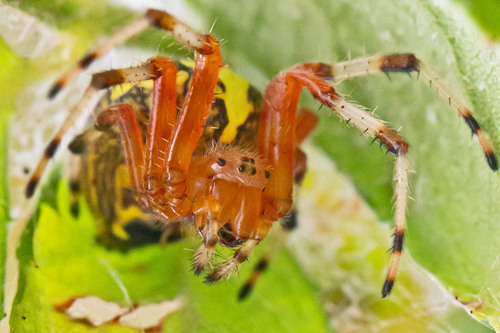
The European garden spider, or cross spider, is brown to orange with a cross of white spots on its round abdomen. It's common in gardens across Europe and North America. The marbled orbweaver is orange, yellow or white with a marbled pattern, common in North American woodland edges in autumn.
Orb weavers are shy. They rarely bite, and a bite is usually milder than a bee sting.
Black and yellow, or striped like a wasp
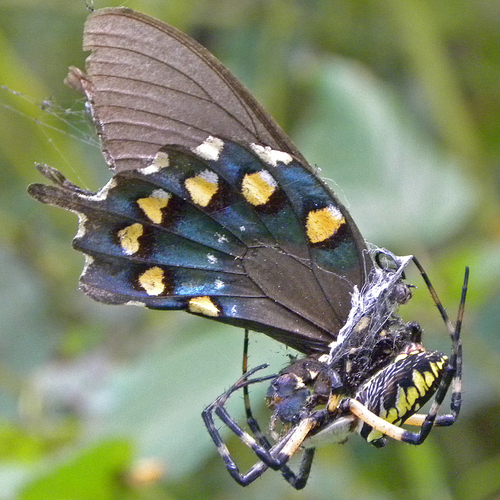
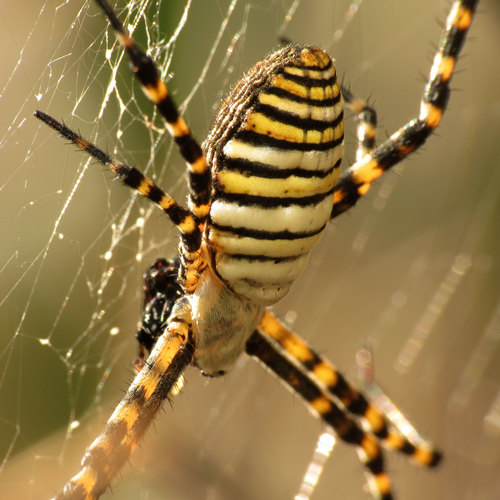
The yellow garden spider of North America is large, with females 19-28 mm long, black and bright yellow, with long black-and-yellow legs. Its web often has a thick zigzag band of silk down the middle.
The wasp spider of Europe and Asia has a similar zigzag in its web but is striped yellow, white and black across the abdomen, like a wasp. It's spreading north, including into southern England.
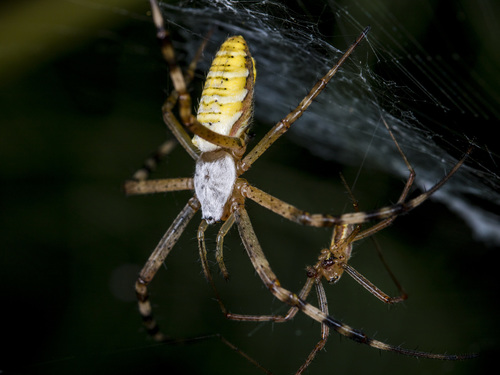
The banded garden spider is a North American relative with thin silver, yellow and dark bands across the abdomen. All three are harmless to people, and a bite is rare and mild.
Huge golden webs: Joro and golden silk orb weavers
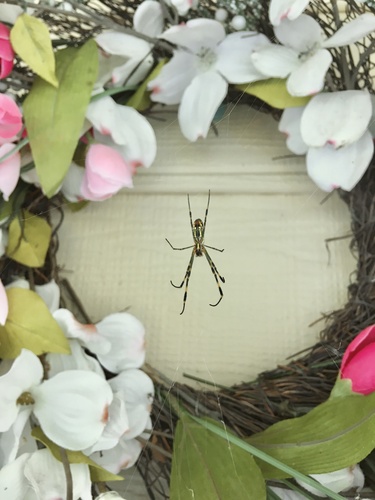
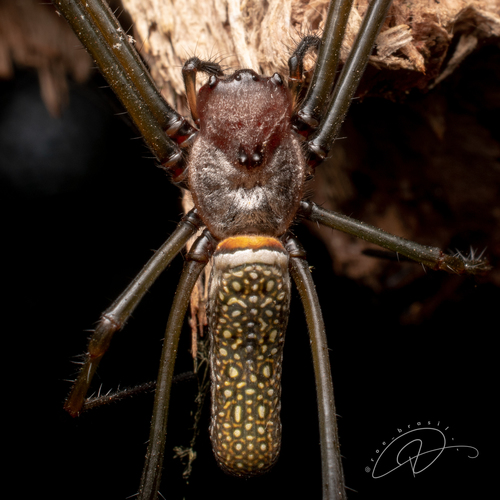
Golden silk orb weavers build very large webs, up to a metre across, with silk that shines gold in sunlight. Females are big, with long legs that have feathery tufts.
The Joro spider is yellow with blue-black bands and red marks underneath. Originally from East Asia, it has spread across the southeastern US since it was first found in Georgia. The golden silk orbweaver, also called the banana spider, is native to the southeastern US and has an elongated, yellowish body.
Both are shy and their bites are mild. They're not considered dangerous to people or pets.
Small with spikes: spinybacked orb weavers
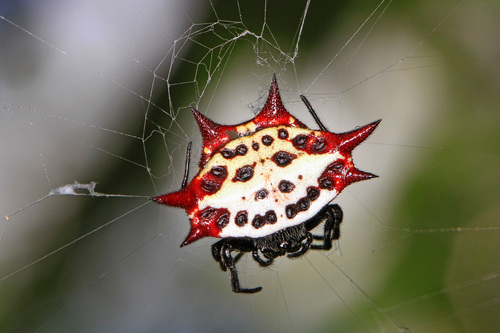
Spinybacked orbweavers are tiny, about 6-9 mm, with a hard, flat, white or yellow abdomen with black spots and six red or black spikes around the edge. They look like little crabs or ornaments sitting in small orb webs, often decorated with tufts of silk. They're common in the southern US and are harmless.
No web, big eyes, and they jump: jumping spiders
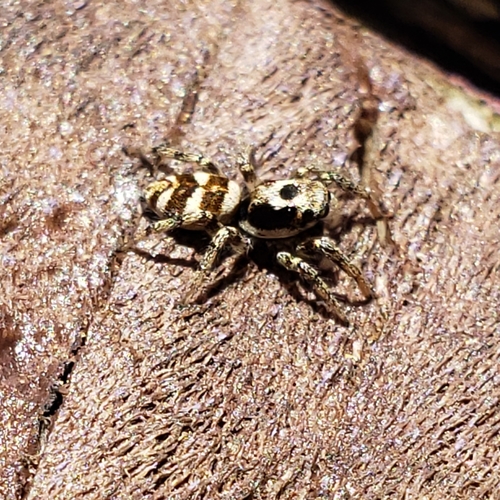
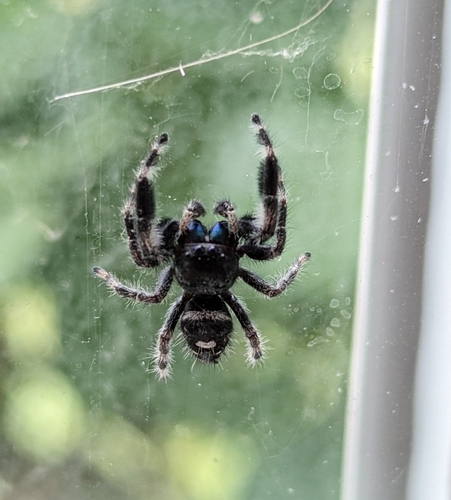
Jumping spiders don't build catching webs. They hunt by sight, with two big forward-facing eyes, and move in short hops. They're often curious, turning to look at you.
The zebra jumping spider is small, about 5-7 mm, striped black and white, and found on sunny walls, fences and window frames in Europe and North America. The bold jumping spider is larger, black with white spots and stripes and shiny green or blue mouthparts.
They can bite if squeezed, but it's rare and mild.
Waiting on flowers: crab spiders and lynx spiders
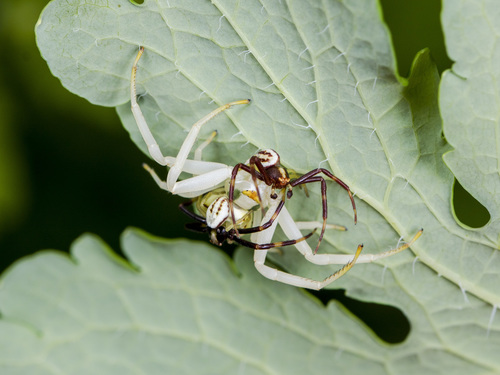
Goldenrod crab spiders sit on flowers with their long front legs held open like a crab, waiting for bees and flies. Females can be white or yellow and can slowly change colour to match the flower.
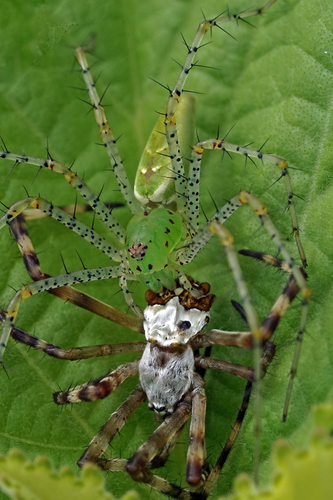
The green lynx spider is bright green with spiny legs and lives on shrubs and tall plants in the southern US. It hunts without a web and can jump short distances.
Both are harmless to people, though a green lynx spider may bite if handled.
Should you remove garden spiders?
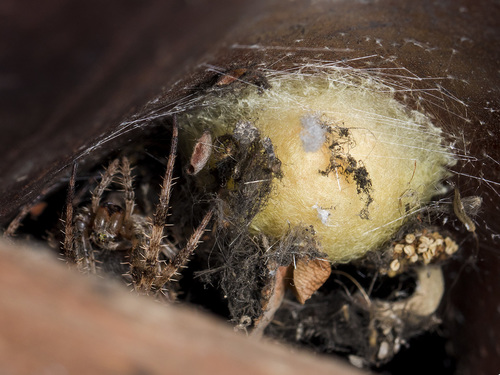
Usually not. Garden spiders eat flies, mosquitoes, moths, aphids and other pests, and most die off with the first hard frosts, leaving egg sacs that hatch in spring. If a web is in the way, move the spider with a stick or a glass to a nearby plant.
If a spider is in the house, or you're worried it could be a widow or a recluse, check those guides or identify it from a photo.
?Frequently asked questions
Are garden spiders dangerous?
No. Common garden spiders, such as cross spiders, yellow garden spiders and orb weavers, are shy, rarely bite, and a bite is usually milder than a bee sting. They're useful predators of flies, mosquitoes and garden pests.
What is the big yellow and black spider in my garden?
In North America it's usually the yellow garden spider, which has a black and bright yellow body and often a zigzag of silk in its web. In Europe, a striped yellow, white and black spider in a web with a zigzag is likely a wasp spider. Both are harmless.
Is the Joro spider dangerous?
No. Joro spiders are large and have spread across the southeastern US, but they're shy, rarely bite, and their venom isn't considered dangerous to people or pets.
What is the spider with a white cross on its back?
That's the European garden spider, also called the cross spider. It's brown to orange with a cross of white spots on its abdomen, builds round orb webs in gardens, and is harmless to people.
Written by the Insect Scanner team, last updated 2026-11-02. Identification from photos is never certain: don't handle insects you can't identify, and get medical advice for bites, stings or allergic reactions.