
Goldenrod crab spider
Misumena vatia · Crab spiders
A small ambush predator that sits on flowers and changes color between white and yellow to match its background.
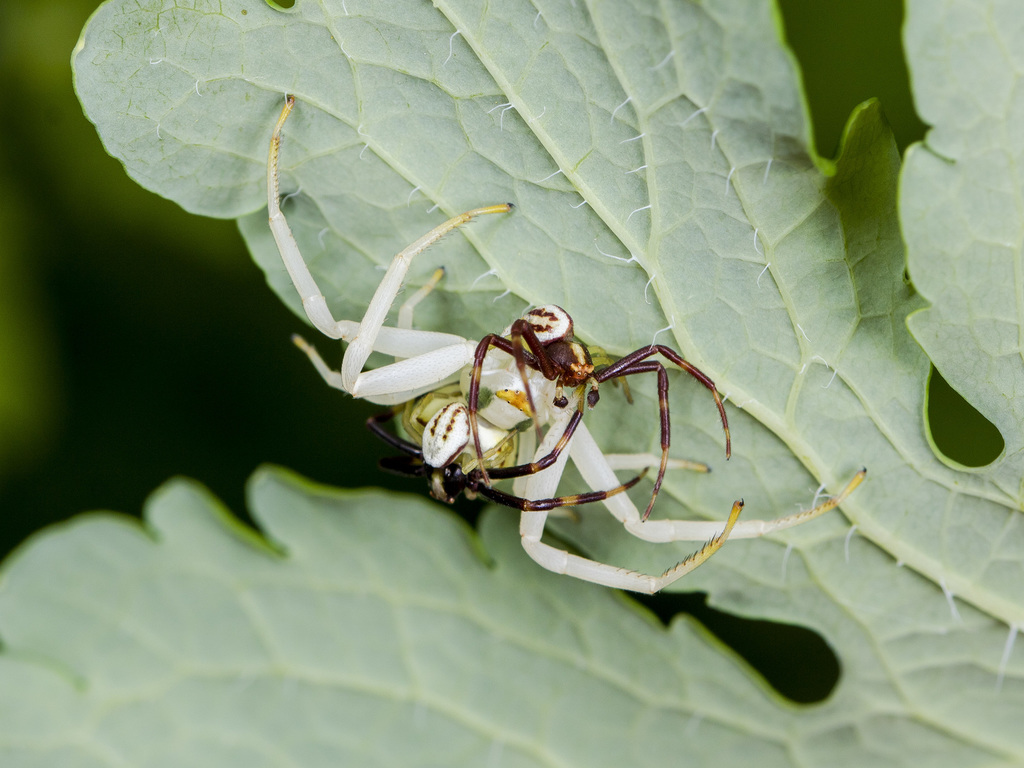
!Is the goldenrod crab spider dangerous?
Only mildly. These spiders are not dangerous to people. Bites are rare and occur only if the spider is handled or provoked; symptoms are usually minor (localized pain, redness, slight swelling) and resolve without medical treatment. For unusual or worsening reactions, seek medical advice.
Pets
Not a significant threat to pets. A bite to a small pet could cause brief local irritation; systemic reactions are extremely unlikely.
📖Overview
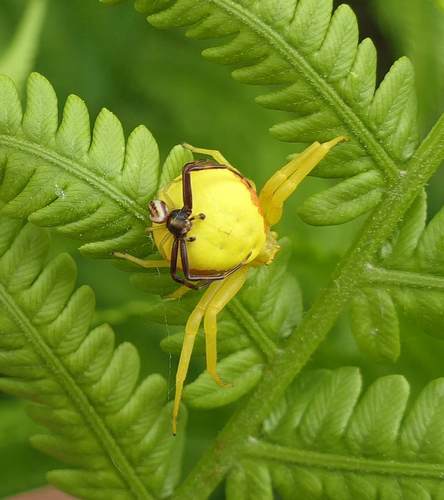
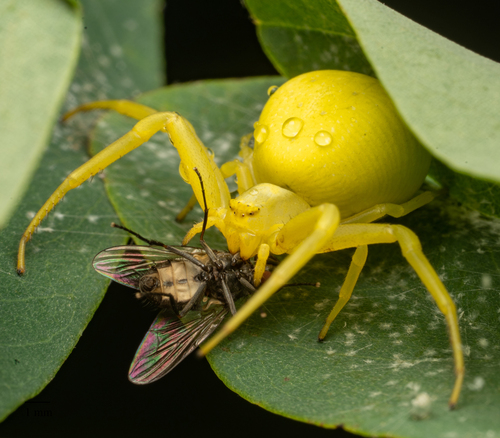
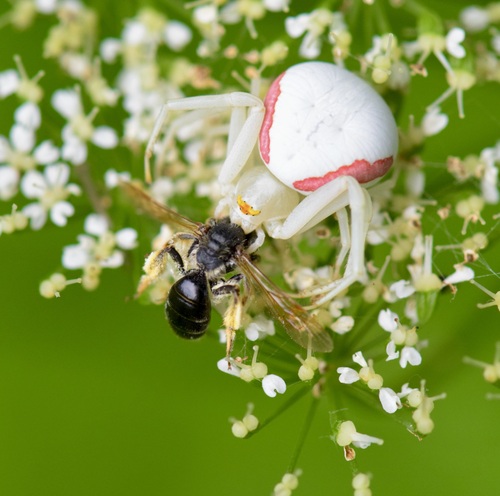
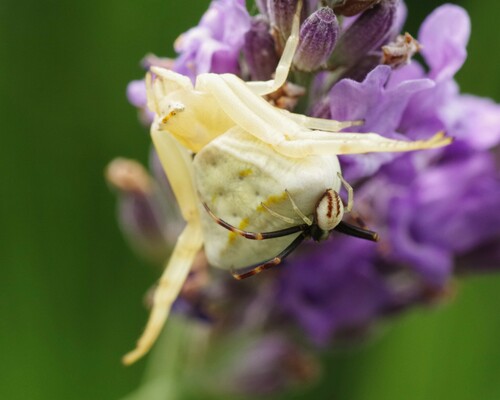
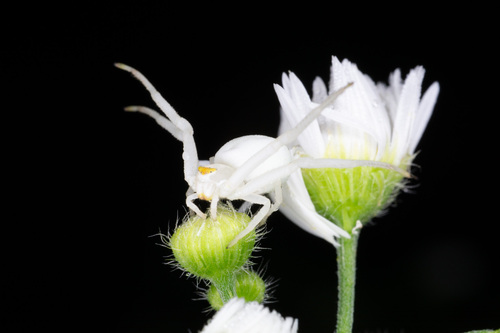
Misumena vatia is a crab spider in the family Thomisidae known for perching on flowers and ambushing visiting insects. Females are noticeably larger than males and are sit-and-wait predators that capture pollinators such as bees, flies and butterflies. They can slowly change their body color between white and yellow over days to better match the flower they occupy; the color change is physiological and not instantaneous.
These spiders are common on open, sunny flowers—particularly goldenrod and other composite and umbel flowers—in much of the Holarctic region. They are solitary, do not build webs to catch prey, and females guard their egg sac until the spiderlings hatch.
🔍How to identify a goldenrod crab spider
Females have a broad, flattened, crab-like body and legs that extend sideways, allowing a sideways walking posture. Body length of adult females is typically 6-10 mm; males are much smaller, about 3-5 mm. Dorsal patterning can include subtle lines or spots; many adult females are entirely white or entirely yellow, though some show mottling or pale greenish markings. Legs are usually paler than the body and may show faint banding. Eyes are arranged in two roughly parallel rows typical of crab spiders.
- Sits on flowers with front legs spread sideways in a crab-like posture
- Females 6-10 mm body length; very variable color but commonly white or bright yellow matching the flower
- Slow color change between white and yellow over days (compared with instant camouflage of some insects)
- No web used for prey capture; found on open flowers rather than in webs
Lookalikes
Whitebanded crab spider Misumenoides formosipes
Very similar in habit and appearance; M. formosipes females often show more distinct dorsal markings and the two species are separated by subtle differences in genital morphology and local distribution. Field separation can be difficult.
Flower crab spider Thomisus onustus
Thomisus onustus (Old World species) also sits on flowers and can be white or yellow, but has different body proportions and regional distribution (Europe and Asia).
Running crab spider Philodromidae spp.
Philodromid spiders are similar in shape but are more active hunters on foliage and lack the distinctive slow color change seen in Misumena vatia.
↻Life cycle
Egg sac
Female produces one or more silk egg sacs and guards them, often attached to vegetation; eggs hatch after several weeks depending on temperature.
Spiderlings (juvenile)
Spiderlings emerge from the egg sac and disperse by crawling or ballooning. Juveniles resemble small adults and undergo several molts as they grow.
Adult
Adults are sexually mature after final molts. Males search for females to mate; after mating females may produce one or more egg sacs and guard the young.
🍃Diet and predators
Young eat
Small flying and crawling arthropods (tiny flies, aphids, small bees) captured on flowers
Adults eat
Larger pollinators and flower visitors such as bees, hoverflies, butterflies and small wasps; captured by ambush rather than webs
Predators of the young
Larger predators including wasps, birds and predatory insects
Predators of adults
Birds, parasitic wasps, larger spiders and mantids
🌱Effect on plants and gardens
Does not feed on plants. As a predator of pollinators and herbivorous insects, it can help reduce pest insects but may also capture some pollinating insects.
📍Where and when to find it
Adults on the open faces of flowers (goldenrod, daisies, umbels) during the day; eggs and guarded sacs on stems near flowers; spiderlings on foliage or ballooning from plants.
Best time
Late spring through autumn when target flowers bloom; daytime, especially sunny afternoons when pollinators are active.
Observation tips
Approach slowly and use a macro lens or phone close-up; the spider sits still on the flower so side or top shots showing the crab-like legs and flower background are most diagnostic.
✨Fun facts
- Females can change colour between white and yellow to better match the flower they sit on; turning yellow takes roughly 10-25 days, while fading back to white takes about a week.
- Despite the common name, they do not eat goldenrod; the name comes from their frequent presence on goldenrod flowers in late summer.
- Males are much smaller than females and are rarely seen on flowers waiting to ambush prey; they spend time hunting or searching for mates.
?Frequently asked questions
Are goldenrod crab spiders dangerous to humans?
No. They are not dangerous. Bites are rare and usually cause only mild, short-lived local pain and redness.
Do goldenrod crab spiders bite people?
Only if handled or provoked. They prefer to remain on flowers and will rarely bite; treat any bite as you would a minor insect bite and clean the area.
Why is there a yellow or white spider on my goldenrod?
They sit on flowers to ambush pollinators. The spider may be white or yellow to match the flower, improving its success at catching prey.
How can I get rid of them from my garden?
They are beneficial predators and rarely a problem. If you must remove one, gently relocate it using a container. Avoid broad insecticide use, which kills predators and pollinators.
Where do goldenrod crab spiders live?
On sunny, flower-rich meadows, roadsides and gardens across much of North America and Europe, especially where goldenrod and similar flowers bloom.
📷Photos of the goldenrod crab spider
More spiders
This guide was written with AI assistance and fact-checked, last updated 2026-10-10. Identification from photos is never certain: don't handle insects you can't identify, and get medical advice for bites, stings or allergic reactions. More about the goldenrod crab spider: iNaturalist, Wikipedia.