
Nursery web spider
Pisaura mirabilis · Nursery web spiders
A slender, long-legged hunting spider that carries its egg sac in the jaws and builds a silk "nursery web" for its young.
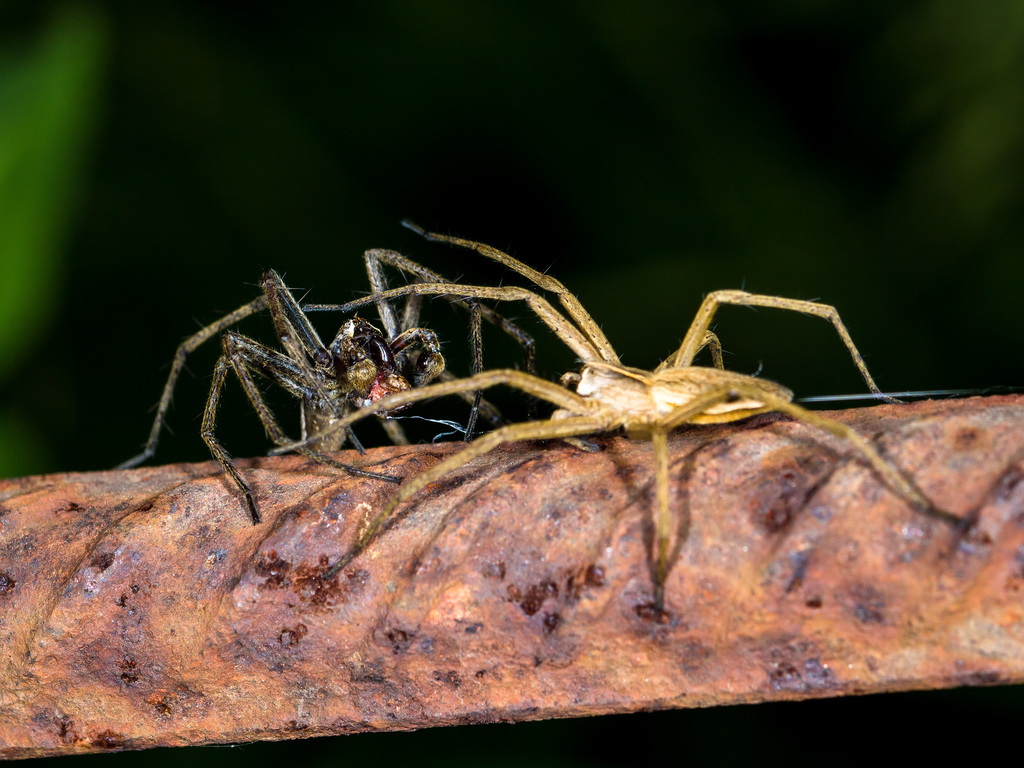
!Is the nursery web spider dangerous?
Only mildly. Nursery web spiders can bite if handled roughly or trapped against skin. Bites are uncommon, usually produce only minor local pain, redness and slight swelling, and their fangs often cannot pierce human skin; serious reactions are rare. Clean the bite with soap and water, apply a cold pack for swelling, and seek medical attention if there are signs of severe allergy, spreading infection, or unusual symptoms.
Pets
Bites to cats or dogs are rare and generally produce only mild local effects. Very small pets could show stronger reactions; consult a veterinarian if a bite is suspected and symptoms develop.
📖Overview
Pisaura mirabilis is a common European and western-Asian hunting spider in the family Pisauridae. It does not build a capture web but actively hunts among low vegetation, catching insects and other small arthropods. Females carry an egg sac held between the chelicerae and, shortly before spiderlings hatch, build a silk 'nursery web' tent among vegetation where she places the egg sac and guards the young spiderlings.
🔍How to identify a nursery web spider
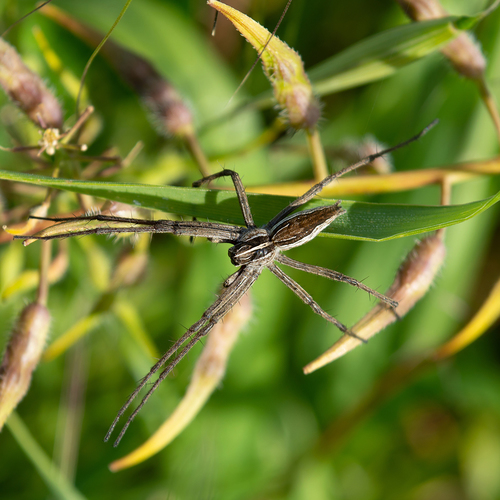
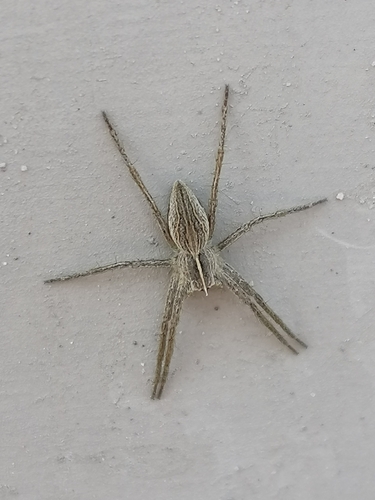
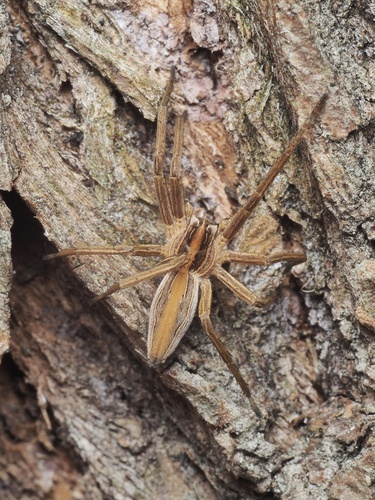
Adults are slender, long-legged spiders with an elongated cephalothorax and long abdomen. The body is typically brownish with a distinct pale (cream or beige) median stripe along the dorsal surface of the abdomen, often bordered by darker bands. Legs are long, spindly and similarly brown; the legs may show faint banding. Eyes are arranged in two rows typical of hunting spiders. Males are usually slimmer and sometimes more patterned; females are slightly larger and more robust.
- Long, slender legs and elongated cephalothorax compared with many ground spiders.
- Distinct pale median dorsal stripe on the abdomen, often bordered by darker areas.
- Female frequently seen carrying an egg sac in the chelicerae before building a nursery web.
- Hunts among low vegetation rather than sitting in a capture web.
Lookalikes
Fishing spider Dolomedes spp.
Dolomedes are generally larger and stockier, usually live near water, and the raft spider (D. fimbriatus) has bold pale stripes along its sides; they also carry their egg sac in the jaws, so look at size, shape and habitat.
Wolf spider Lycosidae (various species)
Wolf spiders carry egg sacs attached to their spinnerets on the abdomen and are generally stockier; Pisaura carries the sac in the jaws and has a more elongated appearance.
↻Life cycle
Egg sac
After mating, the female produces a round silk egg sac and carries it in her chelicerae (jaws) for several weeks until the spiderlings are nearly ready to hatch.
Nursery web and spiderlings
Just before hatching the female builds a silk 'nursery web' tent among vegetation, places the egg sac inside and guards the spiderlings until after their first molt, when they disperse.
Adult
Spiderlings grow through several molts, overwinter as juveniles and mature the following spring. Adults are active in spring and summer, when mating takes place.
🍃Diet and predators
Young eat
Small insects and other tiny arthropods caught by active hunting within vegetation.
Adults eat
Various flying and crawling insects (flies, aphids, small moths, beetles) captured by stalking and pouncing among grasses and shrubs.
Predators of the young
Birds, predatory insects, other spiders and small vertebrates
Predators of adults
Birds, wasps, larger spiders and small mammals
🌱Effect on plants and gardens
Pisaura mirabilis is a predator of insects and does not feed on plants. It can help control pest insects in gardens, so it is beneficial.
📍Where and when to find it
Look in low vegetation, meadow grasses, hedgerows and garden shrubs. Females carrying egg sacs are often seen on plant stems; nursery webs are built among dense grass or shrubs.
Best time
Late spring through summer into early autumn; dusk and night can be productive for observing hunting activity.
Observation tips
Slow, low-angle photographs work well. Check low stems and leaf clusters for the distinctive nursery web and the female guarding it. Do not disturb a guarded nursery web.
✨Fun facts
- Females carry the egg sac in their jaws, a habit shared with other nursery web and fishing spiders; wolf spiders attach theirs to the spinnerets instead.
- The common name 'nursery web spider' refers to the temporary silk nest the female builds to protect her young just before they hatch.
- Males sometimes present prey as a gift to females during courtship to reduce the risk of being eaten.
?Frequently asked questions
Do nursery web spiders bite?
They can bite if provoked or handled, but bites are uncommon and usually cause only mild local pain and swelling.
Are nursery web spiders dangerous to humans?
No — they are not considered dangerous. Their venom is not medically significant for humans, though allergic reactions are possible in rare cases.
Why is there a spider in my house?
They enter houses while hunting or seeking shelter, especially in late summer and autumn. Indoor sightings are usually accidental; they prefer vegetation outdoors.
How do I get rid of nursery web spiders?
Best methods are humane removal (use a jar and a stiff piece of paper) and prevention: seal gaps around windows and doors, reduce outdoor lighting that attracts insects, and remove dense vegetation next to the house.
Do they bite to protect their egg sac?
Females guarding an egg sac or nursery web can be defensive and may bite if handled; avoid disturbing a guarded sac and observe from a distance.
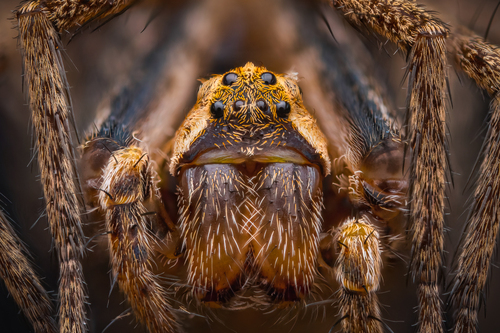
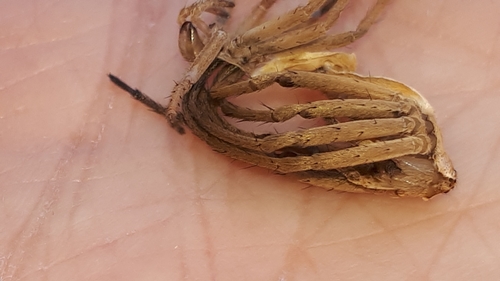
📷Photos of the nursery web spider
More spiders
This guide was written with AI assistance and fact-checked, last updated 2026-10-10. Identification from photos is never certain: don't handle insects you can't identify, and get medical advice for bites, stings or allergic reactions. More about the nursery web spider: iNaturalist, Wikipedia.