
False black widow
Steatoda grossa · Comb-footed spiders
A small, dark cobweb-building spider commonly found in and around human buildings; bites are uncommon and usually cause mild to moderate symptoms.
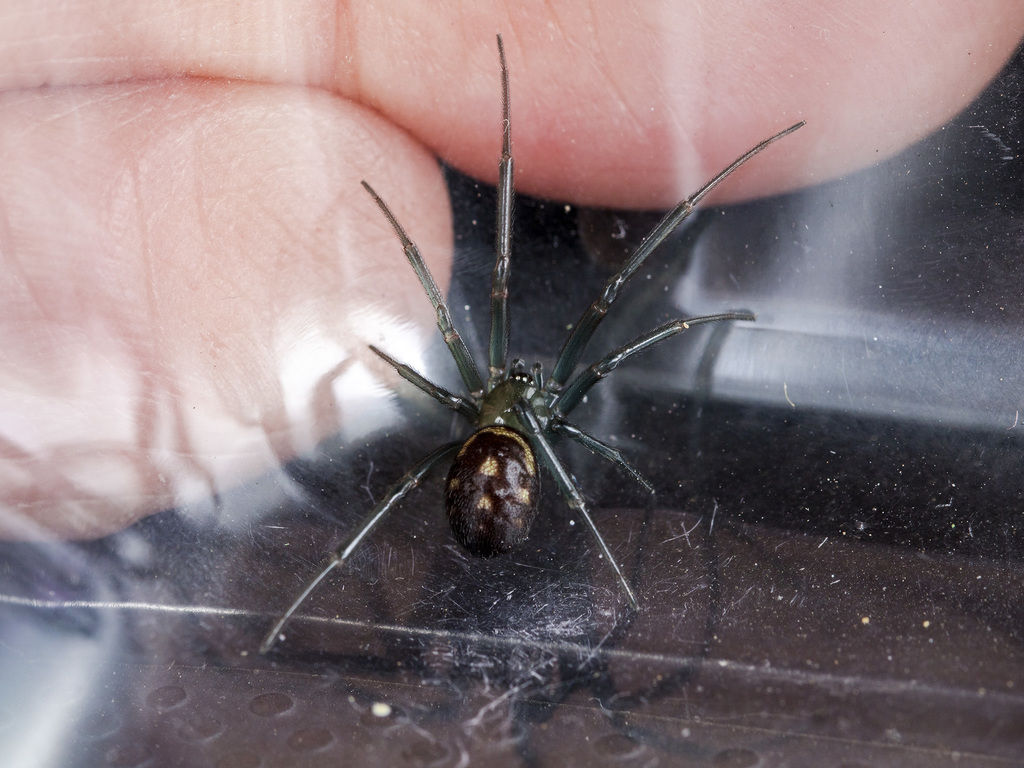
!Is the false black widow dangerous?
Only mildly. Bites are uncommon and usually occur when a spider is pressed against skin. Typical symptoms are local pain, redness and swelling that may last a few days. Some people report nausea, headache or general discomfort; severe systemic reactions are rare. Treat bites like other minor spider bites: clean the area with soap and water, apply a cold pack to reduce swelling, take over-the-counter pain relievers if needed, and seek medical attention if symptoms worsen, spread, or if you experience severe pain, breathing difficulty or other systemic signs.
Pets
Small pets (young kittens or puppies) could experience discomfort or localized swelling from a bite; severe reactions are uncommon. If a pet shows marked lethargy, vomiting, difficulty breathing, or progressive symptoms after a suspected bite, contact a veterinarian.
📖Overview
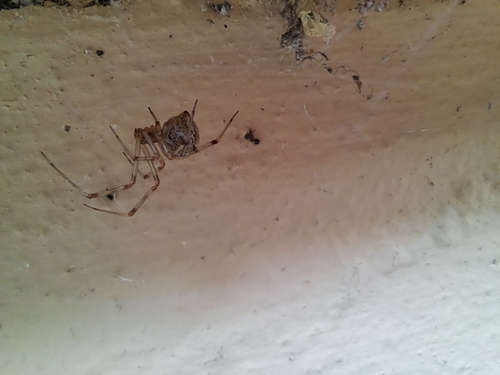
Steatoda grossa is a small theridiid spider that lives in and around human structures worldwide. It builds messy, irregular cobwebs in sheltered corners, under furniture, in basements, garages and sheds. Females are sedentary and often remain near their webs; males wander more during the mating season. This species is synanthropic (closely associated with people) and has spread widely beyond its presumed native range.
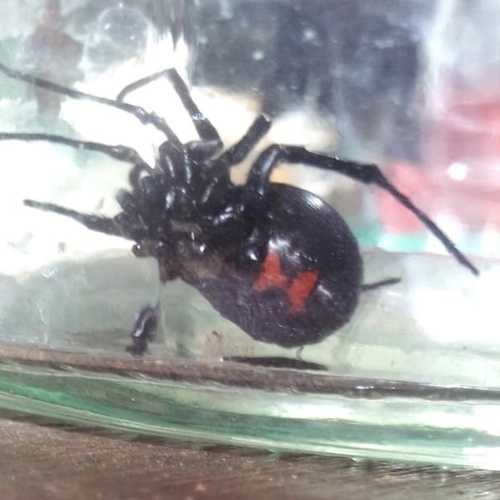
Compared with true black widows (Latrodectus species), S. grossa has a similar dark silhouette but lacks the distinctive bright red hourglass mark. Bites can occur if the spider is trapped against skin, but severe reactions are uncommon. The species helps control household insect pests by catching flies, ants and other small arthropods in its web.
🔍How to identify a false black widow
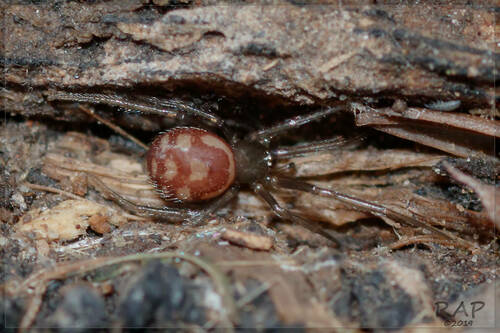
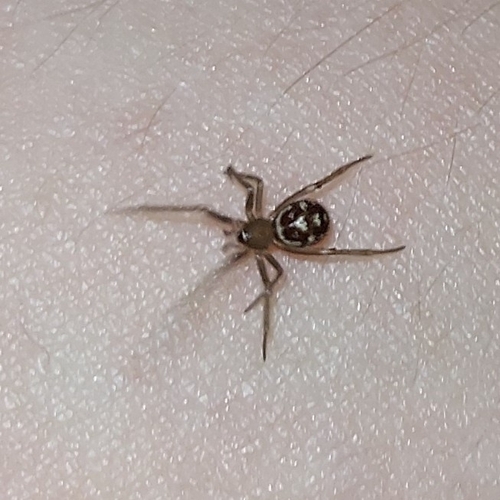
Adults are small, smooth-bodied spiders with a rounded, shiny abdomen and relatively small legs. Color ranges from dark brown to purplish-brown; some individuals show faint lighter markings or a banded pattern on the abdomen. The cephalothorax is proportionally narrower than the abdomen and the legs are relatively short and stout compared with some other web-building spiders. Females are noticeably larger and more bulbous than males.
- Round, smooth, shiny abdomen; body length 4-10 mm depending on sex
- Uniform dark brown to purplish coloration; may show faint pale markings but lacks bright red hourglass
- Builds irregular, tangled cobwebs in sheltered corners, often near the ground or in undisturbed indoor areas
- Compare size and markings to distinguish from related species (see similar species)
Lookalikes
Noble false widow Steatoda nobilis
S. nobilis is typically larger with more distinct cream or pale markings on the dorsal abdomen; S. grossa is usually darker and more uniformly colored.
Western black widow Latrodectus hesperus
True widow spiders (Latrodectus) have a more elongated abdomen and usually show a red or orange hourglass or dorsal markings; their bites are more likely to cause medically significant symptoms.
Rabbit hutch spider Steatoda bipunctata
S. bipunctata is slightly smaller and flatter-bodied, usually with a pale band along the front and middle of the abdomen; examine size, patterning and web site to separate it from S. grossa.
↻Life cycle
Egg
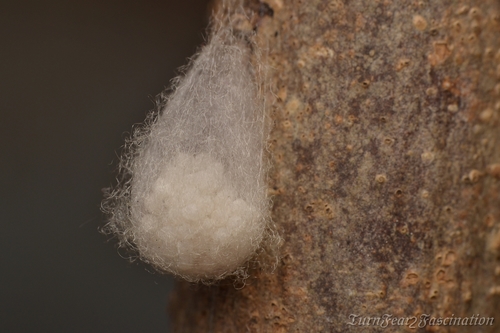
Females enclose eggs in silk sacs (often multiple) and commonly guard them. Eggs hatch into spiderlings after several weeks depending on temperature.
Spiderling (juvenile)
Young spiders disperse by walking or 'ballooning' on silk. They go through several molts while growing.
Adult
Mature spiders mate; females continue to build webs and produce egg sacs. Adults may live many months, especially females in sheltered indoor locations.
🍃Diet and predators
Young eat
Small flying and crawling insects, tiny arthropods caught in the web
Adults eat
A variety of household and garden insects and other small arthropods captured in their tangled cobwebs
Predators of the young
Ants, predatory beetles, other spiders and small insectivorous birds
Predators of adults
Wasps (spider-hunting wasps), larger spiders, some birds and small mammals
🌱Effect on plants and gardens
Does not feed on plants; beneficial by preying on household and garden insects such as flies, ants and moths.
How to get rid of false black widows
Reduce indoor populations by removing clutter, vacuuming webs and egg sacs, sealing cracks and gaps, and reducing insect prey by good sanitation. For immediate removal, capture with a jar and cardboard or use a vacuum. Insecticide sprays can reduce numbers but are often temporary; professional pest control may be considered for large infestations. Wear gloves and be cautious when reaching into dark, undisturbed spaces.
📍Where and when to find it
Look for webs in basements, garages, closets, attics, behind furniture, under eaves and in sheds. Check cracks, wood piles and undisturbed corners for adults and egg sacs.
Best time
Spring through autumn outdoors; year-round indoors. Spiders are mostly nocturnal and easier to spot at night when insects visit lights.
Observation tips
Turn on a flashlight when inspecting dark corners, use a long-reach tool or jar to collect specimens, and avoid putting hands into unseen crevices. Wear gloves when cleaning out infested spaces.
✨Fun facts
- Although called a "false black widow," Steatoda grossa is a different genus and generally less medically significant than true black widows.
- They are good at living with people and are often found in quiet, undisturbed indoor spots where they catch pest insects.
- Females sometimes guard egg sacs and may show maternal care by staying near their young until dispersal.
?Frequently asked questions
Are false black widow spiders dangerous?
Only mildly. They are venomous but bites are uncommon; most cause only local pain and swelling. Severe reactions are rare, but seek medical help for worsening or systemic symptoms.
Do false black widow spiders bite people?
Yes, but bites usually occur only when the spider is trapped against skin (for example in clothing or bedding). Avoid handling and use caution in dark, undisturbed spaces.
Why do I find these spiders in my house?
They prefer sheltered, undisturbed locations and follow prey (insects). Indoor environments provide warmth, shelter and steady food sources.
How can I get rid of false black widows?
Remove webs and egg sacs, reduce clutter, seal entry points, limit insect prey with good sanitation, vacuum regularly, and use sticky traps or targeted insecticide if necessary. Capture and relocate individual spiders if preferred.
How can I tell a false widow from a true black widow?
False widows (Steatoda) lack the bright red hourglass marking on the underside of the abdomen that is typical of many Latrodectus species and are usually less glossy black and more uniformly brown or purplish.
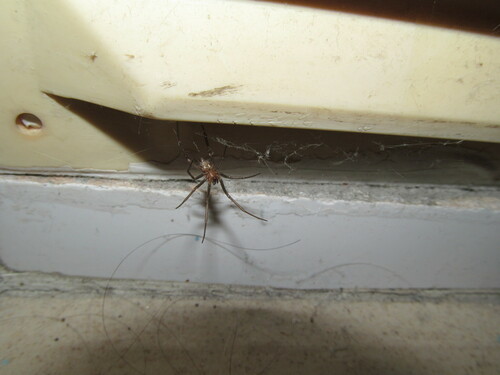
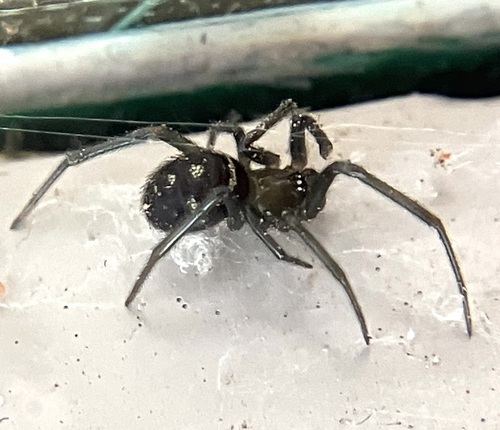
📷Photos of the false black widow
More spiders
This guide was written with AI assistance and fact-checked, last updated 2026-10-10. Identification from photos is never certain: don't handle insects you can't identify, and get medical advice for bites, stings or allergic reactions. More about the false black widow: iNaturalist, Wikipedia.