
Brown widow
Latrodectus geometricus · Comb-footed spiders
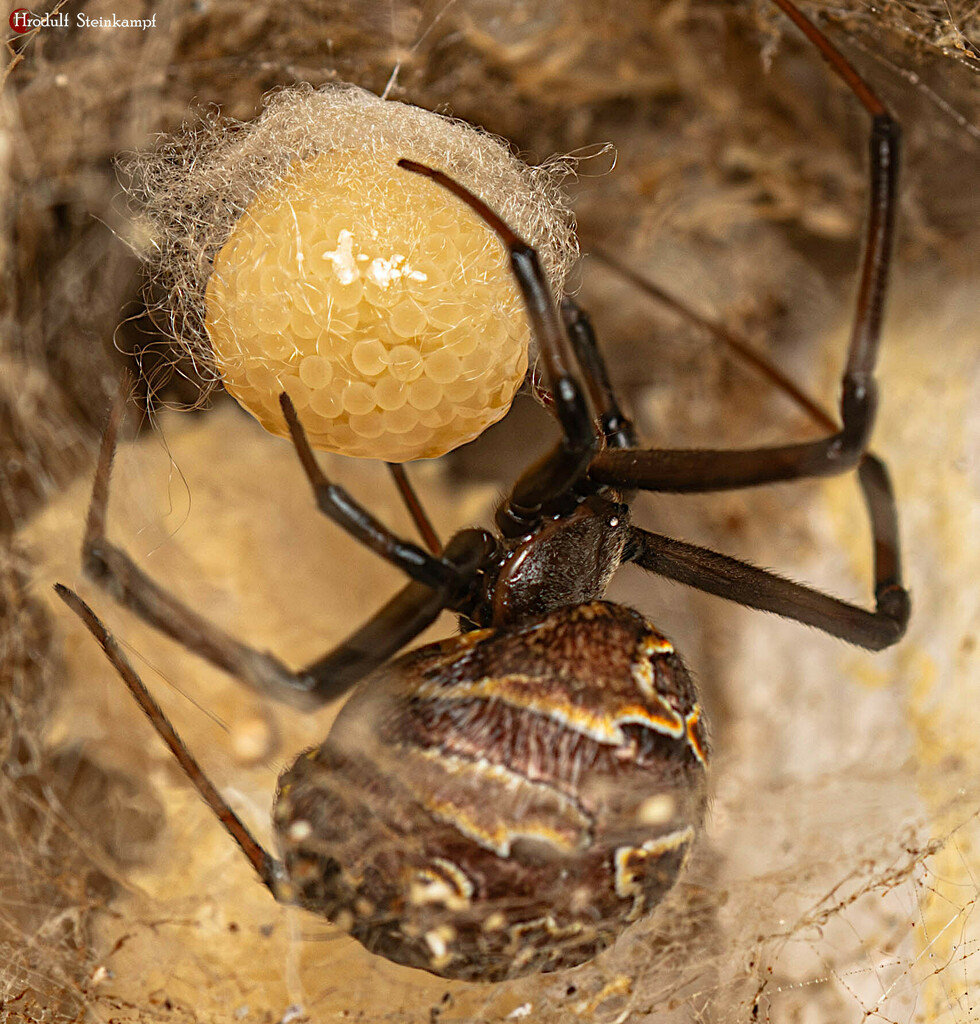
A small widow spider with a tan to brown body, orange hourglass on the underside and a distinctive spiky egg sac; bites are venomous but usually less severe than black widow bites.
!Is the brown widow dangerous?
Yes, it can be. Bites are venomous and can cause local pain, swelling, redness and sometimes muscle cramps, nausea or headache. Severe systemic reactions are uncommon but can occur, especially in young children, the elderly or people with underlying health problems. First aid: clean the bite with soap and water, apply a cold pack to limit swelling, keep the affected limb at rest, and seek medical attention if pain spreads or symptoms worsen. Seek emergency care immediately for severe muscle cramps, chest or abdominal pain, sweating, or difficulty breathing. Do not apply tourniquets or attempt to suck out venom.
Pets
Can envenomate small pets; signs include pain, weakness, vomiting or muscle tremors. Seek veterinary care if a bite is suspected.
📖Overview
The brown widow is a cosmopolitan widow spider now found in warm regions worldwide. It prefers sheltered, cluttered sites around buildings and vehicles where it builds messy, sticky webs to capture insects. Females are larger and more robust than males and are most often noticed because of their distinctive egg sacs and the orange or cream hourglass marking on the underside of the abdomen.
Brown widows are synanthropic (closely associated with human structures) and commonly occupy eaves, gutters, outdoor furniture, stacks of materials, and inside garages, sheds and cartons. They are predators of nuisance insects and are not aggressive: bites occur when the spider is pressed against skin or otherwise provoked. Medical reports indicate their venom is neurotoxic, but bites typically produce local pain and muscle cramps; severe systemic reactions are uncommon compared with bites from some black widow species.
🔍How to identify a brown widow
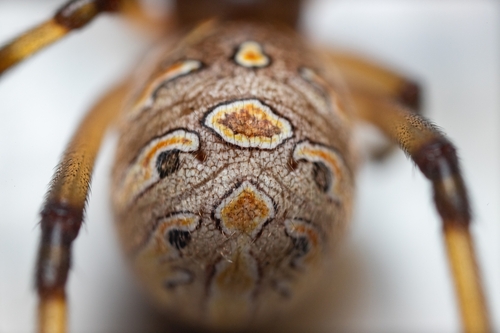
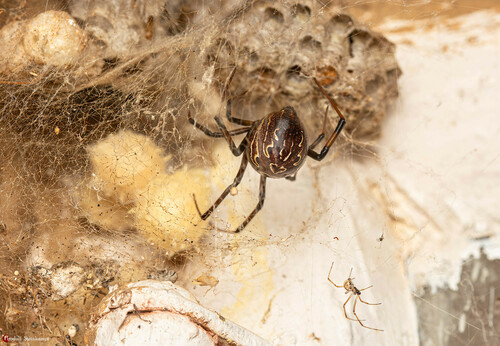
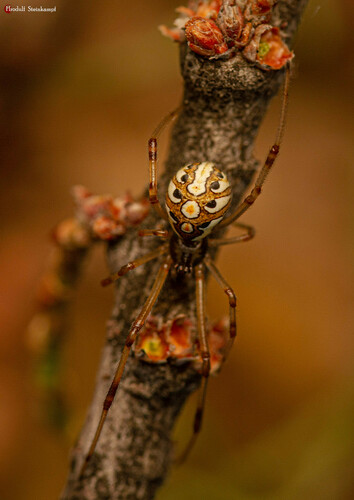
Females are roughly 7-15 mm body length (not including legs); males are much smaller, often 3-6 mm. The overall colour ranges from light tan to dark brown with mottled patterns on the dorsal abdomen; the ventral abdomen usually shows an orange, yellow-orange or cream hourglass mark (often broken or partial rather than a solid red). The dorsal pattern on many individuals has geometric, streaked or mottled markings. Legs are banded or plain brown and the body is globose. The egg sac is very characteristic: round to oval and covered with irregular, spiky, flared silk lobes giving a “bumpy” or star-like surface, often cream, pinkish or tan in colour.
- Look for a small tan to brown widow with a broken orange or cream hourglass on the underside of the abdomen.
- Check for the distinctive round, spiky or bumpy egg sac (often cream, tan or pinkish).
- Note the mottled geometric dorsal markings and banded or plain brown legs; females are much larger than males.
- Brown widows are usually found in sheltered, man-made structures rather than out in open vegetation.
Lookalikes
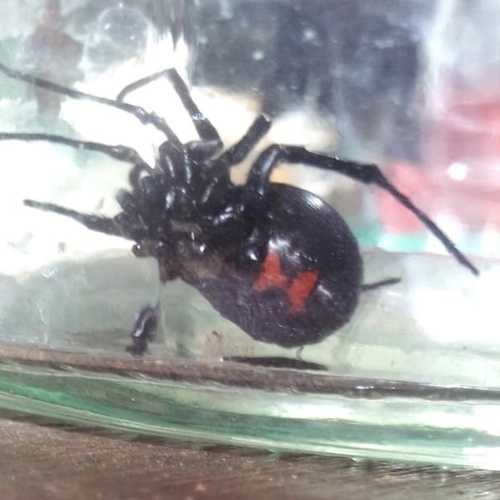
Black widow Latrodectus mactans
Black widows are usually shiny black with a solid red hourglass on the underside and lack the spiky egg sac; their bites are often considered more medically significant.
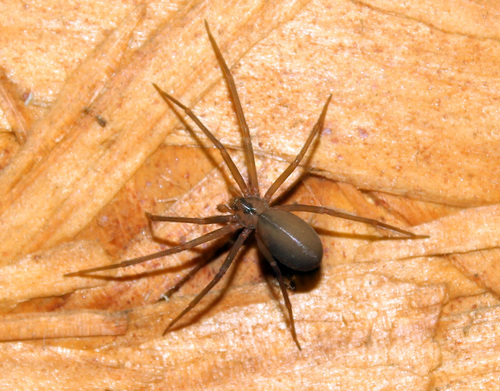
False black widow Steatoda grossa
False widows (Steatoda) are brown and can resemble brown widows superficially but lack the orange hourglass and make smooth, round egg sacs without spiky projections.
↻Life cycle
Egg sac
Females produce one or more distinctive round, spiky-looking silk egg sacs each containing dozens to hundreds of eggs; sacs are attached to the web or hidden in sheltered spots.
Spiderlings (juvenile)
Young spiders hatch and disperse as small spiderlings; they moult several times while growing and remain in webs or nearby sheltered areas.
Adult
Sexually mature spiders build irregular webs, mate (males are smaller), and females produce egg sacs; adults continue to hunt in their webs.
🍃Diet and predators
Young eat
Small flying and crawling insects and other tiny arthropods caught in the web.
Adults eat
Insects and other arthropods trapped in the sticky web, including flies, ants, beetles and small moths.
Predators of the young
Ants, predatory beetles, parasitoid wasps and small birds.
Predators of adults
Wasps (including spider-hunting wasps), larger spiders, birds, lizards and small mammals.
🌱Effect on plants and gardens
Does not feed on plants; helps control insect pests by catching them in its web.
How to get rid of brown widows
Reduce shelters and clutter around buildings (clear boxes, woodpiles, outdoor furniture). Seal cracks and gaps where spiders can build. Remove webs and egg sacs with a long-handled brush or vacuum while wearing gloves; dispose of vacuum bag contents safely. Sticky traps can monitor presence. For heavy infestations, use insecticide sprays labeled for spiders around likely harborage (follow label directions and safety precautions). If you are uncomfortable removing webs or there are safety concerns, contact pest control professionals.
📍Where and when to find it
Look under eaves, inside garages and sheds, on outdoor furniture, under toys or stacked materials, and in dark corners where webs are attached to structural surfaces. Egg sacs are commonly visible in sheltered crevices.
Best time
Spring through autumn in temperate areas; year-round in warm climates. Check at night with a flashlight when spiders may be more active on their webs.
Observation tips
Use a torch to inspect eaves and corners; photograph the underside of the abdomen if safe to do so to check for the orange hourglass. Avoid disturbing a web with bare hands and wear gloves when removing webs or egg sacs.
✨Fun facts
- The brown widow's egg sac looks spiky or bumpy—one of the easiest field clues to its presence.
- Brown widows have spread broadly around the world by hitchhiking in shipping, cargo and on transported goods.
- Some studies suggest brown widows can reduce local black widow numbers where they invade, possibly by outcompeting or preying on them.
?Frequently asked questions
Do brown widows bite?
Yes, they will bite if threatened or pressed against skin, but they are not aggressive and bites usually occur from accidental contact.
Are brown widows dangerous to humans?
They can be. Their venom is neurotoxic, but bites are typically less severe than those of black widows because they inject less venom. Most bites cause local pain and minor symptoms; severe reactions are uncommon but possible, so seek medical care if symptoms spread.
Why is there a brown widow in my house?
They like sheltered, cluttered, dry spots near human structures for building webs and egg sacs. Garages, sheds, eaves, boxes and outdoor furniture are typical harborage sites.
How can I get rid of brown widows?
Remove webs and egg sacs with a long-handled tool or vacuum (wear gloves), reduce clutter, seal entry points, and use sticky traps or targeted insecticide treatments if needed. For heavy infestations or safety concerns, hire pest control professionals.
How do I tell a brown widow from a black widow?
Brown widows are tan to brown with an orange or cream hourglass (often broken) and a spiky egg sac; black widows are glossy black with a solid red hourglass and smoother egg sacs.
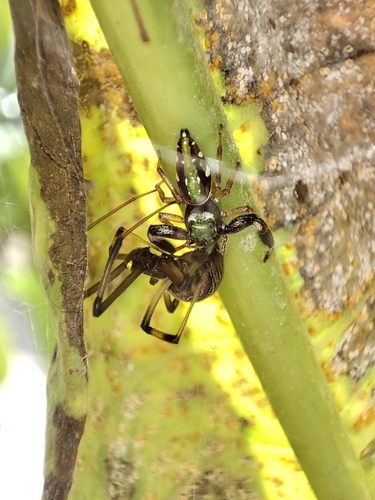
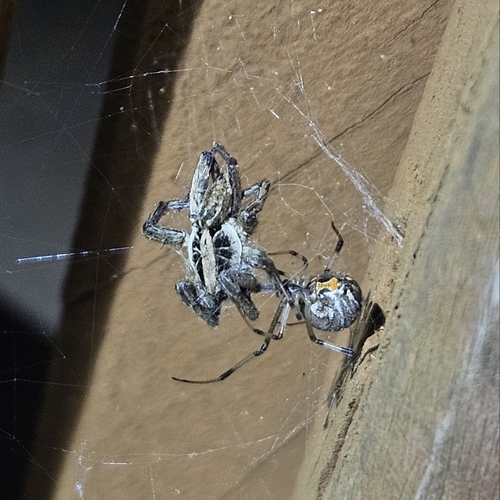
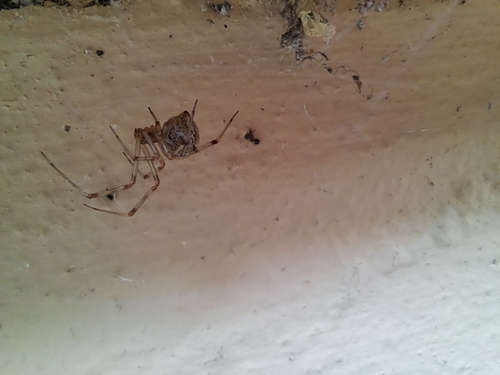
📷Photos of the brown widow
More spiders
This guide was written with AI assistance and fact-checked, last updated 2026-10-10. Identification from photos is never certain: don't handle insects you can't identify, and get medical advice for bites, stings or allergic reactions. More about the brown widow: iNaturalist, Wikipedia.