
False black widow vs Brown widow
These two are easy to mix up. Here's how to tell a false black widow from a brown widow, and whether either one bites or stings.
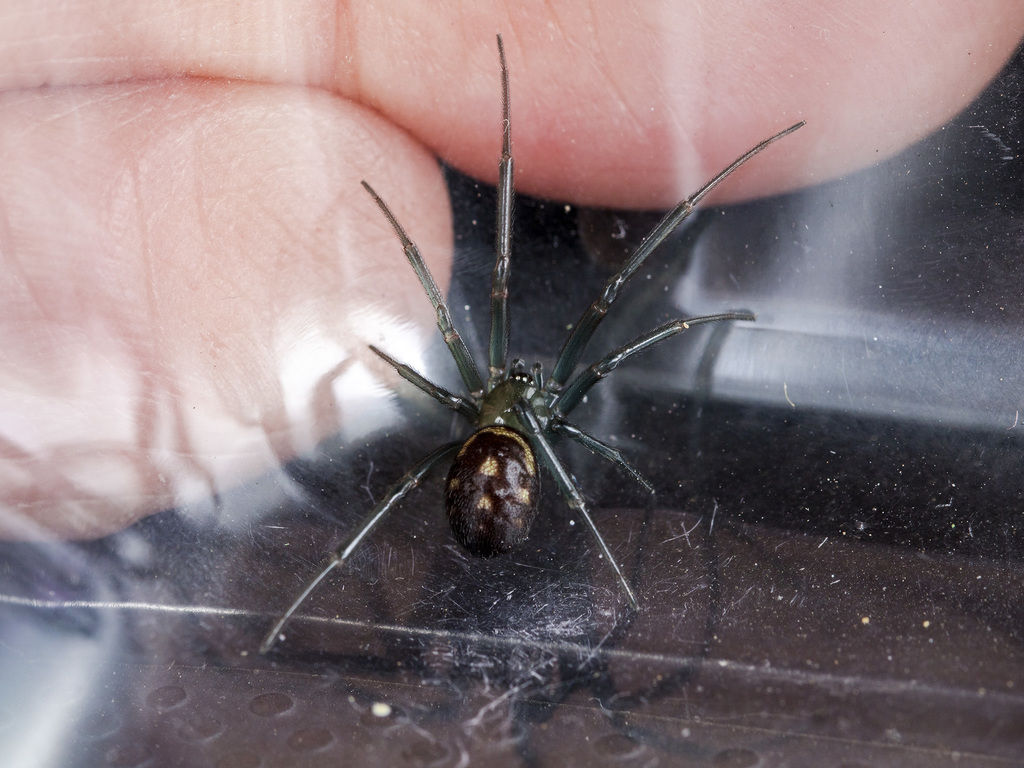
False black widow
Steatoda grossa
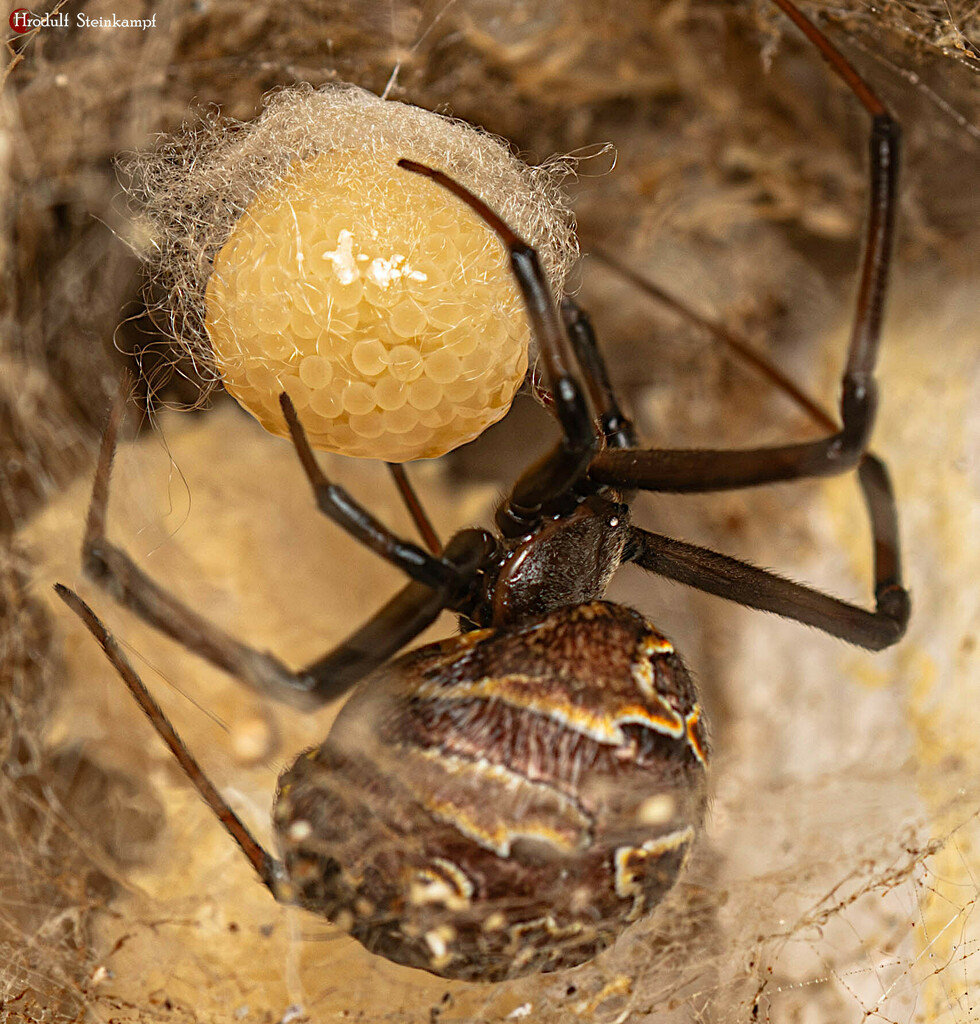
Brown widow
Latrodectus geometricus
≠The key differences
False widows (Steatoda) are brown and can resemble brown widows superficially but lack the orange hourglass and make smooth, round egg sacs without spiky projections.
⚖︎Side by side
| False black widow | Brown widow | |
|---|---|---|
| To humans | Venomous bite | Venomous bite |
| Size | Females 6-10 mm body length; males 4-8 mm | Females 7-15 mm body length; males 3-6 mm |
| Colours | Dark brown, Purplish brown, Pale cream (faint markings) | Tan, Brown, Orange (hourglass), Cream (egg sac) |
| Family | Theridiidae | Theridiidae |
| Habitat | Human structures (houses, basements, garages), sheds, under eaves, rock crevices and debris piles | Sheltered spots on buildings and other man-made structures, garages, sheds, under eaves, inside boxes and among clutter; also vegetation in warm climates. |
| Range | Originally from the Mediterranean and Macaronesia region; now nearly cosmopolitan, commonly found across North America, Europe and many other parts of the world | Probably native to Africa; now found in warm regions worldwide, including the Americas, Asia, Australia, the Middle East and many islands. |
| Active | Active year-round in heated buildings; outdoors most active spring through autumn and mainly nocturnal | Year-round in warm climates; most active in spring through autumn; primarily nocturnal but present in webs day and night. |
| Pest? | Yes | Yes |
🔍How to spot a false black widow
- Round, smooth, shiny abdomen; body length 4-10 mm depending on sex
- Uniform dark brown to purplish coloration; may show faint pale markings but lacks bright red hourglass
- Builds irregular, tangled cobwebs in sheltered corners, often near the ground or in undisturbed indoor areas
- Compare size and markings to distinguish from related species (see similar species)
🔍How to spot a brown widow
- Look for a small tan to brown widow with a broken orange or cream hourglass on the underside of the abdomen.
- Check for the distinctive round, spiky or bumpy egg sac (often cream, tan or pinkish).
- Note the mottled geometric dorsal markings and banded or plain brown legs; females are much larger than males.
- Brown widows are usually found in sheltered, man-made structures rather than out in open vegetation.
?Frequently asked questions
What is the difference between a false black widow and a brown widow?
False widows (Steatoda) are brown and can resemble brown widows superficially but lack the orange hourglass and make smooth, round egg sacs without spiky projections.
Is a false black widow or a brown widow more dangerous?
False black widow: Venomous bite. Brown widow: Venomous bite. Bites are uncommon and usually occur when a spider is pressed against skin. Bites are venomous and can cause local pain, swelling, redness and sometimes muscle cramps, nausea or headache.
Identification from photos is never certain: don't handle insects you can't identify, and get medical advice for bites, stings or allergic reactions.