
Marbled orbweaver
Araneus marmoreus · Orb weavers
A common, colorful orb-weaver that builds circular webs in shrubs and gardens; two main color forms (orange and yellow) with marbled backs.
!Is the marbled orbweaver dangerous?
Only mildly. Not dangerous to people. Like most orb-weavers, Araneus marmoreus can bite if handled or trapped against skin; bites are rare and usually cause only mild, localized pain, redness or swelling. Seek medical attention if an unusual reaction occurs (severe swelling, spreading redness, allergy).
Pets
Generally not harmful to pets. Small dogs or cats could be startled or may get a superficial bite if they chew a spider, but envenomation severe enough to affect pets is extremely unlikely.
📖Overview
Araneus marmoreus is a widespread orb-weaving spider found across much of the Northern Hemisphere. Females are noticeably larger than males and often show striking marbled dorsal patterns in either orange or yellow color forms. They build classic vertical orb webs to capture flying insects and are most common in vegetated, semi-natural habitats such as wood edges, gardens and hedgerows. They are solitary spiders; each adult occupies its own web and females may guard egg sacs through autumn.
Behaviorally they are typical orb weavers: constructing a new web (or repairing an existing one) at dusk, sitting near the web hub or hidden in a retreat connected by a signal line, and remaining largely inactive during the day. Reproduction occurs in late summer to autumn, with females laying one or several egg sacs that overwinter as eggs; spiderlings hatch in spring.
🔍How to identify a marbled orbweaver
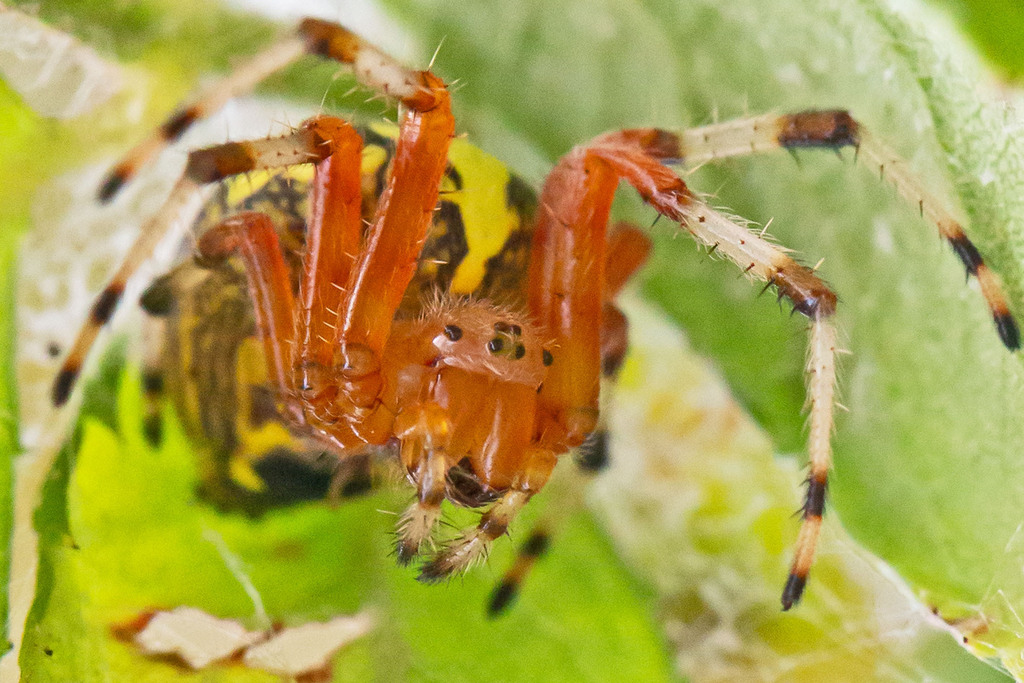
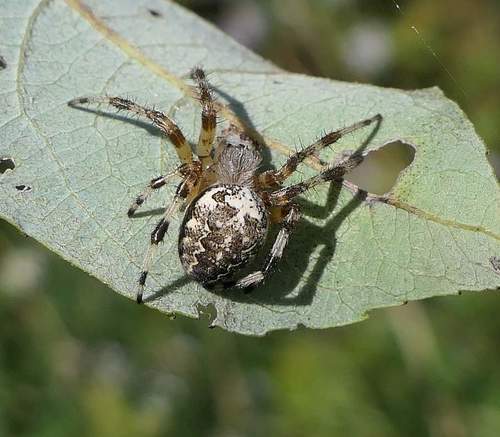
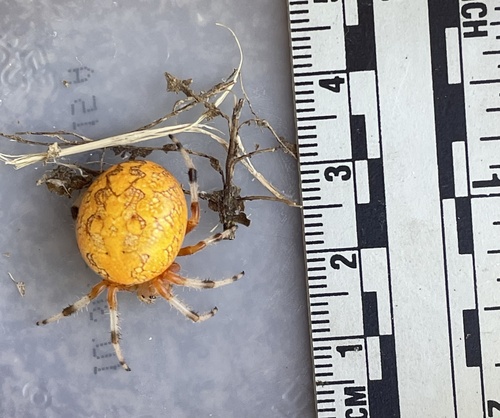
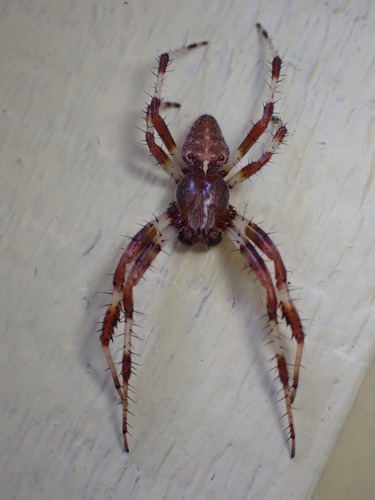
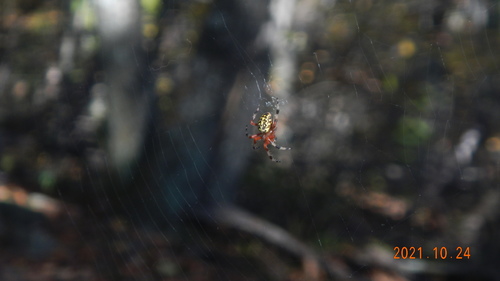
Adult females have robust, rounded abdomens with a marbled pattern of darker streaks and blotches on a yellow to orange background; males are smaller, slimmer and less boldly patterned. Body length for females is typically 9-20 mm, males about 5-9 mm. Legs are banded and moderately stout. The abdomen may be globular and variable in shape; many individuals show a pale ventral band or spots. There are two well-known color morphs: an orange (often called "pumpkin") form and a yellow form, both showing the marbling.
- Look for a rounded, marbled abdomen with darker streaks on an orange or yellow background
- Female size larger and abdomen more swollen than males (9-20 mm vs 5-9 mm)
- Orb web placed in shrubs or low vegetation, often with the spider near the web hub or in a silk retreat connected by a signal line
- Two main color morphs: orange ("pumpkin") and yellow; both show marbled patterning
Lookalikes
Cross orbweaver Araneus diadematus
Has a distinctive white cross of spots on the abdomen and usually less marbled patterning; Araneus diadematus is typically browner and lacks the bright orange morph.
Four-spot orb-weaver Araneus quadratus
Often larger and more uniformly colored (brown, orange, red or greenish) with four large white spots on the abdomen and less marbling; found mainly in Eurasian grassland and heath.
↻Life cycle
Egg
Females lay one or more silk egg sacs in late summer or autumn; sacs are often hidden in curled leaves or silk retreats and overwinter as eggs.
Spiderling (juvenile)
Spiderlings hatch in spring, disperse by ballooning or walking, and molt multiple times as they grow through summer.
Adult
Mature adults appear in mid to late summer; courtship, mating and egg-laying occur in late summer to autumn.
🍃Diet and predators
Young eat
Small flying and crawling insects caught in the web (midges, small flies, tiny moths)
Adults eat
Flying insects such as flies, moths and midges intercepted in the orb web
Predators of the young
Birds, predatory insects (wasps), ants and larger spiders
Predators of adults
Birds, wasps (spider-hunting wasps), and small mammals; parasitoids and fungal pathogens can also affect them
🌱Effect on plants and gardens
Does not feed on plants; it helps control flying insect pests by catching them in its web, so it is beneficial in gardens.
📍Where and when to find it
Look for webs in shrubs, low trees and garden plants; adults are most visible in late summer and autumn. Egg sacs are hidden in curled leaves or silk retreats.
Best time
Late spring through autumn, especially dusk and night when they build and use their webs.
Observation tips
Approach slowly to photograph the web and spider; use a flash or fill light at dusk. Check the edges of vegetation for the spider's silk retreat if the hub is empty.
✨Fun facts
- There are two main color morphs (orange and yellow); both belong to the same species and can be found in the same area.
- Females of Araneus marmoreus often hide in a silk-lined retreat at the edge of the web and monitor it via a signal thread.
- Because of the bright orange morph, it is sometimes called the "pumpkin spider" and is commonly noticed in autumn when adults are most visible.
?Frequently asked questions
Are marbled orbweavers dangerous?
Only mildly. Their bite is uncommon and only causes mild, temporary local symptoms in most people.
Do marbled orbweavers bite people?
Bites are rare and occur only if the spider is handled or trapped against skin; effects are usually mild (minor pain and redness).
Why is a marbled orbweaver in my house?
They prefer outdoor vegetation but may enter sheds, porches or garages searching for sheltered web sites or prey. Indoor sightings are usually accidental and uncommon.
How do I get rid of marbled orbweavers?
Remove their webs with a broom or hose, reduce outdoor lighting that attracts prey, seal gaps into buildings, and clear dense vegetation near structures. Capture and relocate spiders outdoors rather than killing them for a humane approach.
Where do marbled orbweavers live?
They live in vegetated habitats like woodland edges, hedgerows, gardens and shrubby areas across temperate North America and Eurasia.
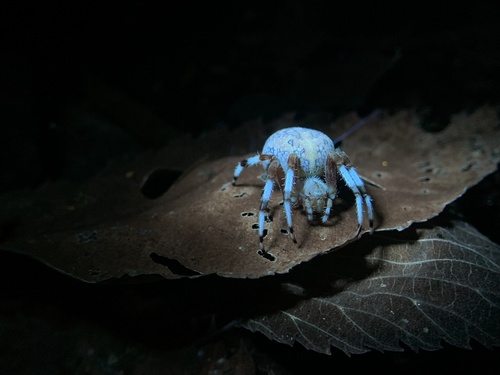
📷Photos of the marbled orbweaver
More spiders
This guide was written with AI assistance and fact-checked, last updated 2026-10-10. Identification from photos is never certain: don't handle insects you can't identify, and get medical advice for bites, stings or allergic reactions. More about the marbled orbweaver: iNaturalist, Wikipedia.