
Dimorphic jumping spider
Maevia inclemens · Jumping spiders
A small North American jumping spider famous for its two distinct male forms and their different courtship dances.
!Is the dimorphic jumping spider dangerous?
No. Maevia inclemens is not dangerous to people. Like most jumping spiders it can bite if provoked or handled roughly; bites are rare and cause at most minor, localized pain, redness or itching. No medically significant venom is known for this species. Clean the area, apply ice if swollen, and seek medical care only if symptoms worsen or an allergic reaction occurs.
Pets
Harmless to cats and dogs. Individual spiders might be eaten by pets; there is no known risk of harmful toxins to pets from this species.
📖Overview
Maevia inclemens is a small, active jumping spider (family Salticidae) native to eastern North America. It is best known because adult males occur in two distinct forms (hence "dimorphic"), each with its own courtship display. These spiders hunt visually by leaping on small arthropod prey rather than using webs to capture food. They are found on low vegetation, leaf litter and woodland edges, and sometimes on fences and buildings, during the warmer months.
🔍How to identify a dimorphic jumping spider
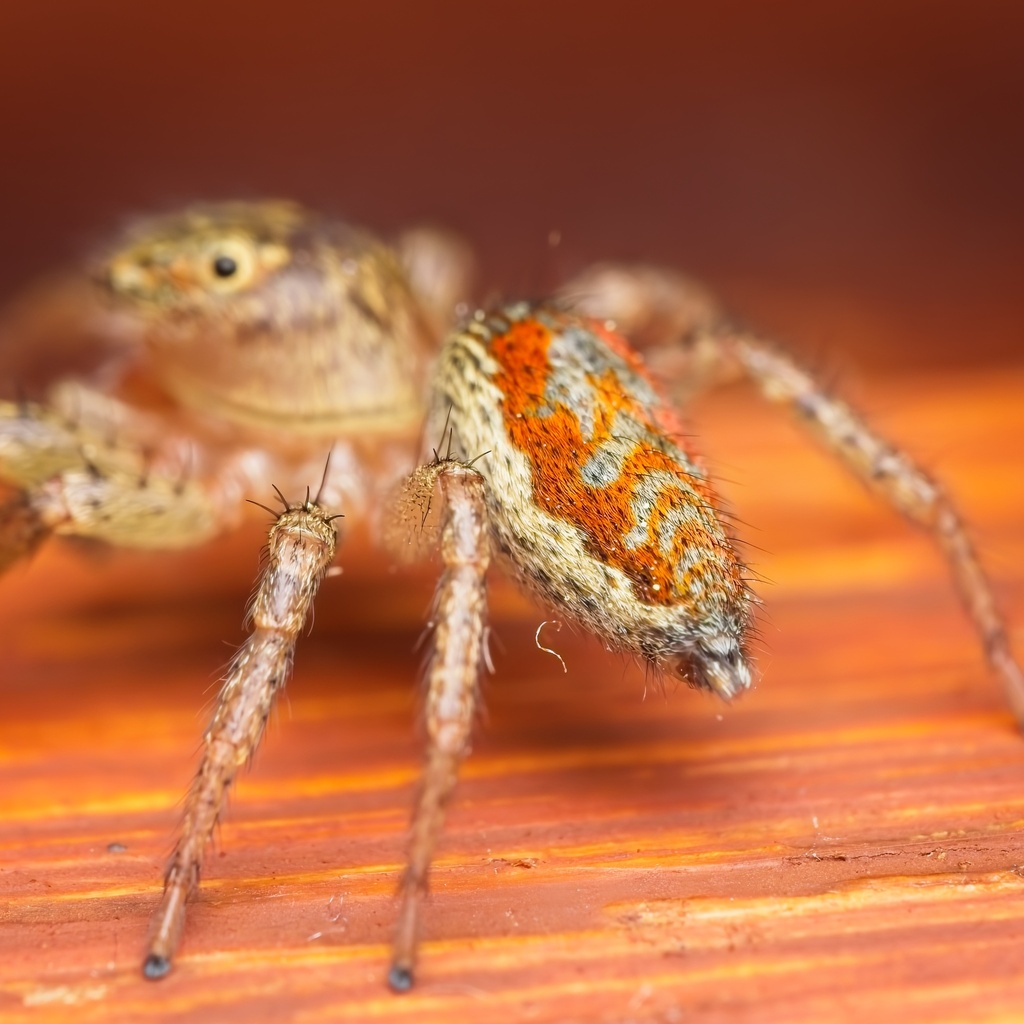
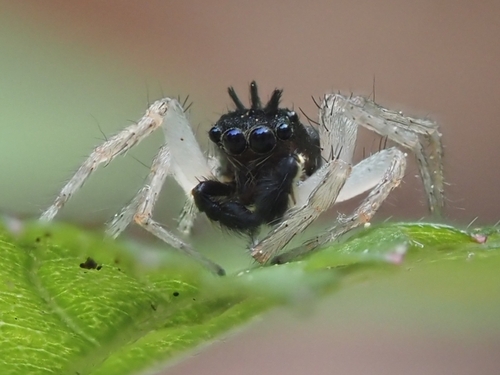
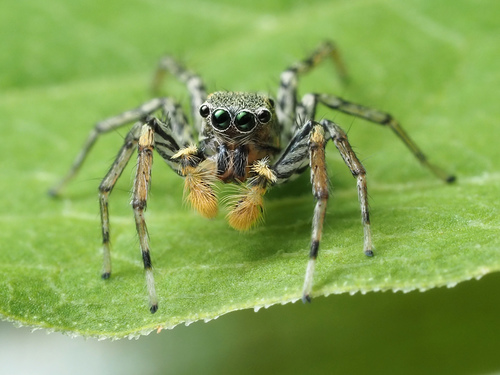
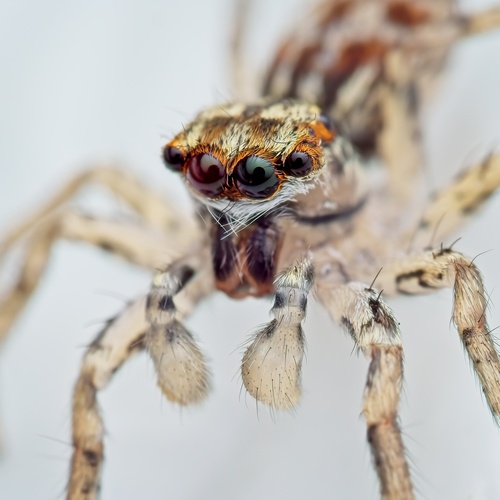
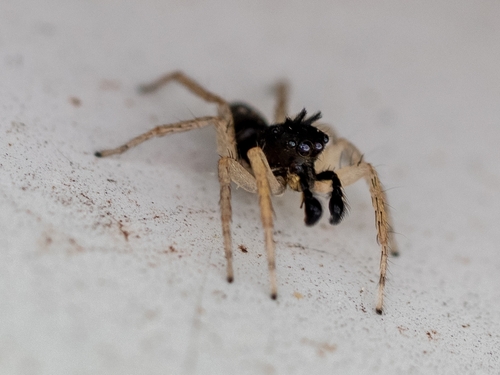
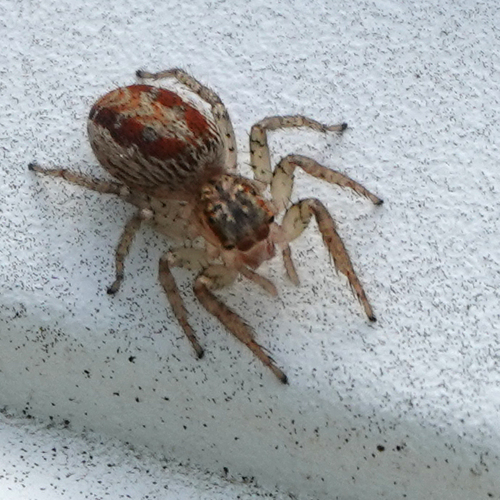
Adults are compact jumping spiders with large forward-facing eyes typical of salticids. Males come in two distinct forms: a "tufted" form that is black with pale legs and three tufts of black hairs on top of the head, and a "grey" form with grey and black stripes and orange palps. Females are tan to orange-brown with darker chevrons or spots on the abdomen. Body length for adults is under 10 mm.
- Very small stocky jumping spider with large forward-facing eyes.
- Males: either black with pale legs and three black tufts on the head ("tufted" form), or striped grey and black with orange palps ("grey" form).
- Females: tan to orange-brown with darker markings on the abdomen.
- Active in daylight on walls, fences, vegetation and low branches; moves in short, deliberate hops.
Lookalikes
Bold jumping spider Phidippus audax
Phidippus audax is larger (10-20 mm), often has iridescent chelicerae and different habitus; Maevia inclemens is smaller and more delicate.
Habronattus species Habronattus spp.
Habronattus often show different leg ornamentation and male courtship gait; close examination of size and facial patterns separates them from Maevia.
↻Life cycle
Eggs
Laid in silk sacs concealed in leaf litter, bark crevices or sheltered sites. Eggs overwinter in colder climates or hatch in spring depending on timing.
Spiderlings (juvenile)
Young spiders emerge from the egg sac and resemble miniature adults. They molt several times while growing and disperse by walking or short leaps; ballooning (silk-assisted air dispersal) is reported in some jumping spiders but is not well documented for this species.
Adult
Sexual maturity is reached after several molts. Males perform visual courtship displays; females accept or reject males and lay egg sacs after mating.
🍃Diet and predators
Young eat
Small soft-bodied arthropods and tiny insects caught by stalking and leaping.
Adults eat
Various small insects and other spiders, captured by active hunting rather than prey webs.
Predators of the young
Predatory insects, larger spiders, ants, small birds and shrews.
Predators of adults
Birds, larger spiders, wasps and other visual predators.
🌱Effect on plants and gardens
Does not feed on plants; adults hunt small insects and other arthropods and can help reduce pest insect numbers in gardens.
📍Where and when to find it
Look on sunlit vertical surfaces (fences, walls, trunks), low shrubs and leaf litter. Adults are easiest to spot on warm, sunny days when they actively hunt.
Best time
Spring and summer months during daylight hours; mornings and warm afternoons when insects are active.
Observation tips
Approach slowly — jumping spiders are curious and may pause or turn to face you. Use a macro lens or get close with a camera; fast shutter speeds freeze their quick jumps. Patience during male courtship displays can be rewarding.
✨Fun facts
- Males exist in two distinct and stable forms — a classic example used in studies of sexual selection and polymorphism.
- Each male form performs its own courtship dance, with leg waves and body displays, to attract females.
- Despite their bold appearance and rapid motions, these spiders are harmless to humans and are beneficial predators of small garden pests.
?Frequently asked questions
Are dimorphic jumping spiders dangerous?
No. Maevia inclemens is not dangerous to people. Bites are rare and usually cause only mild, short-lived local effects.
Do Maevia inclemens bite?
They can bite if handled or trapped against skin, but bites are uncommon and produce minor pain or itching at most.
Why do males look so different from each other?
This species displays male polymorphism: two stable male forms (a black "tufted" form and a striped "grey" form) that court females differently. The trait has been the subject of research into mate choice and selection.
Why is this spider in my house?
They wander indoors while hunting for tiny insects or seeking sheltered resting sites. Homes near vegetation or gardens are more likely to see them.
How do I get rid of them?
They are beneficial predators; simple nonlethal methods work: close entry points, reduce indoor insects that attract them, and gently capture and release outside using a cup and paper if removal is desired.
Where do they live?
They are found in eastern North America in gardens, fences, tree trunks, shrubs and other sunlit, low-vegetation habitats from spring through autumn.
📷Photos of the dimorphic jumping spider
More spiders
This guide was written with AI assistance and fact-checked, last updated 2026-10-10. Identification from photos is never certain: don't handle insects you can't identify, and get medical advice for bites, stings or allergic reactions. More about the dimorphic jumping spider: iNaturalist, Wikipedia.