
Missing sector orb weaver
Zygiella x-notata · Orb-weaver spiders
A small orb-weaver that builds the distinctive 'missing sector' web with a signal thread to its retreat, common on buildings and garden structures.
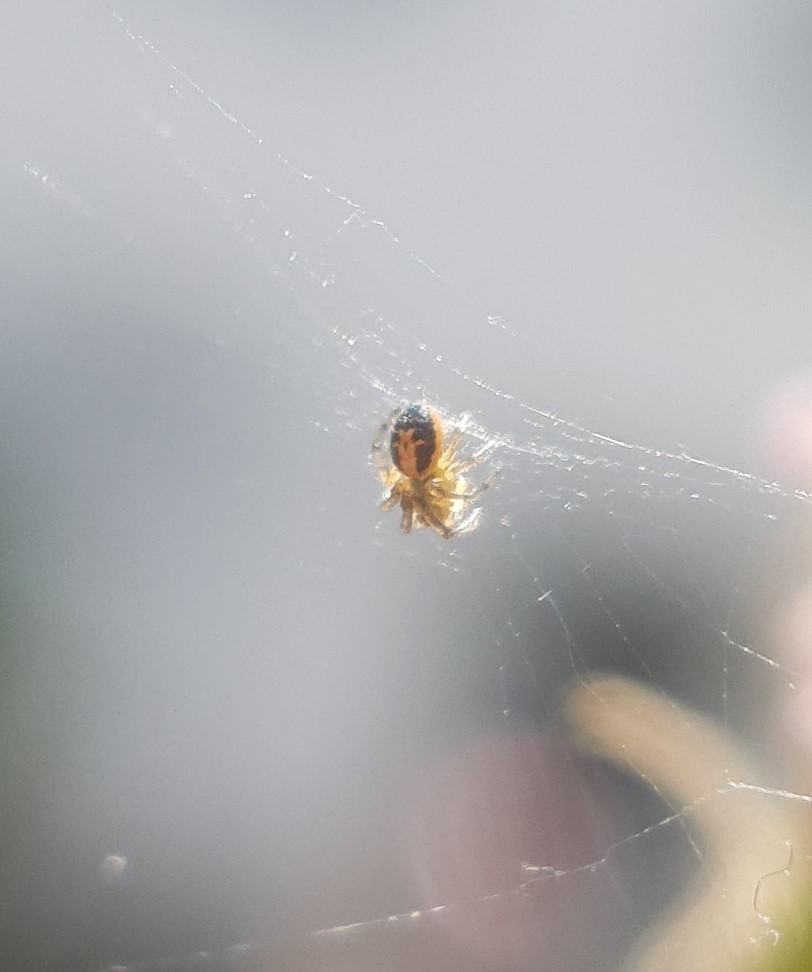
!Is the missing sector orb weaver dangerous?
No. Zygiella x-notata is not considered dangerous. It is reluctant to bite, and its small fangs rarely penetrate skin; at most a bite causes brief, mild local pain or redness. No medically significant venom effects are known. If bitten, wash the area with soap and water and apply a cold pack if needed.
Pets
Generally harmless to cats and dogs. A large pet could crush a spider and get a minor skin irritation, but the spider's bite is not known to cause systemic problems in pets.
📖Overview
Zygiella x-notata is a small, adaptable orb-weaver spider native to Europe (including the British Isles) that has spread to North America and other temperate regions. It is best known for the round web that has a missing sector and for running along a silk signal thread to detect prey from a concealed retreat. These spiders are common around houses, gardens, porches and other man-made structures where they can anchor webs between walls, railings and vegetation.
They are generally non-aggressive and pose little danger to people. Females are larger and remain near their webs; males wander more widely when searching for mates. Females commonly rebuild or repair their webs daily and produce egg sacs in autumn that overwinter, hatching in spring.
🔍How to identify a missing sector orb weaver
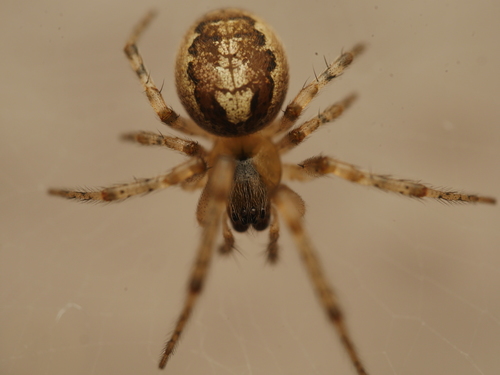
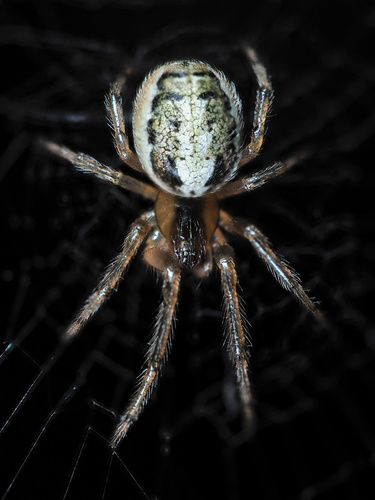
Adults have a compact, rounded abdomen and relatively short legs compared with some other orb-weavers. Female body length is typically larger than males, and the abdomen is silvery-grey with a darker leaf-shaped (folium) pattern edged in darker brown down the middle. Legs are similar in tone and may show faint banding. Males are slimmer and more uniformly colored.
A useful field clue is the spider's web: a nearly circular orb web that lacks a sector of radii; a silk 'signal' line runs from the web center to a nearby retreat where the spider hides and waits for vibrations.
- Look for an orb web with a missing sector (a wedge-shaped gap) and a single silk 'signal' line leading to a nearby retreat.
- Female body length about 6-10 mm, silvery-grey abdomen with a darker leaf-shaped pattern.
- Spider usually found at the edge of the web in a folded leaf, crack or corner rather than sitting openly in the web center.
- Males smaller (4-6 mm) and slimmer; identification often relies on the web structure rather than male markings.
Lookalikes
Zygiella atrica Zygiella atrica
Closely related and similar in appearance; both build missing-sector webs. Distinctions often require microscopic examination of genitalia or regional range data.
Barn spider Araneus cavaticus
Araneus species usually build complete round webs without a missing sector, and females are larger (up to about 20 mm) and more robust; they sit in the web centre at night.
↻Life cycle
Egg
Females lay eggs in silk sacs in autumn, often tucked into a retreat or crevice; the eggs overwinter and spiderlings hatch in spring.
Juvenile (spiderling)
Young spiders disperse as small nymphs or spiderlings by walking or ballooning on silk, then grow through molts while rebuilding webs.
Adult
Sexually mature spiders, mostly in late summer and autumn; females typically stay at or near a web while males roam seeking mates. After mating females produce egg sacs.
🍃Diet and predators
Young eat
Small flying insects, aphids and other tiny arthropods captured in small webs.
Adults eat
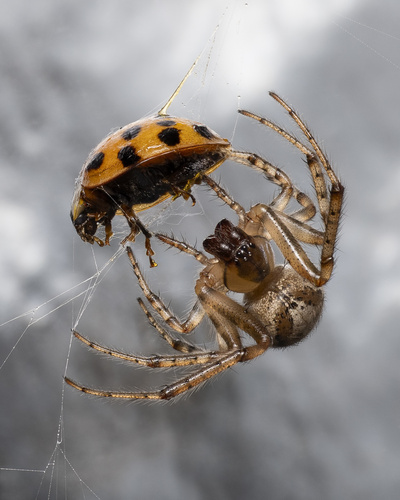
Flying insects such as flies, mosquitos, moths and small beetles caught in the orb web.
Predators of the young
Birds, parasitoid wasps, predatory insects, other spiders.
Predators of adults
Birds, wasps, larger spiders and some small mammals.
🌱Effect on plants and gardens
Feeds on flying insect pests (moths, flies, small beetles) and therefore helps control populations; does not damage plants.
📍Where and when to find it
Look for webs in corners of porches, between railings, window frames, eaves and shrubs; adults are often concealed in a folded leaf, crevice or corner connected to the web by a signal thread.
Best time
Spring to autumn in temperate regions; webs are most visible at dusk and dawn when dew highlights the silk or when insects are active.
Observation tips
Photograph the web structure as well as the spider; the missing sector and signal line are diagnostic. Approach quietly and use side lighting at low angle to show silk threads.
✨Fun facts
- The 'missing sector' in the web is deliberate: a silk signal line replaces that sector so the spider can detect prey while hiding in a retreat.
- Zygiella x-notata often reuses the same web frame each night, rebuilding the sticky spiral but keeping anchor lines.
- They are synanthropic—comfortable living close to humans—and are a common sight on porches and window frames.
?Frequently asked questions
Do missing sector orb weavers bite?
They can bite if handled or trapped against skin, but bites are uncommon and usually cause only mild local symptoms; no serious medical effects are known.
Why is there a missing sector in the web?
The spider leaves a wedge-shaped gap and instead runs a signal thread from the web centre to its hidden retreat; vibrations along that thread alert it to trapped prey.
Why is this spider in my house?
They are attracted to the sheltered anchor points and abundant flying insects around lights, windows and eaves; they often build webs on buildings and under eaves rather than deep indoors.
How can I get rid of them?
For a few unwanted spiders, remove webs with a broom or vacuum and seal gaps where they hide. Reduce outdoor lighting at night and move plants away from walls. Chemical controls are rarely necessary; if used, follow product instructions and safety precautions.
Are they beneficial?
Yes. They eat flying insect pests and help reduce nuisance insects around homes and gardens.
📷Photos of the missing sector orb weaver
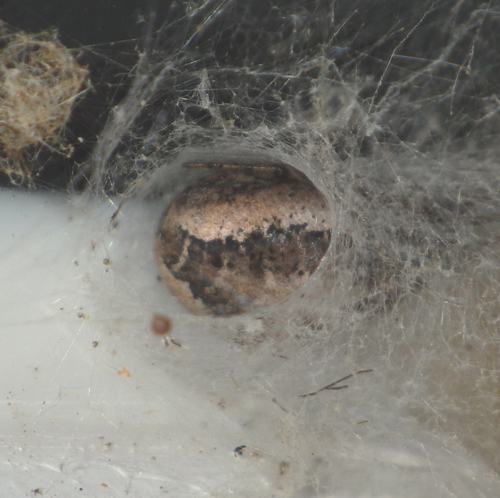
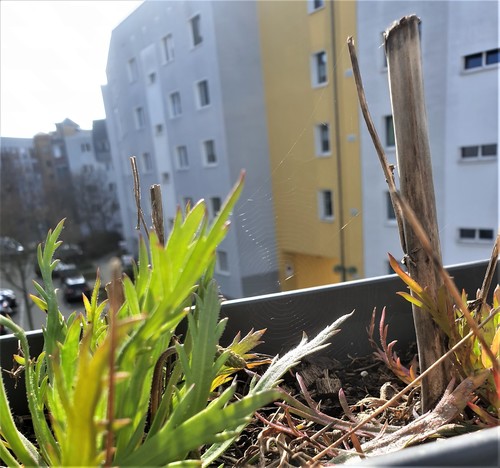
More spiders
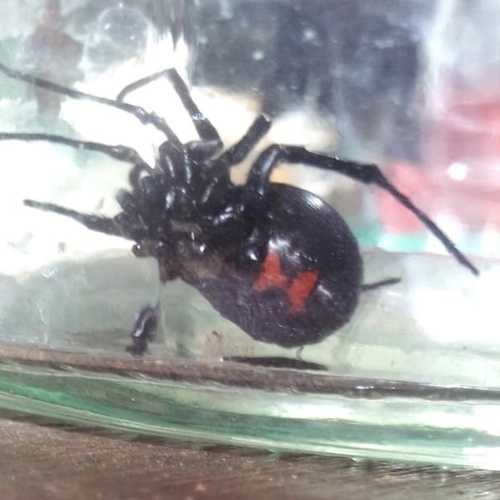
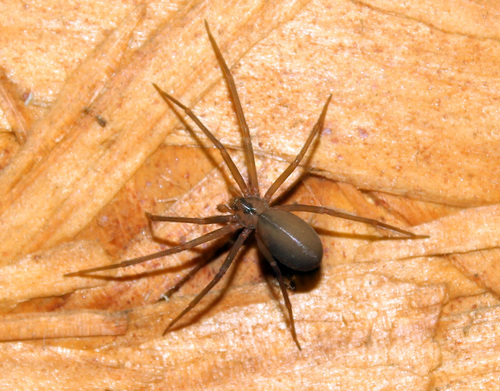
This guide was written with AI assistance and fact-checked, last updated 2026-10-10. Identification from photos is never certain: don't handle insects you can't identify, and get medical advice for bites, stings or allergic reactions. More about the missing sector orb weaver: iNaturalist, Wikipedia.