
Spotted orbweaver vs Missing sector orb weaver
These two are easy to mix up. Here's how to tell a spotted orbweaver from a missing sector orb weaver, and whether either one bites or stings.
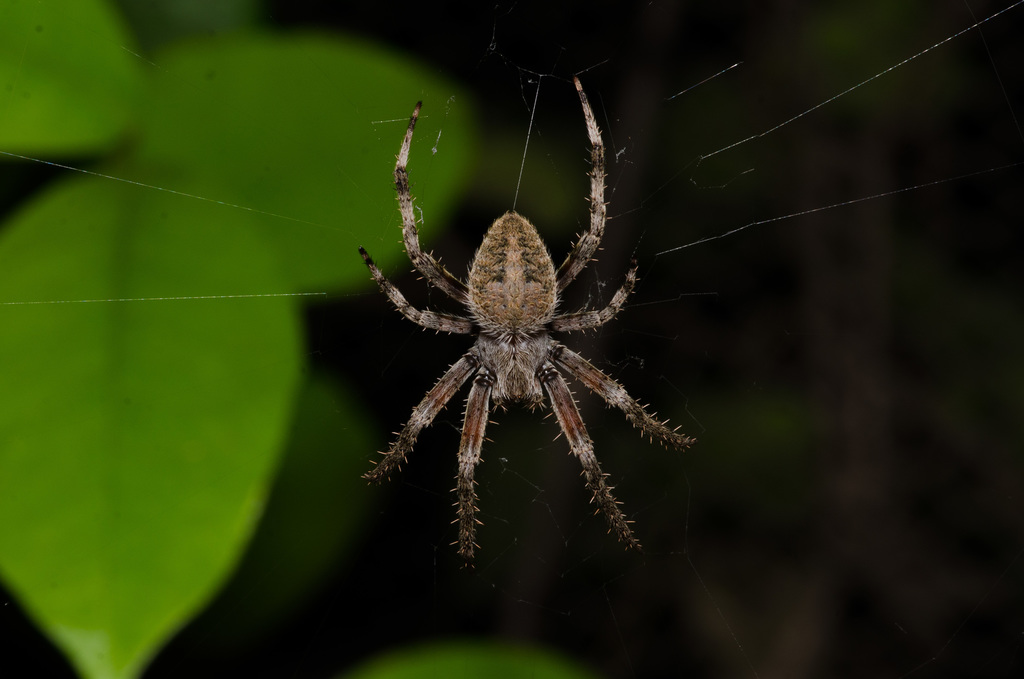
Spotted orbweaver
Neoscona crucifera
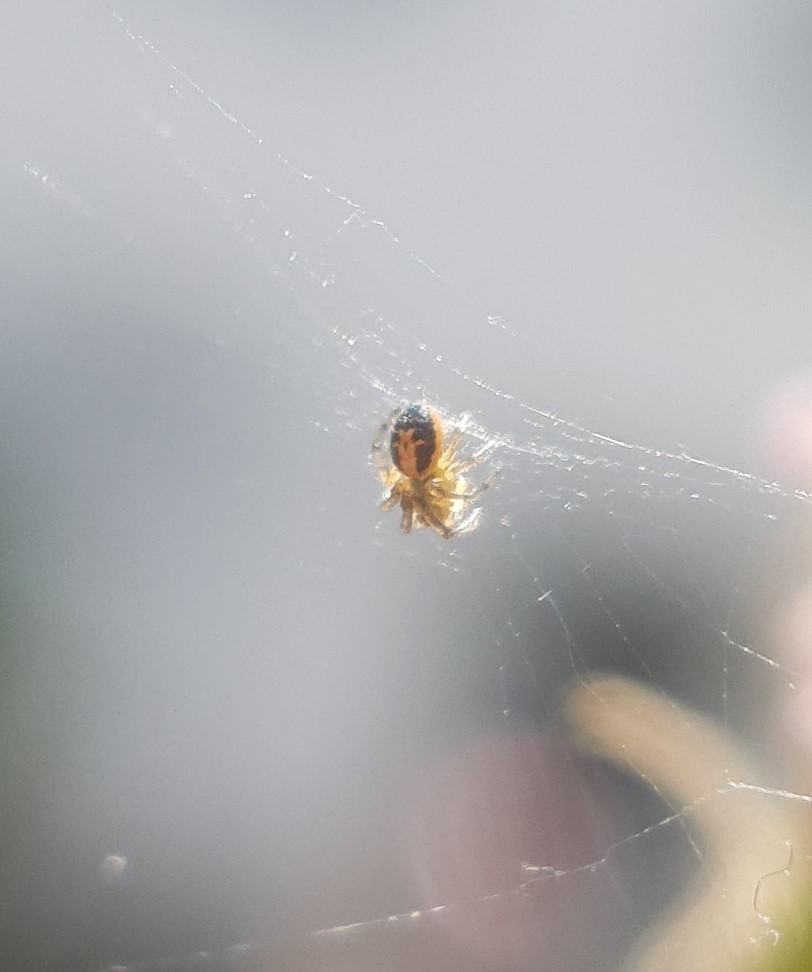
Missing sector orb weaver
Zygiella x-notata
≠The key differences
Araneus species usually build complete round webs without a missing sector, and females are larger (up to about 20 mm) and more robust; they sit in the web centre at night.
⚖︎Side by side
| Spotted orbweaver | Missing sector orb weaver | |
|---|---|---|
| To humans | Mild bite | Non-toxic |
| Size | Females 9-20 mm body length, males 6-13 mm body length | Females 6-10 mm body length, males 4-6 mm body length |
| Colours | Brown, Tan, Reddish-brown, Cream | Brown, Tan, Cream, Dark brown |
| Family | Araneidae | Araneidae |
| Habitat | Gardens, wood edges, fields, porches, barns and building eaves; often near lights that attract prey | Human structures (eaves, window frames, porches), gardens, hedgerows and shrubs where webs can be anchored to vertical surfaces. |
| Range | Widespread in eastern and central North America; reports extend into parts of southern Canada and the eastern United States and Midwest. | Native to Europe (including the British Isles); now established widely in North America and other temperate regions, especially around buildings. |
| Active | Late spring to autumn; adults most conspicuous in late summer and fall. Mostly nocturnal (build and repair webs at night). | Active mainly spring to autumn (varies by region); nocturnal to crepuscular web-building and prey capture, but visible during day in retreats. |
| Pest? | No | No |
🔍How to spot a spotted orbweaver
- Large, rounded abdomen with lighter spots or pale cruciform-looking markings on a brown or reddish-brown background
- Long, banded legs with noticeable hair and spines; front legs often held forward in a typical orb-weaver posture
- Builds large vertical orb webs, usually repaired or rebuilt at night; daytime hiding retreat near the web
- Females substantially larger and bulkier than males
🔍How to spot a missing sector orb weaver
- Look for an orb web with a missing sector (a wedge-shaped gap) and a single silk 'signal' line leading to a nearby retreat.
- Female body length about 6-10 mm, silvery-grey abdomen with a darker leaf-shaped pattern.
- Spider usually found at the edge of the web in a folded leaf, crack or corner rather than sitting openly in the web center.
- Males smaller (4-6 mm) and slimmer; identification often relies on the web structure rather than male markings.
?Frequently asked questions
What is the difference between a spotted orbweaver and a missing sector orb weaver?
Araneus species usually build complete round webs without a missing sector, and females are larger (up to about 20 mm) and more robust; they sit in the web centre at night.
Is a spotted orbweaver or a missing sector orb weaver more dangerous?
Spotted orbweaver: Mild bite. Missing sector orb weaver: Non-toxic. Spotted orbweavers are not considered medically dangerous. Zygiella x-notata is not considered dangerous.
Identification from photos is never certain: don't handle insects you can't identify, and get medical advice for bites, stings or allergic reactions.