
Spotted orbweaver
Neoscona crucifera · Orb-weaver spiders
A common, stout-bodied orb-weaver in North America that builds large vertical webs at night and is not dangerous to people.
!Is the spotted orbweaver dangerous?
Only mildly. Spotted orbweavers are not considered medically dangerous. Bites are rare and usually occur only if a spider is trapped against skin or handled roughly. A bite can cause localized pain, redness and swelling lasting hours to a few days. Clean the area with soap and water, apply a cold pack to reduce swelling, and take over-the-counter pain relief if needed. Seek medical care if symptoms worsen, signs of infection appear, or if you have an unusual allergic reaction.
Pets
Generally harmless to pets. A bite to a small pet could cause minor local pain or swelling but severe reactions are uncommon. If a pet shows unusual symptoms after a spider encounter, consult a veterinarian.
📖Overview
Neoscona crucifera is a widespread orb-weaver spider found across much of eastern and central North America. Adults build large wheel-shaped webs, usually at night, to catch flying insects; during the day they often hide near the web in a retreat of silk and debris. They are generally non-aggressive toward people and only bite when provoked (for example, trapped against skin). Bites are uncommon and usually cause only mild, short-lived pain and swelling.
These spiders are most noticeable in late summer and autumn when adult females are largest and webs are most often seen near lights, porches and among shrubs. They are beneficial predators in gardens and around homes because they reduce populations of nuisance insects such as moths and mosquitoes.
🔍How to identify a spotted orbweaver
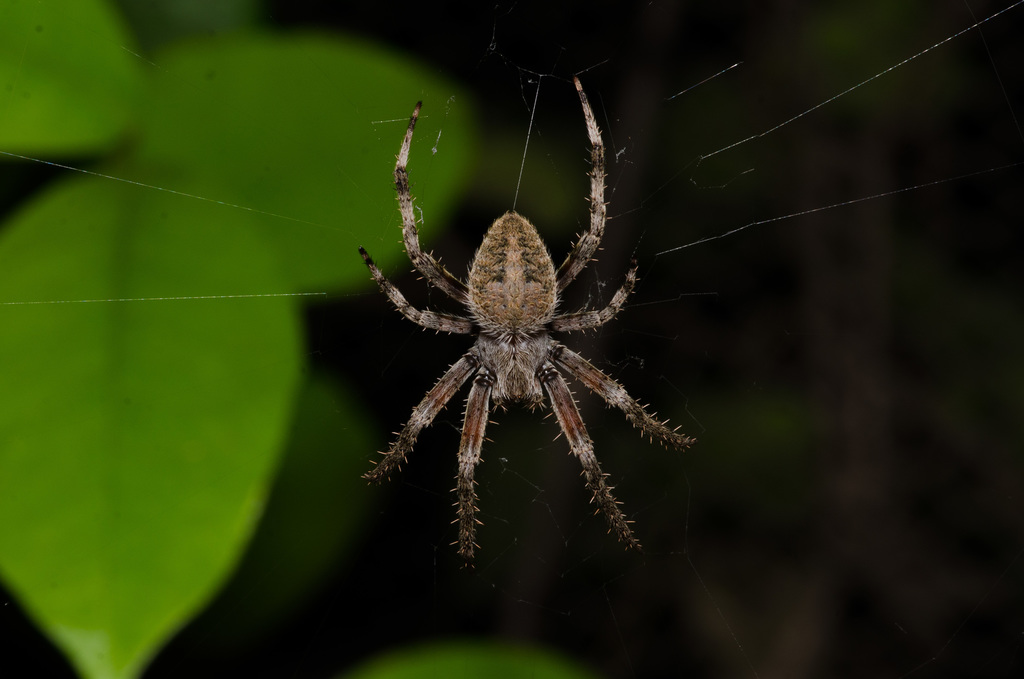
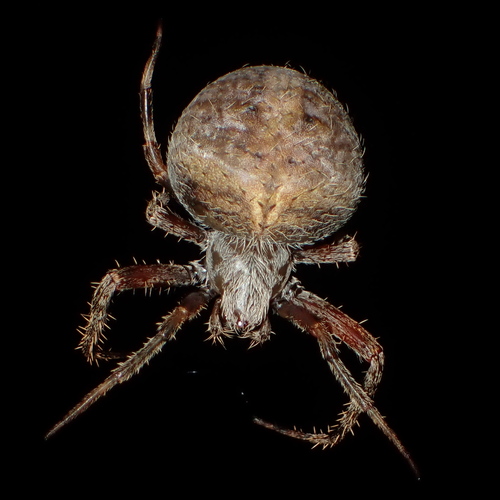
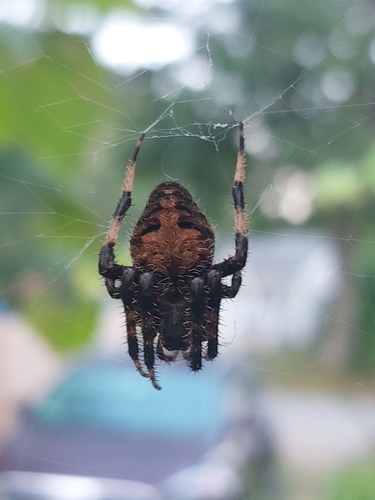
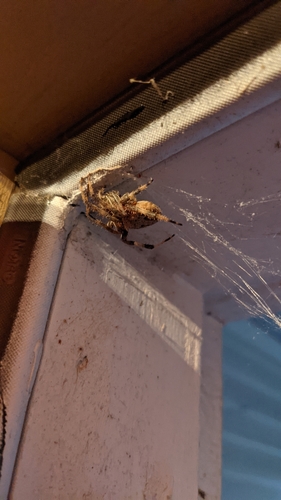
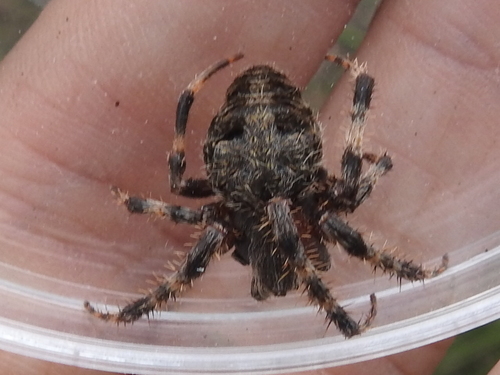
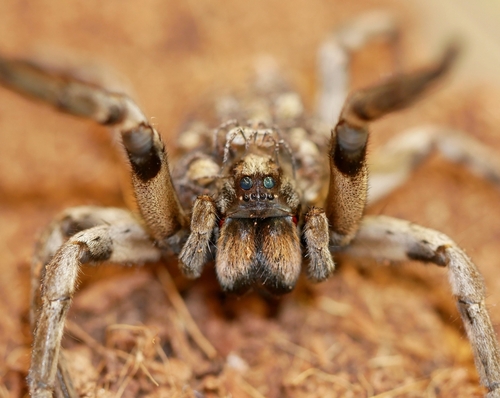
Adult spotted orbweavers have a robust, hairy abdomen with a pattern of lighter spots or pale markings on a background of brown, reddish-brown or tan. The cephalothorax (head region) is similarly colored and often has a light central stripe. Legs are long, banded, and covered with fine hairs and spines; front legs are held forward when resting. Females are noticeably larger than males and may display a rounder abdomen. Juveniles look like smaller, paler versions of the adults and develop adult markings after successive molts.
- Large, rounded abdomen with lighter spots or pale cruciform-looking markings on a brown or reddish-brown background
- Long, banded legs with noticeable hair and spines; front legs often held forward in a typical orb-weaver posture
- Builds large vertical orb webs, usually repaired or rebuilt at night; daytime hiding retreat near the web
- Females substantially larger and bulkier than males
Lookalikes
Arabesque orbweaver Neoscona arabesca
Smaller and with a more intricate, wavy dorsal pattern; N. arabesca often has a less pronounced spotted look and different abdominal markings.
Red-femured spotted orbweaver Neoscona domiciliorum
Very similar in shape and habits but has reddish femora and a distinct dark, cross-like pattern on the abdomen; close inspection or expert help may be needed.
↻Life cycle
Egg sac
Females lay eggs in a silk sac (often wrapped and glued) and attach it to a sheltered spot; sacs can contain hundreds of eggs and overwinter in colder regions.
Spiderling (juvenile)
Spiderlings hatch and disperse (sometimes by 'ballooning' on silk threads), then undergo successive molts as they grow through juvenile stages.
Adult spider
After the final molt spiders are reproductively mature; adults build and repair large orb webs and mate before females produce egg sacs and die after the season in temperate areas.
🍃Diet and predators
Young eat
Small flying insects and other tiny arthropods
Adults eat
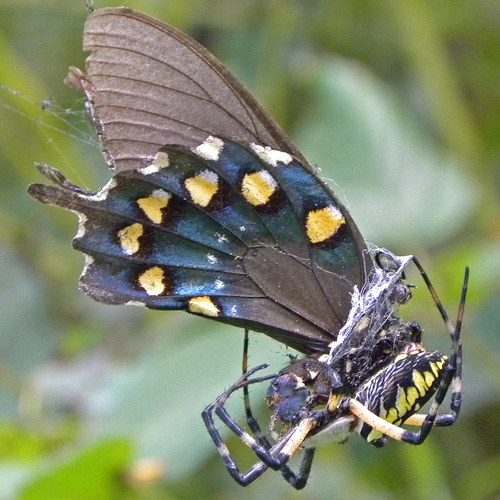
Flying insects such as moths, flies, mosquitoes and other nocturnal insects captured in their orb webs
Predators of the young
Other spiders, predatory insects and small birds
Predators of adults
Birds, wasps (including spider wasps), larger spiders and small mammals
🌱Effect on plants and gardens
Not harmful to plants; helps control flying insect pests that may otherwise damage garden plants
📍Where and when to find it
Look for large orb webs attached between shrubs, porch posts, eaves and tall grasses. During the day the spider may hide in a silk retreat at the web edge; inspect at night with a torch to see the spider on the web.
Best time
Late summer to early autumn, at night or just after dusk when webs are intact and spiders are active.
Observation tips
Approach slowly and use a light at night to photograph the web and spider. Avoid shining light directly into the spider's face to prevent startling it. Use a telephoto or macro lens to fill the frame without touching the spider.
✨Fun facts
- Spotted orbweavers often rebuild or repair their webs at night and may consume and recycle the silk from an old web before making a new one.
- Female orb-weavers can produce large egg sacs that protect hundreds of eggs; in cold climates egg sacs help the next generation survive winter.
- These spiders are attracted to lights because lights draw flying insects, making porches and eaves common web sites.
?Frequently asked questions
Are spotted orbweavers dangerous to humans?
Only mildly. They are not medically dangerous. Bites are rare and usually cause only mild, temporary pain and swelling.
Do spotted orbweavers bite?
They can bite if handled or trapped against skin, but bites are uncommon and typically mild.
Why is there a big web on my porch at night?
Spotted orbweavers build large orb webs at night to catch flying insects that are attracted to porch lights and outdoor lighting.
How do I get rid of spotted orbweavers?
Non-lethal options: remove webs with a broom or vacuum, reduce outdoor lighting or switch to yellow 'bug' lights, and seal gaps in siding or eaves to reduce sheltered web sites. For persistent problems, relocate spiders outdoors rather than killing them; chemical sprays are unnecessary and rarely effective long-term.
Where do spotted orbweavers live?
They live in gardens, fields, wood edges and on buildings (eaves, porches, barns) across much of eastern and central North America, typically where they can anchor large orb webs.
📷Photos of the spotted orbweaver
More spiders
This guide was written with AI assistance and fact-checked, last updated 2026-10-10. Identification from photos is never certain: don't handle insects you can't identify, and get medical advice for bites, stings or allergic reactions. More about the spotted orbweaver: iNaturalist, Wikipedia.