
Mouse spider
Scotophaeus blackwalli · Ground spiders
A small, nocturnal ground-dwelling spider often found in houses and garden debris; not dangerous to humans and rarely bites.
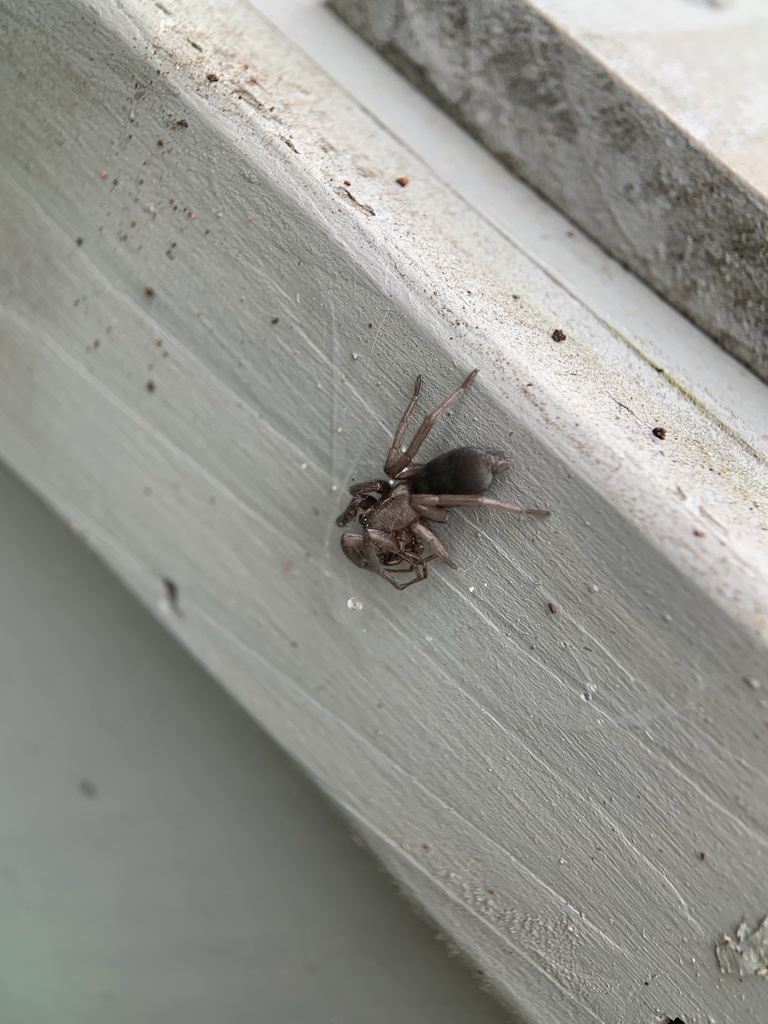
!Is the mouse spider dangerous?
Only mildly. Bites are rare. If bitten, symptoms are usually mild: short-lived pain, slight swelling and redness. Clean the bite with soap and water, apply a cold pack to reduce swelling, and monitor for increasing pain, spreading redness, or allergic reaction. Seek medical attention if symptoms worsen or if you experience breathing difficulties, dizziness, or extensive swelling.
Pets
Generally not dangerous to cats or dogs due to small venom yield and small fangs. A bite could cause short-lived local irritation in small pets; consult a veterinarian if you suspect a bite and your pet shows unusual behavior or prolonged symptoms.
📖Overview
Scotophaeus blackwalli is a small, ground-dwelling spider common across much of Europe and introduced in parts of North America. It is a nocturnal hunting species that does not build a web to catch prey but actively searches for insects and other arthropods around leaf litter, wall bases and inside buildings. Adults are relatively secretive, hiding in crevices, under stones or inside clothes and boxes during the day.
This species tolerates human environments well, which explains why it is often found indoors. Bites are uncommon; when they do occur they usually cause only mild, localized symptoms. S. blackwalli is an important predator of small insects and therefore can be considered beneficial in controlling household pests.
🔍How to identify a mouse spider
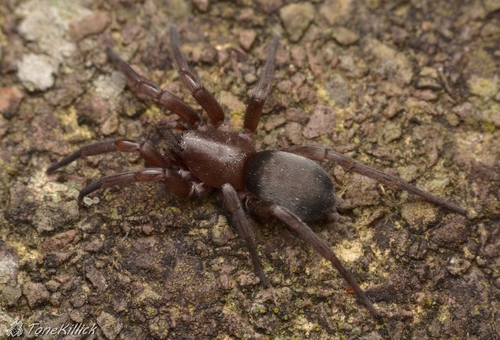
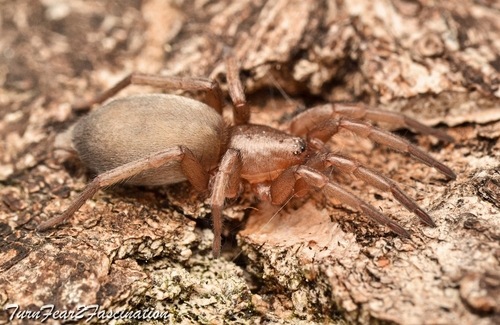
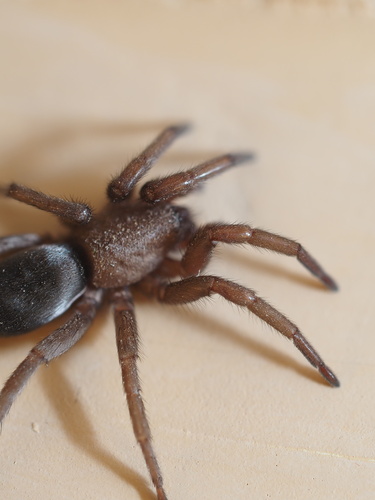
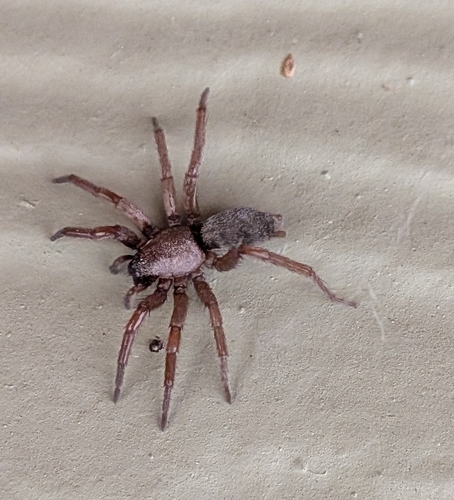
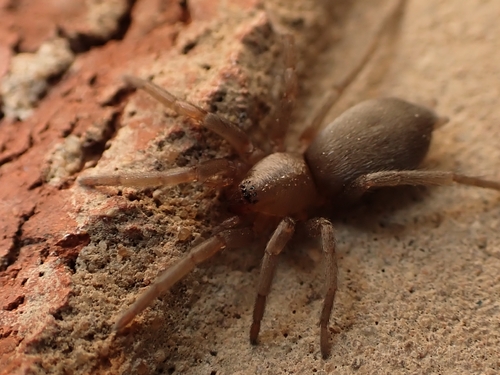
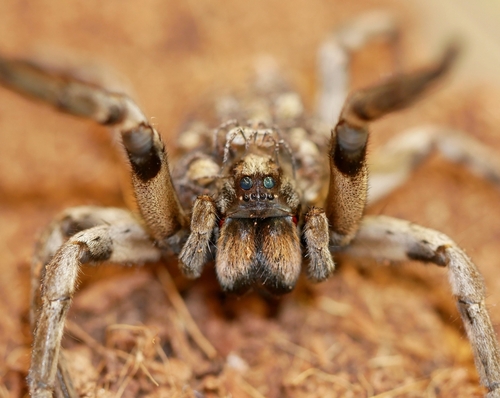
Adults are compact, fast-moving spiders with a flattened body and relatively short legs compared with web-building spiders. The body is mouse-grey to brownish and covered in fine, silky hairs that give a velvety look; the abdomen may show a faint darker heart mark. Legs match the body tone and may be slightly darker. Males are slimmer and smaller than females. Cylindrical spinnerets are visible at the rear of the abdomen, a typical feature of ground spiders.
- Small, compact ground spider with a matte brown to grey-brown body and short legs.
- Visible paired spinnerets at the rear of the abdomen (typical of ground spiders).
- Active at night and usually found under stones, bark or indoors near skirting boards and in boxes.
Lookalikes
Stone spiders Drassodes spp.
Drassodes species are usually larger and paler grey-brown, live mostly outdoors under stones, and have a more elongated body; Scotophaeus is darker and more often found indoors.
False wolf spider Zoropsis spinimana
Zoropsis is larger (10-19 mm) with longer legs and a bold pattern of dark and pale markings on the body and legs, whereas the mouse spider is plain mouse-grey.
↻Life cycle
Egg sac
Females produce a silk egg sac and guard it; egg sacs contain multiple eggs which hatch into spiderlings.
Spiderling (juvenile)
Spiderlings moult several times as they grow; juveniles resemble small adults and are active hunters.
Adult spider
Sexually mature spiders mate during the warmer months; adults continue hunting and reproducing until the end of their lifespan.
🍃Diet and predators
Young eat
Small insects and arthropods such as springtails and tiny flies.
Adults eat
Small insects and other arthropods captured by active hunting at night.
Predators of the young
Predatory insects, other spiders, and parasitoid wasps.
Predators of adults
Birds, larger spiders, centipedes and small mammals that forage in leaf litter.
🌱Effect on plants and gardens
Does not feed on plants; feeds on small arthropods and can help reduce pest insects indoors and around gardens.
📍Where and when to find it
Look at night with a torch on walls, skirting boards, under stones, logs, garden debris, in sheds and garages. Check boxes and clothing stored on floors.
Best time
Spring through autumn, at night.
Observation tips
Use a torch with an angled beam to spot active hunters at night; photograph them from above to show body shape and spinnerets. Be gentle when moving boxes to avoid surprises.
✨Fun facts
- Called 'mouse spider' because its dense, velvety body can appear mouse-like when curled up, not because it eats mice.
- Does not build prey-capture webs; it is an active nocturnal hunter that searches for prey on the ground.
?Frequently asked questions
Are mouse spiders dangerous?
Only mildly. Scotophaeus blackwalli is not considered dangerous; bites are rare and usually cause only mild, localized symptoms.
Do mouse spiders bite humans?
They will only bite if handled or trapped against the skin. Most encounters result in escape rather than biting.
Why is a mouse spider in my house?
They are attracted to sheltered, cluttered microhabitats with prey: basements, garages, boxes, and gaps around skirting where insects are present.
How do I get rid of them?
Reduce clutter, seal cracks and gaps, store clothing and boxes off the floor, vacuum regularly and remove insect prey sources. Sticky traps can catch individuals; chemical control is rarely necessary.
Will they infest my home?
No typical infestations — presence is usually sporadic and tied to available shelter and prey rather than colony-like infestation.
📷Photos of the mouse spider
More spiders
This guide was written with AI assistance and fact-checked, last updated 2026-10-10. Identification from photos is never certain: don't handle insects you can't identify, and get medical advice for bites, stings or allergic reactions. More about the mouse spider: iNaturalist, Wikipedia.