
Bowl and doily spider
Frontinella pyramitela · Sheet-weaving spiders
A small North American sheet-weaver known for its horizontal "bowl and doily" web made of two layers that trap tiny flying insects.
!Is the bowl and doily spider dangerous?
No. Bites are rare and, if they occur, produce only minor local irritation similar to a pinprick for most people. No medically significant effects are known. If someone has an unusual reaction (large swelling, spreading redness, fever, or severe pain), seek medical attention.
Pets
Not a threat to dogs or cats because the spiders are too small to deliver a harmful bite; pets may eat them with no ill effects.
📖Overview
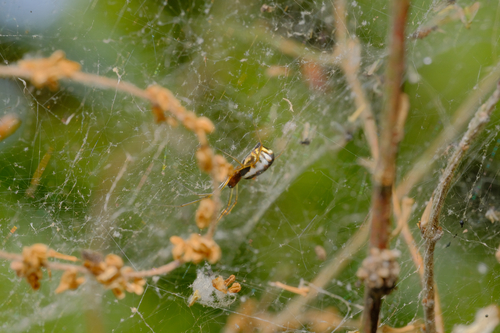
Frontinella pyramitela is a small linyphiid spider common across much of North America. It constructs a distinctive two-layer web: a shallow, inverted bowl (the "bowl") suspended above a flat, horizontal sheet (the "doily"). The spider hangs upside down beneath the bowl and bites prey that fall into it. They are common in low vegetation, shrubs, hedgerows and garden edges and are most noticeable when webs are abundant in spring and summer.
These spiders are tiny and shy. They are not aggressive toward people and their bite is not considered medically significant. They play a useful role catching small pest insects and are generally harmless around homes and gardens.
🔍How to identify a bowl and doily spider
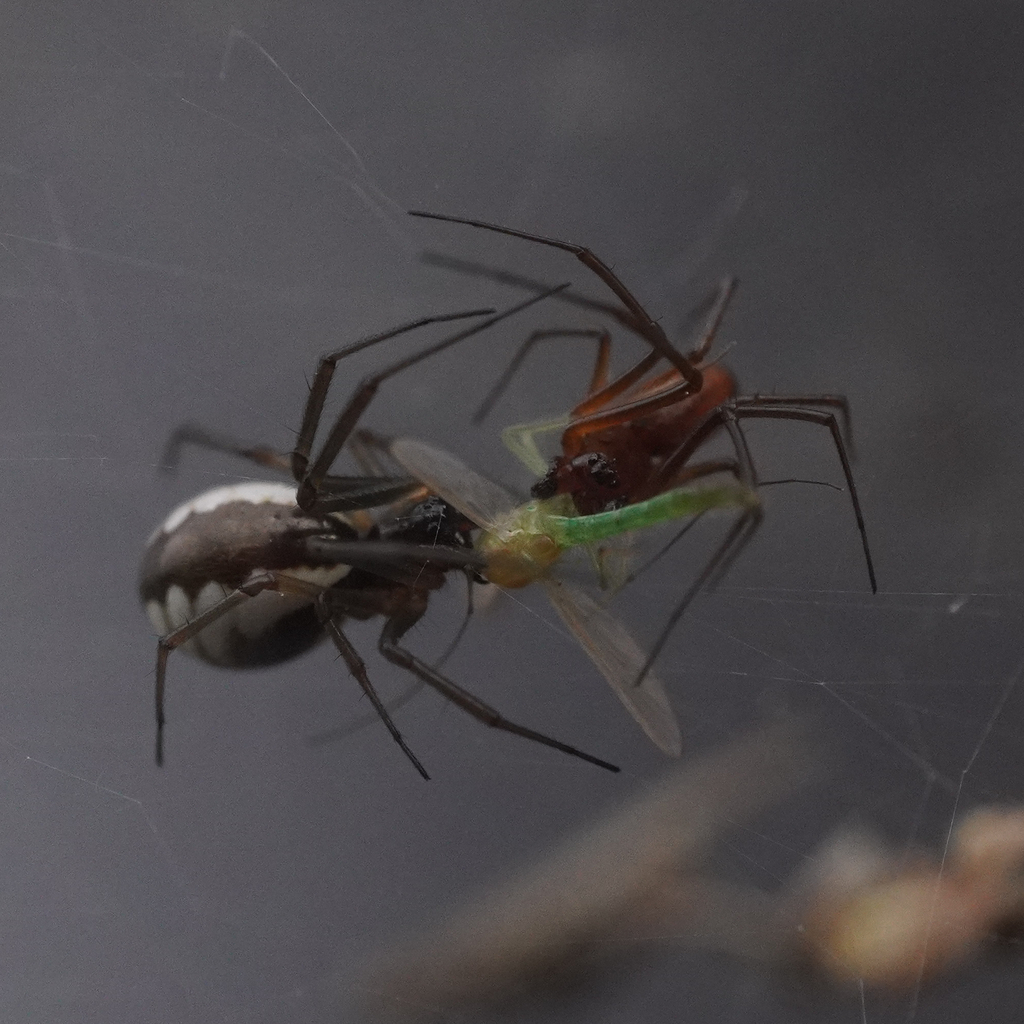
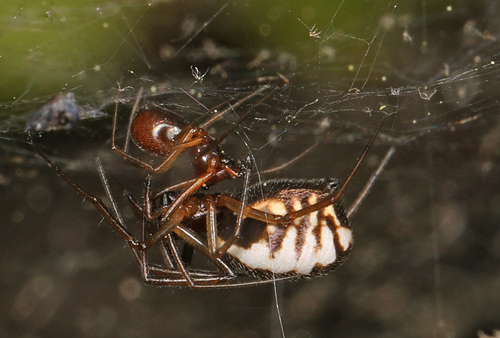
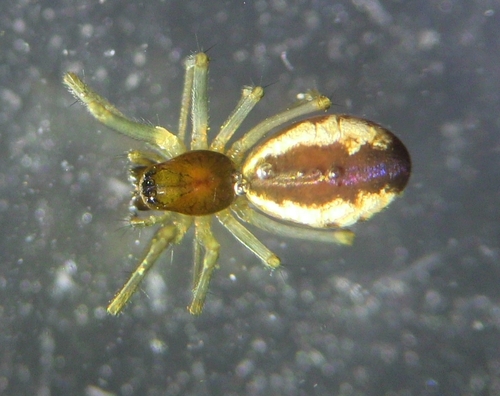
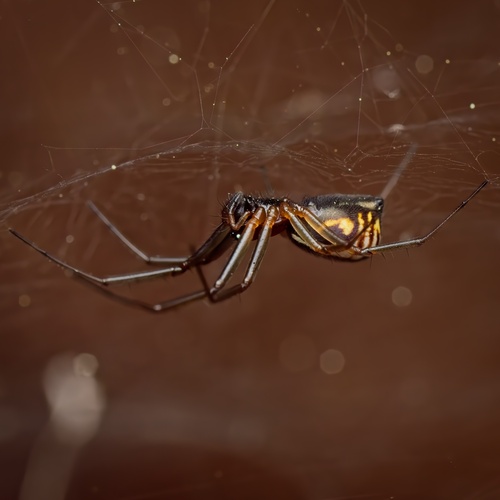
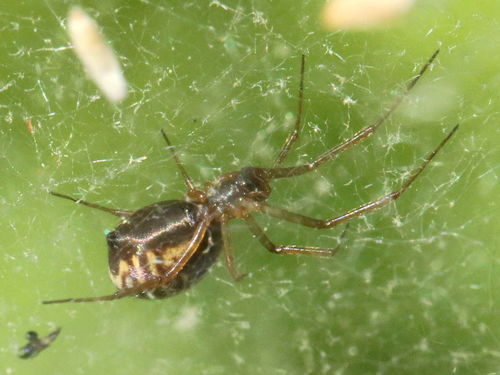
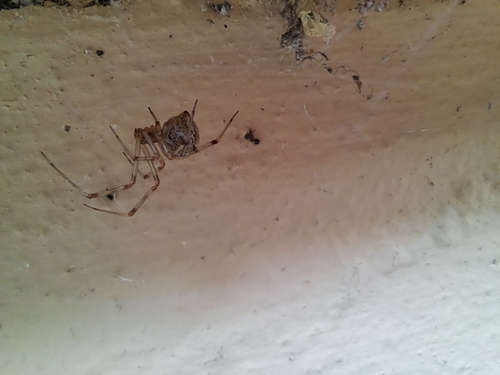
Adults are small-bodied (a few millimetres long) with a rounded abdomen. The carapace is brown, and the abdomen is dark brown to blackish with white or yellowish markings along the sides; males are similar but slimmer and darker. Legs are relatively long and slender compared with the body and are often pale brown. Their overall look is plain compared with larger, more colourful spiders; the distinctive web is a more reliable field mark than fine colour details.
- Look for the distinctive two-layer web: a shallow inverted bowl suspended above a horizontal sheet (the "doily").
- Very small body size, about 3-5 mm long; brown carapace and dark abdomen with pale markings along the sides.
- Spider usually hangs upside down beneath the bowl, between the bowl and the doily, and bites prey through the silk.
- Webs are built low in vegetation, often in clusters where many shrubs or grasses meet.
Lookalikes
Money spider (various Linyphiidae) Various species
Many linyphiids are similarly small and build sheet-like webs, but Frontinella pyramitela is distinctive for the paired bowl-and-doily structure rather than a simple sheet alone.
Filmy dome spider Neriene radiata
The filmy dome spider builds a single dome-shaped sheet with the spider hanging beneath it, without the separate flat 'doily' sheet below; its abdomen is pale with dark wavy markings.
↻Life cycle
Egg
Females lay eggs inside small silken sacs, often hidden in vegetation; eggs overwinter in some regions or hatch later the same season depending on climate.
Spiderling (juvenile)
Young spiders resemble miniature adults and go through several moults while staying on or near the maternal web before dispersing into nearby vegetation.
Adult
Adults build and maintain the characteristic bowl-and-doily web, mate, and the female produces egg sacs; adults are most common in spring and summer.
🍃Diet and predators
Young eat
Very small flying insects and springtails caught in the web.
Adults eat
A variety of tiny flies, gnats, aphids and other small arthropods that fall onto or are intercepted by the web.
Predators of the young
Small insects, larger spiders, ants and predatory mites.
Predators of adults
Birds, wasps, larger spiders and predatory insects.
🌱Effect on plants and gardens
Feeds on small flying or jumping insects that visit vegetation; helps reduce populations of tiny pests in gardens and natural areas.
📍Where and when to find it
Webs low in vegetation—shrubs, hedge lines, grassy margins, garden borders; look underside of the sheet for the spider.
Best time
Spring through early autumn; daytime is good because webs are usually visible in morning light.
Observation tips
Approach slowly and photograph the web from the side to show the bowl and doily structure; a macro or close-up will capture the tiny spider under the bowl.
✨Fun facts
- The common name comes from the web shape: the upper "bowl" resembles a shallow dish and the lower sheet like a doily.
- They often build many webs in the same patch of vegetation; dense patches of overlapping bowl-and-doily webs are easy to spot in dewy morning light.
- Insects that hit the tangle of threads above the web fall into the bowl, where the spider hanging beneath bites upward through the silk and pulls the prey through.
?Frequently asked questions
Do bowl and doily spiders bite people?
Bites are uncommon. These spiders are tiny and not aggressive; if bitten the effect is typically minor local irritation and not medically significant for most people.
Why is a bowl and doily spider in my house?
They prefer outdoor vegetation but may be found on porches, in garages or near windows where low shrubs or tall grasses are close to the building. They do not infest homes indoors like house spiders.
Are bowl and doily spiders beneficial or pests?
Beneficial — they catch small pest insects and help control populations in gardens and natural areas.
How can I get rid of bowl and doily spiders?
If unwanted, remove webs by brushing or sweeping them away, trim nearby vegetation, and reduce dense ground cover where webs attach. Pesticides are unnecessary for this harmless species and usually not recommended.
Where and when will I see these spiders?
Look in spring and summer in low shrubs, tall grasses and hedgerows, a few centimetres to about 30 cm above ground, especially where vegetation is dense.
📷Photos of the bowl and doily spider
More spiders
This guide was written with AI assistance and fact-checked, last updated 2026-10-10. Identification from photos is never certain: don't handle insects you can't identify, and get medical advice for bites, stings or allergic reactions. More about the bowl and doily spider: iNaturalist, Wikipedia.