
Goliath birdeater
Theraphosa blondi · Tarantulas
One of the world's largest spiders by mass and legspan; a ground-dwelling rainforest tarantula that uses size, fangs and irritating hairs to defend itself.
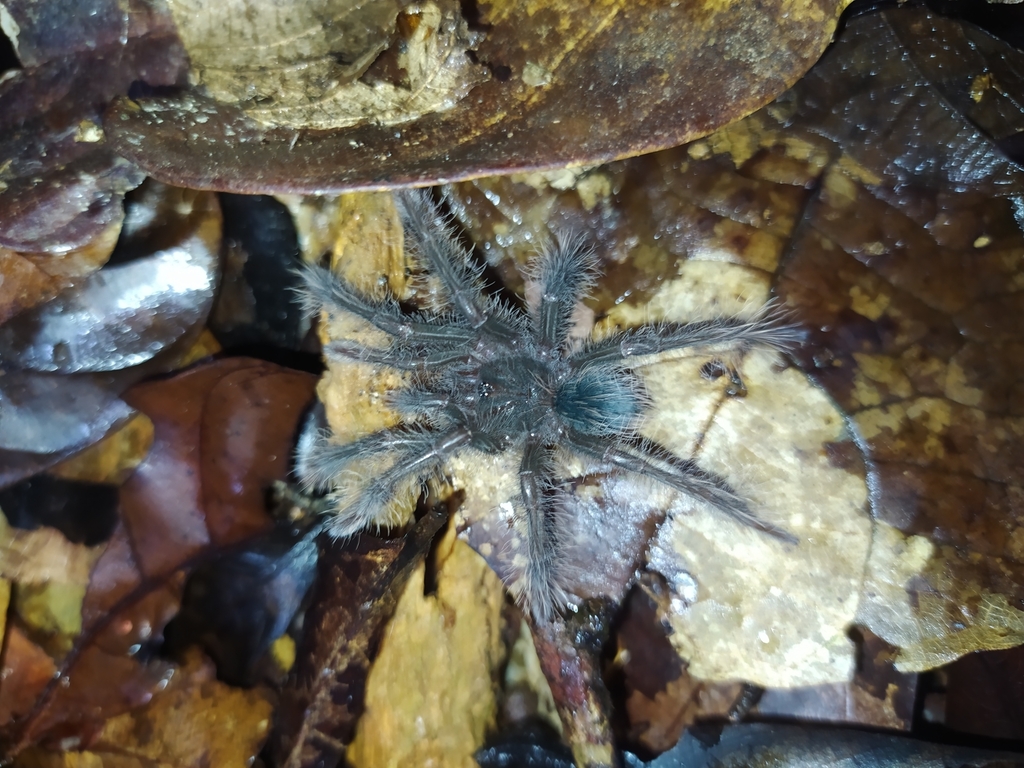
!Is the Goliath birdeater dangerous?
Only mildly. Bites can be painful due to large fangs but their venom is not known to be medically significant for healthy adults; effects are typically localized pain, swelling and possible infection. The primary hazard is urticating hairs (barbed abdominal hairs) kicked up as a defensive measure: they cause intense itching, skin irritation and can inflame eyes or respiratory mucosa. If hairs enter the eyes, seek medical care to remove them and treat inflammation. For any bite that shows progressive swelling, numbness, fever or signs of infection, seek medical attention.
Pets
Pets can suffer from skin and eye irritation from urticating hairs; birds are especially vulnerable and may be severely harmed by contact or ingestion. Large dogs or cats could receive painful bites; seek veterinary care for persistent symptoms or eye involvement.
📖Overview
Theraphosa blondi is a very large, heavy-bodied tarantula native to the wet lowland rainforests of northern South America. It is mainly terrestrial and often lives in burrows, under roots or among fallen logs. Despite the common name "birdeater," wild diet is dominated by invertebrates and small vertebrates rather than birds. It is slow-moving but capable of defensive postures, biting with large fangs, and releasing barbed urticating hairs that irritate skin and mucous membranes.
Goliath birdeaters are solitary. Females live many years (often over a decade) and lay egg sacs containing dozens to hundreds of eggs; offspring disperse as spiderlings. They are popular in the exotic pet trade, which has conservation and animal welfare implications, but their large size and specialised care needs make them unsuitable for casual owners.
🔍How to identify a Goliath birdeater
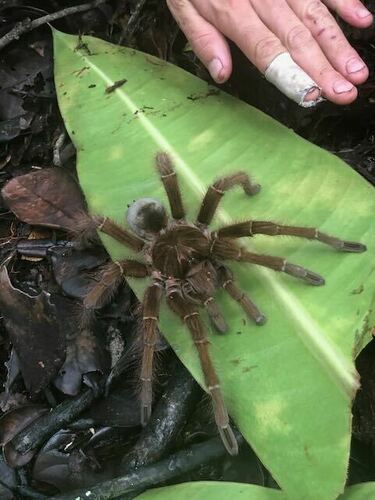
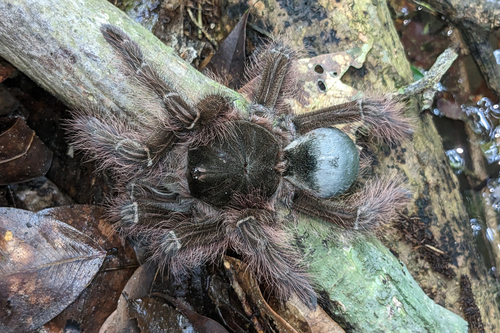
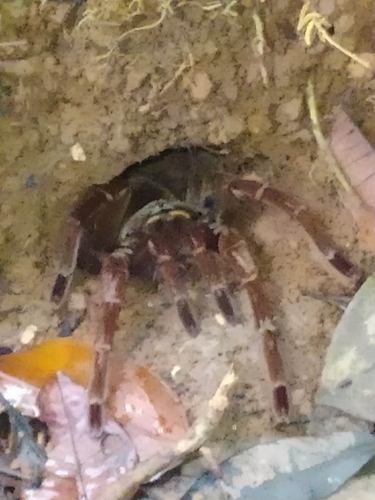
Very large, robust tarantula with a heavy cephalothorax and thick legs. Body length (excluding legs) can be several centimetres; legspan may reach 25-30 cm in large adults. Colouration is generally brown to dark brown, sometimes with a slightly reddish or golden tinge on the setae (hairs). Adults have conspicuous, thick setae on the abdomen and legs; the abdomen is rounded and hairy, and the species has large, visible chelicerae (fang bases). Males become leggier and relatively slimmer at maturity than females and may show slightly different coloration.
- Very large legspan (commonly 20-30 cm) and heavy, rounded abdomen
- Thick, dense hairs on abdomen and legs; overall brown to reddish-brown coloration
- Terrestrial posture and tendency to occupy burrows, under roots or logs
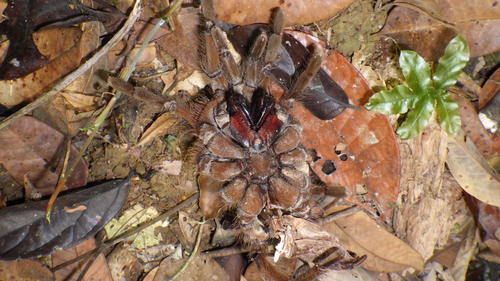
- Large chelicerae (fang bases) visible when viewed closely
Lookalikes
Burgundy goliath birdeater Theraphosa stirmi
Very similar in size and shape; T. stirmi tends to have darker, more burgundy-brown coloring and differs in details of the male palps. Range and expert examination help separate them.
Pinkfoot goliath birdeater Theraphosa apophysis
T. apophysis has pinkish tarsi (feet) when young and adult males have tibial spurs that T. blondi males lack; identification often requires expert examination.
↻Life cycle
Egg
Female lays an egg sac containing dozens to a few hundred eggs; she guards the sac until spiderlings develop.
Spiderling (juvenile)
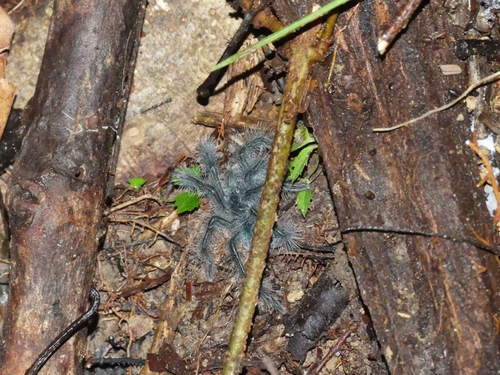
Spiderlings emerge from the egg sac and disperse after a period; juveniles resemble small adults and molt repeatedly while growing.
Adult
Adults reach sexual maturity after multiple molts; males mature sooner and die sooner than females, which can live for many years and repeat reproduction.
🍃Diet and predators
Young eat
Small invertebrates (insects) and very small vertebrates when available
Adults eat
Large invertebrates (beetles, crickets), amphibians, small reptiles and mammals when available; birds are not a primary food item despite the name
Predators of the young
Predatory insects, ants, small mammals and birds
Predators of adults
Large snakes, coatis and other mammalian predators, tarantula hawk wasps (which can paralyse and lay eggs on tarantulas), and opportunistic mammals
🌱Effect on plants and gardens
Does not feed on plants; has little direct impact on gardens or crops
📍Where and when to find it
Look on the forest floor in leaf litter, near burrow entrances, under logs and roots. Eggs and spiderlings are found inside guarded egg sacs and nest retreats.
Best time
Year-round in tropical climates; most active at night and around dusk.
Observation tips
Use a low-angle flashlight for night observations, keep distance to avoid exposure to urticating hairs, and photograph from outside the burrow entrance rather than disturbing the animal.
✨Fun facts
- The common name 'birdeater' comes from an early 18th-century engraving by Maria Sibylla Merian showing a tarantula eating a hummingbird; birds are rarely part of its diet.
- Despite enormous size and fearsome appearance, their venom is relatively weak compared with many smaller spiders; their main defences are size, fangs and irritating hairs.
- Females can live 15-25 years in captivity while males usually live only a few years and die soon after maturing.
?Frequently asked questions
Are goliath birdeaters dangerous to humans?
Only mildly. They are not considered medically dangerous for healthy adults, but bites are painful and urticating hairs cause significant irritation. Eye exposure to hairs can require medical care.
Do goliath birdeaters eat birds?
Birds are not a common food item; their diet mainly consists of large insects and small vertebrates. The name originates from an early anecdote.
Will a goliath birdeater chase or attack people?
They are not aggressive hunters of people. They will adopt defensive behaviours (threat posture, kicking urticating hairs, biting) if provoked or handled.
Why is a goliath birdeater in my house?
If found near human dwellings in its native range, it is likely wandering while searching for shelter or prey; they prefer dark, humid ground retreats and may enter basements or buildings with ground-level access.
How do I get rid of one safely?
Do not provoke or handle it. If removal is needed, contact a local wildlife control professional or experienced exotic pet handler. For small numbers, use a large container and a rigid piece of cardboard to gently guide the spider inside and relocate it outdoors, taking care to avoid eye and skin exposure to hairs.
Can I keep one as a pet?
They are kept by experienced hobbyists but require specialised care (large secure enclosure, stable heat and humidity, and appropriate food). Consider legal, ethical and welfare issues before acquiring one.
📷Photos of the Goliath birdeater
More spiders
This guide was written with AI assistance and fact-checked, last updated 2026-10-10. Identification from photos is never certain: don't handle insects you can't identify, and get medical advice for bites, stings or allergic reactions. More about the Goliath birdeater: iNaturalist, Wikipedia.