
Brown recluse
Loxosceles reclusa · Recluse spiders
A small, shy venomous spider of the central and southern United States best known for a violin-shaped marking and a bite that can rarely cause skin necrosis.
!Is the brown recluse dangerous?
Yes, it can be. Bites are uncommon and usually occur when the spider is pressed against skin. Most bites cause minimal symptoms: mild pain, redness, and small blisters. In a minority of cases, venom can cause progressive local tissue damage (necrosis) over days to weeks; systemic reactions (fever, kidney problems, hemolysis) are rare but possible. If bitten: clean the wound with soap and water, apply a cool compress, keep the limb immobilized and seek medical evaluation promptly. Do not apply tourniquets, cut the wound, or attempt suction. Photographing the spider (if safe) or keeping it in a sealed container can help medical diagnosis.
Pets
Dogs and cats can be bitten if they disturb a spider; most pets experience localized pain and swelling, but severe reactions are uncommon. Seek veterinary care for bites, especially in small animals or if systemic signs appear.
📖Overview
The brown recluse is a small, nocturnal spider that prefers undisturbed, dry shelter such as closets, attics, basements, woodpiles and sheds. It is not aggressive and typically bites only when trapped against skin, crushed, or intentionally provoked. Its bite injects a venom that can cause local tissue damage in some people; severe systemic reactions are uncommon. The species is native to the central and southern United States and is synanthropic, often living near human structures but remaining reclusive.
🔍How to identify a brown recluse
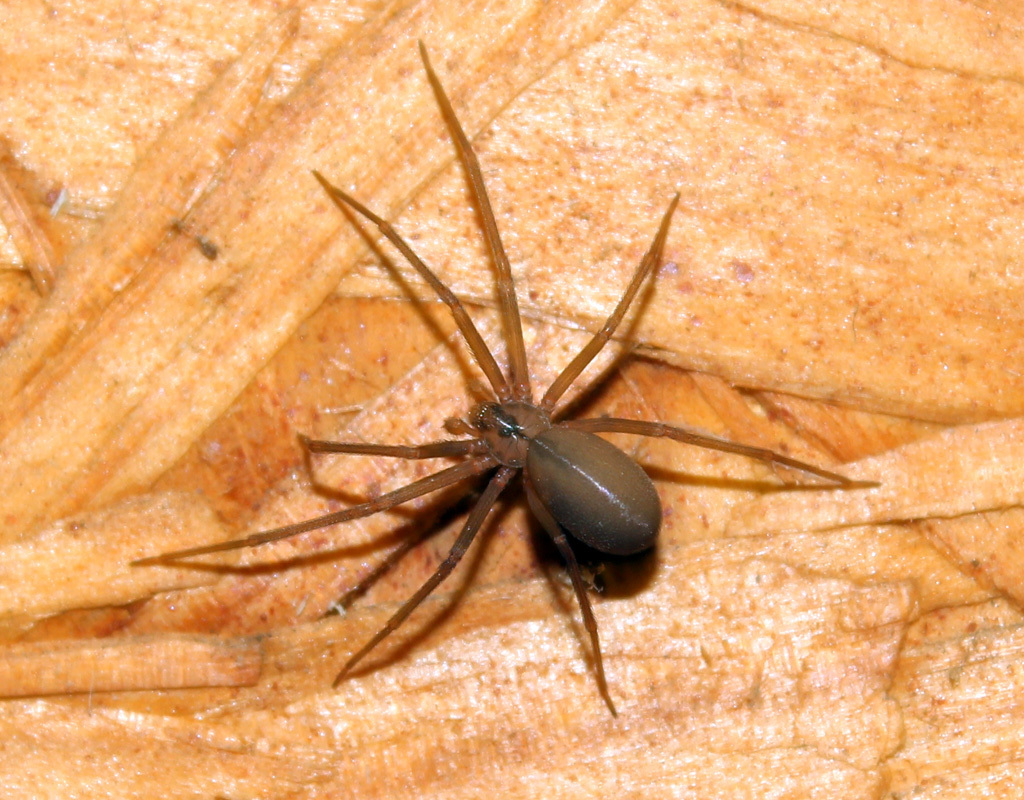
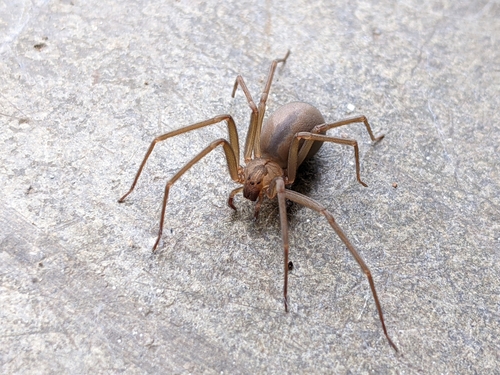
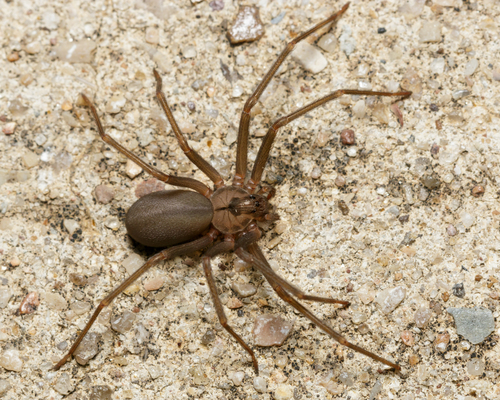
Adults are small, slender-bodied spiders with long legs relative to body size. A characteristic dark violin-shaped mark on the dorsum of the cephalothorax, with the neck of the violin pointing toward the abdomen, is often referenced for identification. Eyes are arranged in three pairs (six eyes total) in a semicircular pattern, which distinguishes it from many other spiders that have eight eyes. Color ranges from light tan to dark brown; legs are uniformly colored and lack conspicuous banding or spines.
- Look for a dark violin-shaped mark on the cephalothorax with the neck of the violin pointing toward the abdomen.
- Check eye arrangement: recluse spiders have six eyes arranged in three dyads (pairs) in a semicircle — most spiders have eight eyes.
- Uniformly colored legs without obvious banding and a uniformly colored abdomen help distinguish it from many harmless lookalikes.
- Size is small: body length about 6-12 mm; note that other small brown spiders may appear similar, so combine characteristics rather than relying on a single mark.
Lookalikes
Other recluse spiders Loxosceles spp.
Closely related recluse species can look similar; geographic range and subtle morphological details separate them. Expert examination may be required.
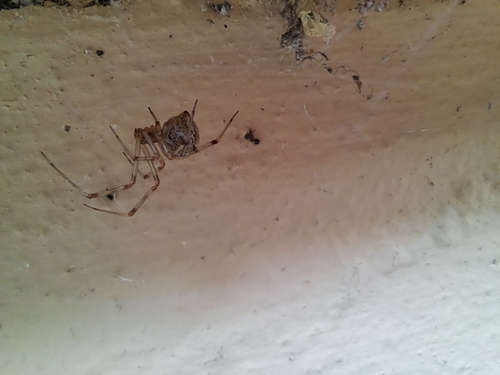
Cellar spider Pholcus phalangioides
Cellar spiders have very long, spindly legs and eight eyes rather than six; they lack the distinct violin marking and tend to build loose webs.
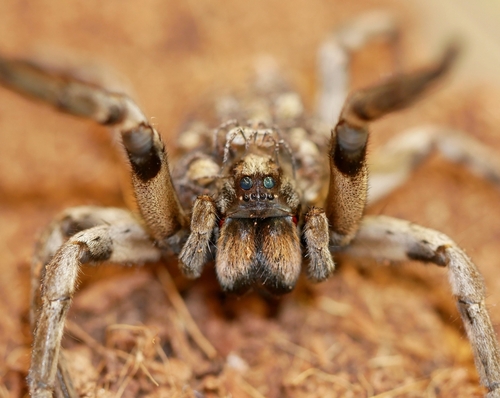
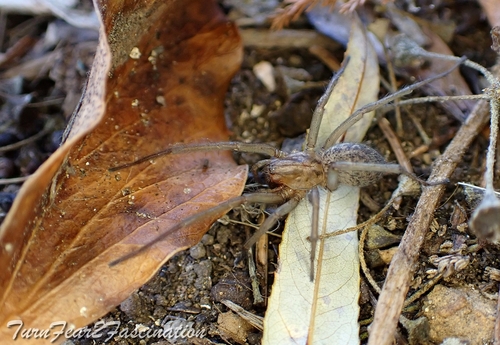
Wolf spiders Family Lycosidae
Wolf spiders are usually larger, more robust, have eight eyes with a distinctive eye-row pattern, and do not show the recluse's violin mark.
↻Life cycle
Egg sac
Females lay one or more small egg sacs containing dozens of eggs, hidden in quiet sheltered spots.
Spiderling (juvenile)
Spiderlings hatch and resemble miniature adults; they molt several times as they grow and disperse short distances.
Adult
Adults are sexually mature after several molts; females may live longer and produce multiple egg sacs during their lives.
🍃Diet and predators
Young eat
Small insects and other tiny arthropods
Adults eat
Cockroaches, ants, small insects and other spiders captured in silk retreats and by active hunting at night
Predators of the young
Other spiders, ants, centipedes and small insectivores
Predators of adults
Larger spiders, centipedes, wasps that parasitize spiders, and insectivorous birds and small mammals
🌱Effect on plants and gardens
Does not feed on plants; beneficial as a predator of household insects.
How to get rid of brown recluses
Reduce hiding places by removing clutter, cardboard and woodpiles near buildings; seal cracks and gaps in foundations, windows and doors; store clothing and shoes off the floor or in sealed containers; use sticky traps along baseboards to monitor activity. For significant infestations, consult pest control professionals. Avoid indiscriminate insecticide use; targeted treatment of likely harborages is more effective.
📍Where and when to find it
Check undisturbed indoor locations (closets, shoes, boxes, attics, basements) and outdoor shelters (woodpiles, rock crevices). Look at night with a flashlight near baseboards and inside stored items.
Best time
Warm months (spring through fall) and at night when they are active.
Observation tips
Wear gloves when moving stored items, tip shoes before wearing, and place a white sheet or paper when inspecting dark boxes to make small spiders easier to see. Capture suspected specimens in a clear sealed container for identification if safe to do so.
✨Fun facts
- Despite its fearful reputation, the brown recluse is shy and bites only when threatened or trapped against skin.
- The species has six eyes arranged in three pairs — many laypeople assume all spiders have eight eyes.
- A very large proportion of alleged 'recluse bites' are actually other conditions or insect bites; correct diagnosis requires clinical evaluation and sometimes laboratory testing.
?Frequently asked questions
Do brown recluse spiders bite?
Yes, but bites are uncommon. They usually occur when the spider is pressed against skin or accidentally trapped.
Are brown recluse bites dangerous?
Most bites cause mild local symptoms. A minority can develop progressive skin necrosis; severe systemic reactions are rare. Seek medical care for any suspected bite.
How can I tell if a spider in my house is a brown recluse?
Look for a small tan to brown spider with a violin-shaped mark, six eyes in three pairs, uniformly colored legs, and the typical size (6-12 mm body). Geographic location is important: many regions have no established brown recluse populations.
Why do I find brown recluses in my home?
They seek quiet, dry, undisturbed refuges such as closets, attics, basements, boxes and shoes. Indoor environments provide shelter and prey.
How do I get rid of brown recluse spiders?
Reduce clutter, seal entry points, store clothing and shoes off floors or in sealed containers, use sticky traps along baseboards, and target harborage areas for treatment. For persistent problems, hire a licensed pest control professional.
Is there an antivenom for brown recluse bites?
Antivenom is not routinely available in many places. Treatment focuses on wound care, pain control and monitoring. Severe cases may require specialized medical or surgical care.
📷Photos of the brown recluse
More spiders
This guide was written with AI assistance and fact-checked, last updated 2026-10-09. Identification from photos is never certain: don't handle insects you can't identify, and get medical advice for bites, stings or allergic reactions.