
Brown recluse vs Long-bodied cellar spider
These two are easy to mix up. Here's how to tell a brown recluse from a long-bodied cellar spider, and whether either one bites or stings.
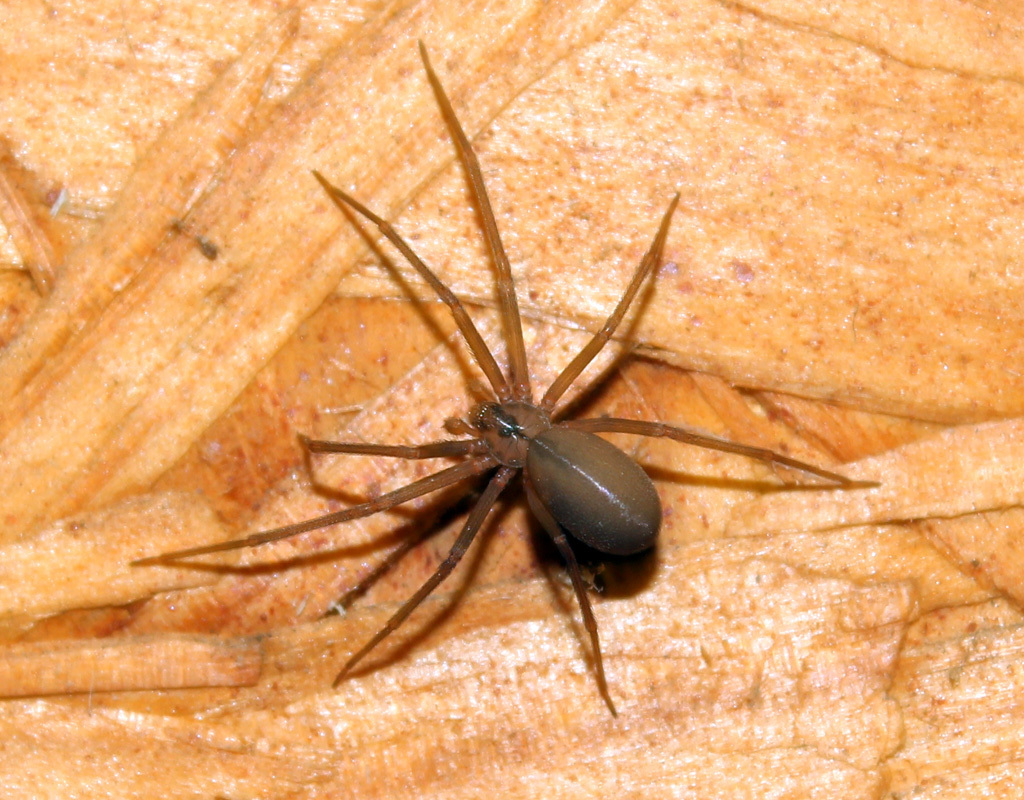
Brown recluse
Loxosceles reclusa
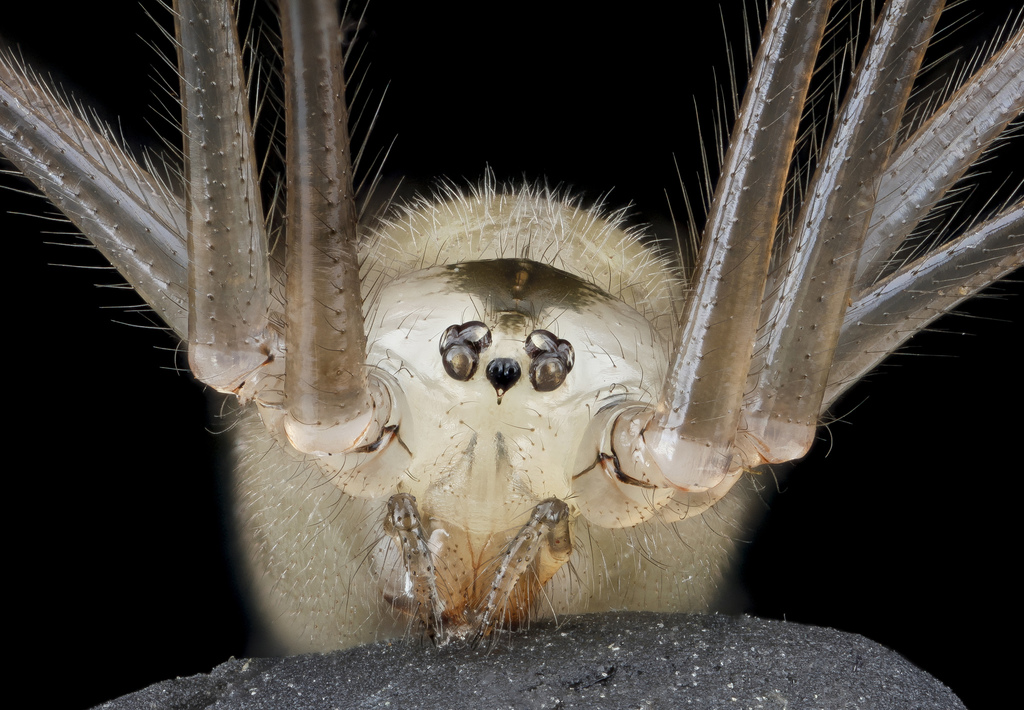
Long-bodied cellar spider
Pholcus phalangioides
≠The key differences
Cellar spiders have very long, spindly legs and eight eyes rather than six; they lack the distinct violin marking and tend to build loose webs.
⚖︎Side by side
| Brown recluse | Long-bodied cellar spider | |
|---|---|---|
| To humans | Venomous bite | Non-toxic |
| Size | 6-12 mm body length (about 1/4 to 1/2 inch); leg span up to about 25 mm | Body length 5-8 mm; legspan commonly 25-50 mm or more |
| Colours | Light brown, Tawny, Cream | Pale beige, Light brown, Gray-brown |
| Family | Sicariidae | Pholcidae |
| Habitat | Dry, sheltered, undisturbed places around and inside buildings: closets, attics, basements, cardboard boxes, woodpiles, behind baseboards and inside shoes. | Human structures (cellars, basements, attics, garages), sheltered corners, under furniture, eaves and window frames; also in caves and sheltered natural crevices in some regions. |
| Range | Native to the south-central and lower midwestern United States (e.g. Missouri, Kansas, Oklahoma, Arkansas, Tennessee, Kentucky) and parts of the Southeast. Not established across the entire U.S.; many reports from outside its range are misidentifications. | Cosmopolitan — spread worldwide by human transport and now found in buildings throughout temperate regions. |
| Active | Primarily nocturnal; most active at night and during warm months (spring through fall) but can be encountered year-round indoors. | Year-round in heated buildings; outdoors or in unheated structures mainly spring to autumn; mostly nocturnal and most active at night. |
| Pest? | Yes | No |
🔍How to spot a brown recluse
- Look for a dark violin-shaped mark on the cephalothorax with the neck of the violin pointing toward the abdomen.
- Check eye arrangement: recluse spiders have six eyes arranged in three dyads (pairs) in a semicircle — most spiders have eight eyes.
- Uniformly colored legs without obvious banding and a uniformly colored abdomen help distinguish it from many harmless lookalikes.
- Size is small: body length about 6-12 mm; note that other small brown spiders may appear similar, so combine characteristics rather than relying on a single mark.
🔍How to spot a long-bodied cellar spider
- Very long, thin legs with a small, elongated abdomen and narrow cephalothorax.
- Loose, messy irregular cobwebs in corners, ceilings and under furniture.
- When disturbed, often vibrates rapidly in its web, making it hard to see.
- Eight eyes: two groups of three larger eyes plus a pair of tiny median eyes.
?Frequently asked questions
What is the difference between a brown recluse and a long-bodied cellar spider?
Cellar spiders have very long, spindly legs and eight eyes rather than six; they lack the distinct violin marking and tend to build loose webs.
Is a brown recluse or a long-bodied cellar spider more dangerous?
Brown recluse: Venomous bite. Long-bodied cellar spider: Non-toxic. Bites are uncommon and usually occur when the spider is pressed against skin. Bites are rare and typically produce no more than minor, localized redness or itching.
Identification from photos is never certain: don't handle insects you can't identify, and get medical advice for bites, stings or allergic reactions.