
Brown recluse vs Woodlouse spider
These two are easy to mix up. Here's how to tell a brown recluse from a woodlouse spider, and whether either one bites or stings.
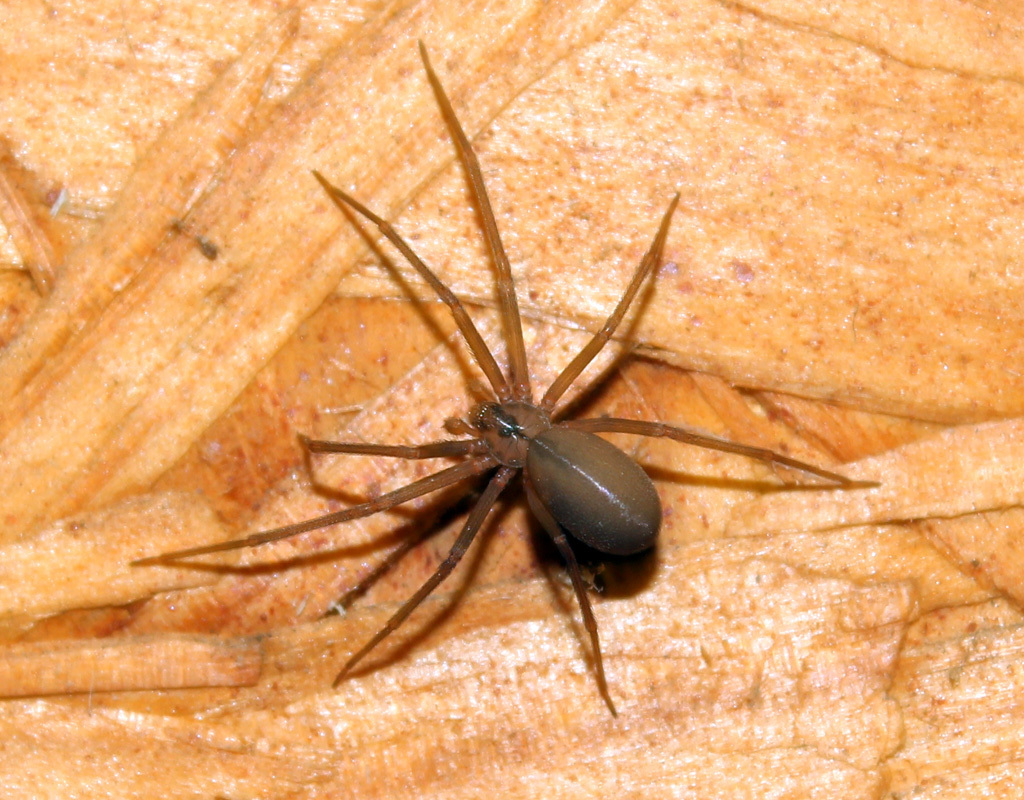
Brown recluse
Loxosceles reclusa
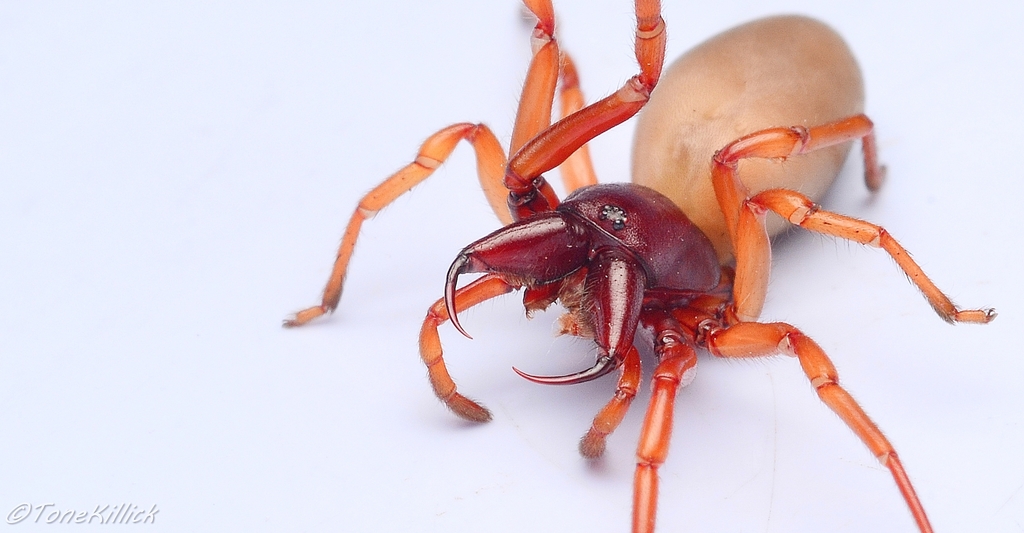
Woodlouse spider
Dysdera crocata
≠The key differences
Also has six eyes, but is uniformly tan with a dark violin-shaped mark on the cephalothorax and long, thin legs, without the reddish legs and huge forward-projecting fangs of D. crocata.
⚖︎Side by side
| Brown recluse | Woodlouse spider | |
|---|---|---|
| To humans | Venomous bite | Painful bite |
| Size | 6-12 mm body length (about 1/4 to 1/2 inch); leg span up to about 25 mm | 7-15 mm body length (males smaller, females larger) |
| Colours | Light brown, Tawny, Cream | Reddish-brown, Pale grey, Cream, Dark grey (chelicerae) |
| Family | Sicariidae | Dysderidae |
| Habitat | Dry, sheltered, undisturbed places around and inside buildings: closets, attics, basements, cardboard boxes, woodpiles, behind baseboards and inside shoes. | Dark, damp places: under stones, logs, leaf litter, woodpiles, and inside cellars, basements, garages and wall voids. |
| Range | Native to the south-central and lower midwestern United States (e.g. Missouri, Kansas, Oklahoma, Arkansas, Tennessee, Kentucky) and parts of the Southeast. Not established across the entire U.S.; many reports from outside its range are misidentifications. | Native to Europe; introduced and established in North America, Australia, New Zealand and other temperate regions worldwide. |
| Active | Primarily nocturnal; most active at night and during warm months (spring through fall) but can be encountered year-round indoors. | Primarily nocturnal; active year-round where climate is mild but most visible in warmer months. |
| Pest? | Yes | No |
🔍How to spot a brown recluse
- Look for a dark violin-shaped mark on the cephalothorax with the neck of the violin pointing toward the abdomen.
- Check eye arrangement: recluse spiders have six eyes arranged in three dyads (pairs) in a semicircle — most spiders have eight eyes.
- Uniformly colored legs without obvious banding and a uniformly colored abdomen help distinguish it from many harmless lookalikes.
- Size is small: body length about 6-12 mm; note that other small brown spiders may appear similar, so combine characteristics rather than relying on a single mark.
🔍How to spot a woodlouse spider
- Two-tone body: reddish cephalothorax and legs with a pale grey or yellowish abdomen.
- Very large, forward-projecting chelicerae (fangs) visible from above.
- Six eyes arranged in a semicircle (not eight).
- Found under stones, logs or in basements where woodlice occur; active at night.
?Frequently asked questions
What is the difference between a brown recluse and a woodlouse spider?
Also has six eyes, but is uniformly tan with a dark violin-shaped mark on the cephalothorax and long, thin legs, without the reddish legs and huge forward-projecting fangs of D. crocata.
Is a brown recluse or a woodlouse spider more dangerous?
Brown recluse: Venomous bite. Woodlouse spider: Painful bite. Bites are uncommon and usually occur when the spider is pressed against skin. Bites are uncommon and occur when the spider is trapped against skin; the bite can be painful, producing localized pain, redness and swelling for a few hours to a day.
Identification from photos is never certain: don't handle insects you can't identify, and get medical advice for bites, stings or allergic reactions.