
Bold jumping spider vs Dimorphic jumping spider
These two are easy to mix up. Here's how to tell a bold jumping spider from a dimorphic jumping spider, and whether either one bites or stings.
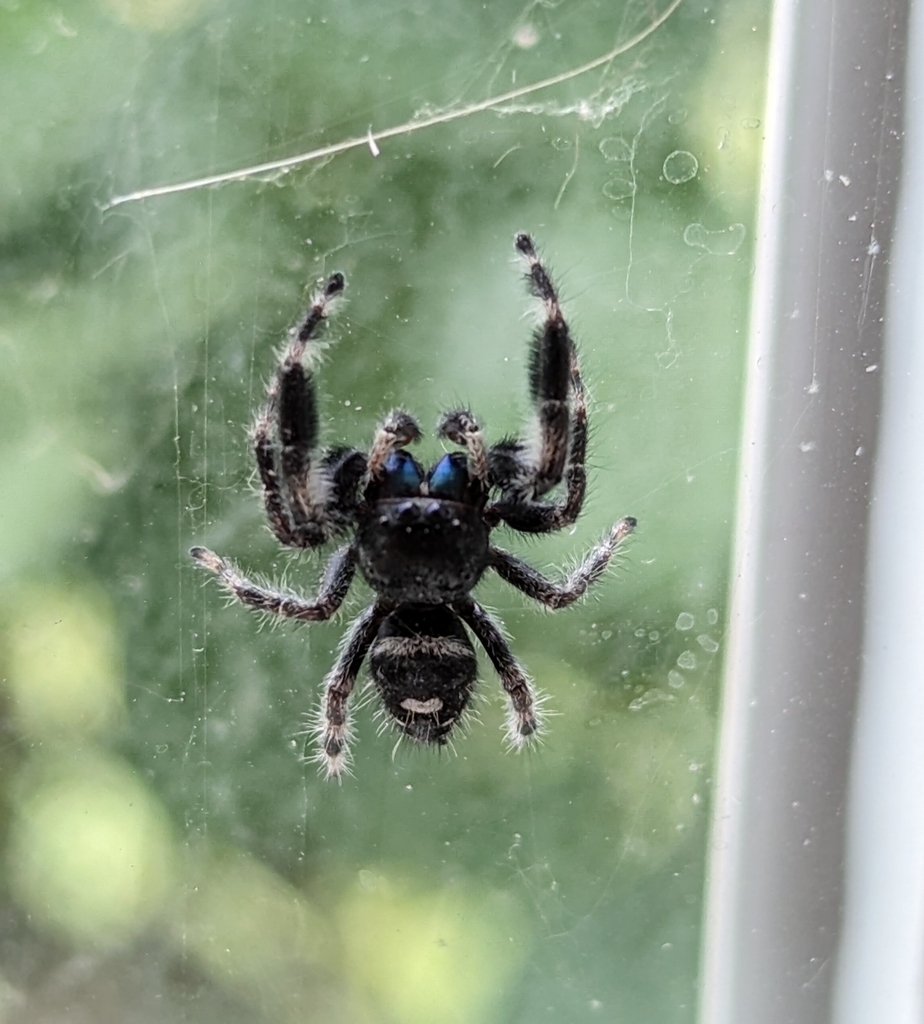
Bold jumping spider
Phidippus audax
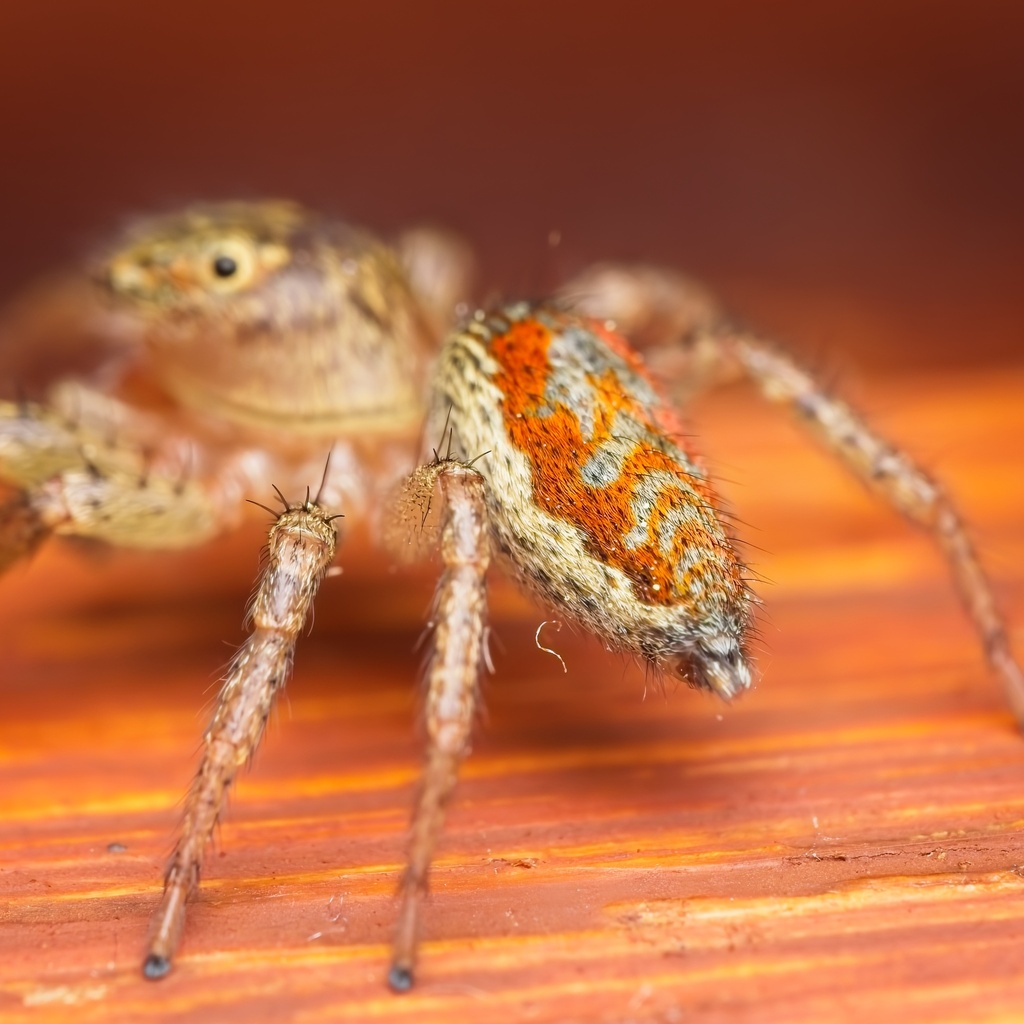
Dimorphic jumping spider
Maevia inclemens
≠The key differences
Phidippus audax is larger (10-20 mm), often has iridescent chelicerae and different habitus; Maevia inclemens is smaller and more delicate.
⚖︎Side by side
| Bold jumping spider | Dimorphic jumping spider | |
|---|---|---|
| To humans | Mild bite | Non-toxic |
| Size | 6-18 mm body length | 4-8 mm body length (adult) |
| Colours | Black, White (spots), Orange (juvenile spots / variants), Iridescent green/blue (chelicerae) | Black, White, Tan, Orange-brown (legs/markings) |
| Family | Salticidae | Salticidae |
| Habitat | Open sunny spots: grassy areas, shrubs, tree bark, fence posts, porches, and building exteriors; also inside houses near windows or light sources. | Sunny, open microhabitats: shrubs, fences, porch walls, tree trunks, leaf litter and low vegetation in gardens, fields and woodland edges. |
| Range | Widespread across North America, from Canada through the United States into northern Mexico; established in many human-altered habitats. | Eastern North America: from parts of the United States into southern Canada (records concentrated in the eastern US and adjacent provinces). |
| Active | Active in spring through fall; diurnal (most active during daylight). | Spring to autumn (spring and summer peak); diurnal (active in daylight). |
| Pest? | No | No |
🔍How to spot a bold jumping spider
- Black to dark brown compact spider with two or three bold white or orange spots on the abdomen.
- Large forward-facing eyes and short, powerful legs typical of jumping spiders.
- Iridescent chelicerae (green/blue) often visible in good light, particularly in males.
- Body length 6-18 mm; juveniles often show orange spots that fade to white with age.
🔍How to spot a dimorphic jumping spider
- Very small stocky jumping spider with large forward-facing eyes.
- Males: either black with pale legs and three black tufts on the head ("tufted" form), or striped grey and black with orange palps ("grey" form).
- Females: tan to orange-brown with darker markings on the abdomen.
- Active in daylight on walls, fences, vegetation and low branches; moves in short, deliberate hops.
?Frequently asked questions
What is the difference between a bold jumping spider and a dimorphic jumping spider?
Phidippus audax is larger (10-20 mm), often has iridescent chelicerae and different habitus; Maevia inclemens is smaller and more delicate.
Is a bold jumping spider or a dimorphic jumping spider more dangerous?
Bold jumping spider: Mild bite. Dimorphic jumping spider: Non-toxic. Bites are uncommon and typically occur only if the spider is handled or trapped against skin. Maevia inclemens is not dangerous to people.
Identification from photos is never certain: don't handle insects you can't identify, and get medical advice for bites, stings or allergic reactions.