
Woodlouse spider
Dysdera crocata · Dysderid spiders
A reddish, nocturnal hunter that specializes in eating woodlice; delivers a painful but not medically dangerous bite.
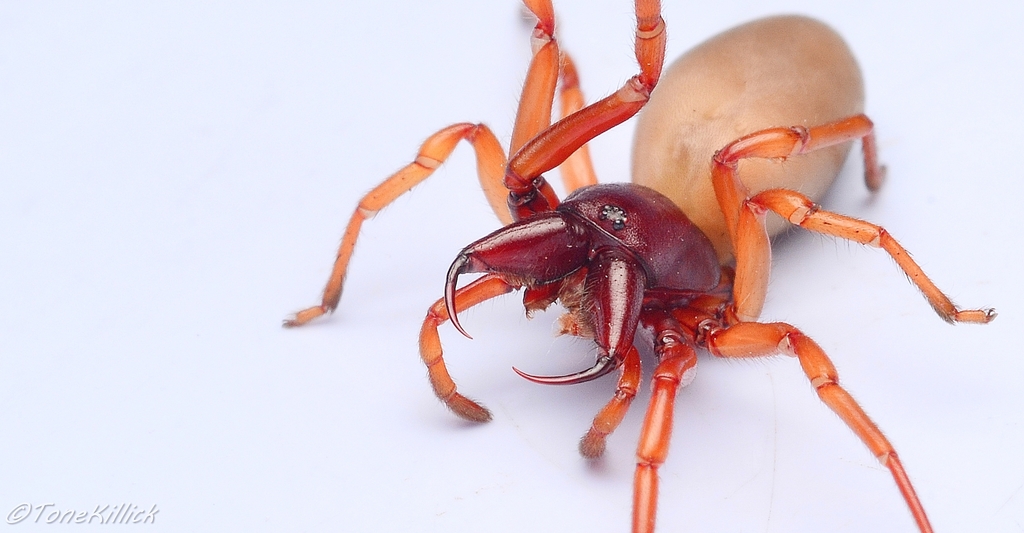
!Is the woodlouse spider dangerous?
Only mildly. Bites are uncommon and occur when the spider is trapped against skin; the bite can be painful, producing localized pain, redness and swelling for a few hours to a day. Serious medical problems or systemic reactions are extremely rare. Standard first aid is cleaning the wound with soap and water, applying a cold pack, and using over-the-counter pain relievers if needed. Seek medical care for increasing pain, signs of infection, or allergic reactions.
Pets
Bites to cats and dogs are very unlikely because Dysdera crocata is small and not aggressive; if a pet is bitten the effects are generally limited to local pain and swelling. Contact a veterinarian if your pet shows unusual symptoms.
📖Overview
Dysdera crocata is a small, ground-dwelling spider best known for preying on woodlice (pillbugs). It is nocturnal and prefers dark, damp microhabitats: under stones, leaf litter, logs and in basements, garages and cellars. Originally from Europe, it is now widespread in temperate regions worldwide, often living near buildings where woodlice are present. The species has large forward-projecting chelicerae used to pierce the hard shells of crustacean prey.
🔍How to identify a woodlouse spider
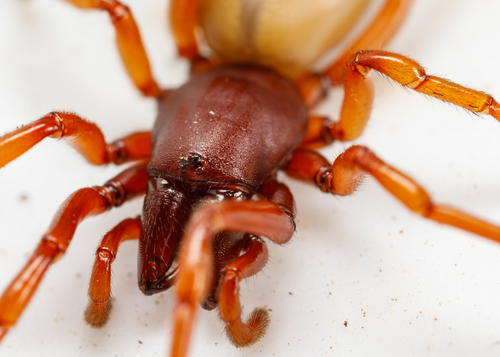
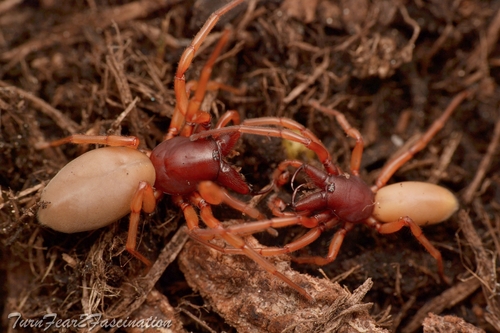
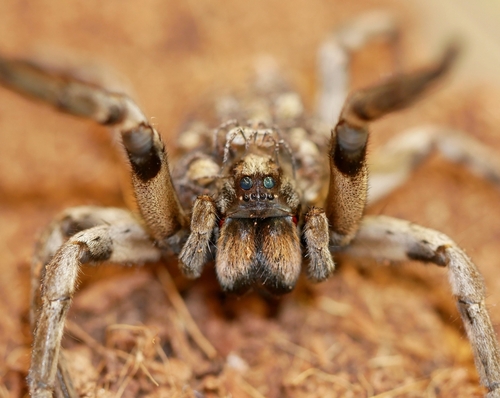
Adults have a distinct two-tone look: a glossy reddish to reddish-brown cephalothorax and legs, and a more pale, greyish or yellowish abdomen. They have six well-spaced eyes (not eight) arranged in a semicircle, and very large, forward-facing chelicerae (fangs) that are visible from above. Body length typically ranges from about 7-15 mm depending on sex and age; females are generally larger and bulkier than males.
- Two-tone body: reddish cephalothorax and legs with a pale grey or yellowish abdomen.
- Very large, forward-projecting chelicerae (fangs) visible from above.
- Six eyes arranged in a semicircle (not eight).
- Found under stones, logs or in basements where woodlice occur; active at night.
Lookalikes
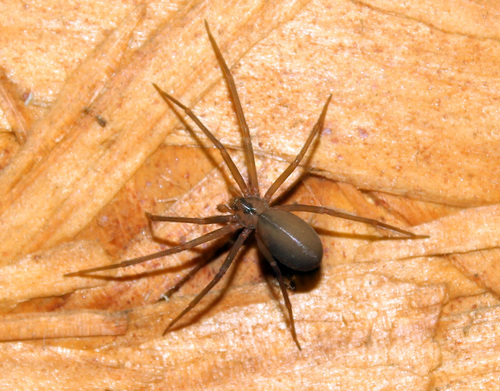
Brown recluse Loxosceles reclusa
Also has six eyes, but is uniformly tan with a dark violin-shaped mark on the cephalothorax and long, thin legs, without the reddish legs and huge forward-projecting fangs of D. crocata.
Other Dysdera woodlouse spiders Dysdera spp.
Other Dysdera species are similar; confirm identification by geographic range and minor differences in size and genitalia—D. crocata is the most common widespread species.
↻Life cycle
Egg
Females lay eggs in silken retreats and guard them for a period; eggs hatch into spiderlings.
Spiderling (juvenile)
Young spiders resemble miniature adults and go through several molts as they grow; juveniles already hunt small invertebrates, especially tiny woodlice.
Adult
Sexually mature spiders mate in appropriate seasons; adults continue to hunt actively and can live across more than one year.
🍃Diet and predators
Young eat
Small arthropods, including tiny woodlice and other crustaceans or insects.
Adults eat
Specialist predator of woodlice (isopods) but will also take other slow-moving arthropods.
Predators of the young
Small predators such as centipedes, larger spiders, ground beetles and insectivorous ants.
Predators of adults
Birds, shrews, centipedes, larger spiders and some predatory insects.
🌱Effect on plants and gardens
Does not feed on plants; beneficial by reducing populations of woodlice and some other small arthropods.
📍Where and when to find it
Look under stones, logs, leaf litter, in woodpiles and around foundations; indoors check basements, cellars, garages and storage boxes. Nighttime searches with a flashlight are most productive.
Best time
Spring through autumn in temperate regions; active at night.
Observation tips
Gently lift stones and logs onto a sheet so you can see and photograph hiding spiders; use a flashlight at night and look in damp corners of basements and garages.
✨Fun facts
- Dysdera crocata is specially adapted to feed on woodlice: its large fangs pierce the tough exoskeleton of isopods.
- Unlike many spiders, it has only six eyes rather than eight.
- It is frequently introduced to new regions by human activity and now has a worldwide temperate distribution.
?Frequently asked questions
Do woodlouse spiders bite?
Yes they can bite if handled or trapped against skin. Bites are painful but not considered medically dangerous for most people.
Are woodlouse spiders poisonous?
They are venomous like most spiders (venom used to subdue prey) but their venom is not considered dangerous to humans. Effects are usually local pain and mild swelling.
Why is this spider in my house?
They follow their prey: woodlice and other moisture-loving invertebrates are common near foundations, basements and leaf litter, so spiders enter buildings seeking shelter and food.
How do I get rid of woodlouse spiders?
Reduce moisture and woodlouse habitat (fix leaks, ventilate basements, remove leaf litter and woodpiles near the house), seal cracks, use sticky traps or vacuum to remove spiders. Chemical controls are rarely needed for small numbers.
Where does the woodlouse spider live?
In dark, damp microhabitats: under stones and logs outdoors, and in cellars, basements, garages or wall voids indoors; they are active at night.
📷Photos of the woodlouse spider
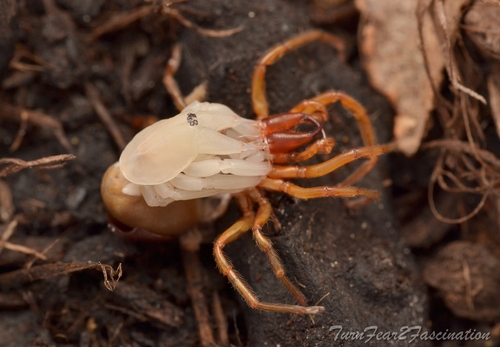
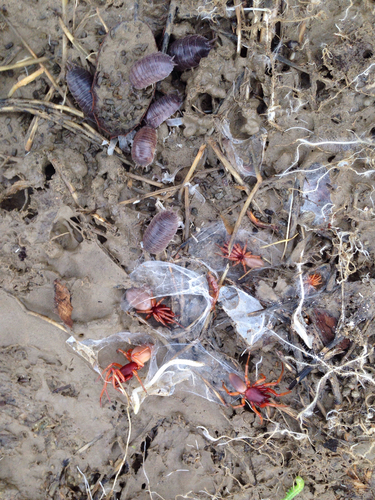
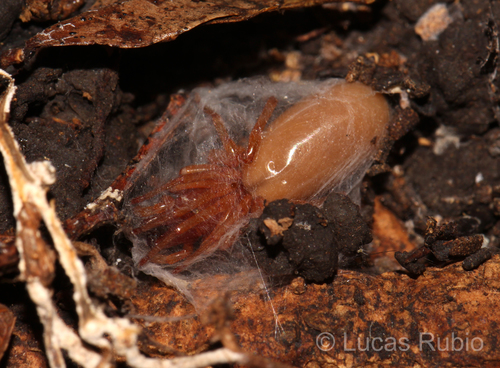
More spiders
This guide was written with AI assistance and fact-checked, last updated 2026-10-10. Identification from photos is never certain: don't handle insects you can't identify, and get medical advice for bites, stings or allergic reactions. More about the woodlouse spider: iNaturalist, Wikipedia.