
Six-spotted fishing spider
Dolomedes triton · Fishing spiders
A large semi-aquatic spider found along freshwater edges in North America that hunts on the water surface and builds nursery webs for its young.
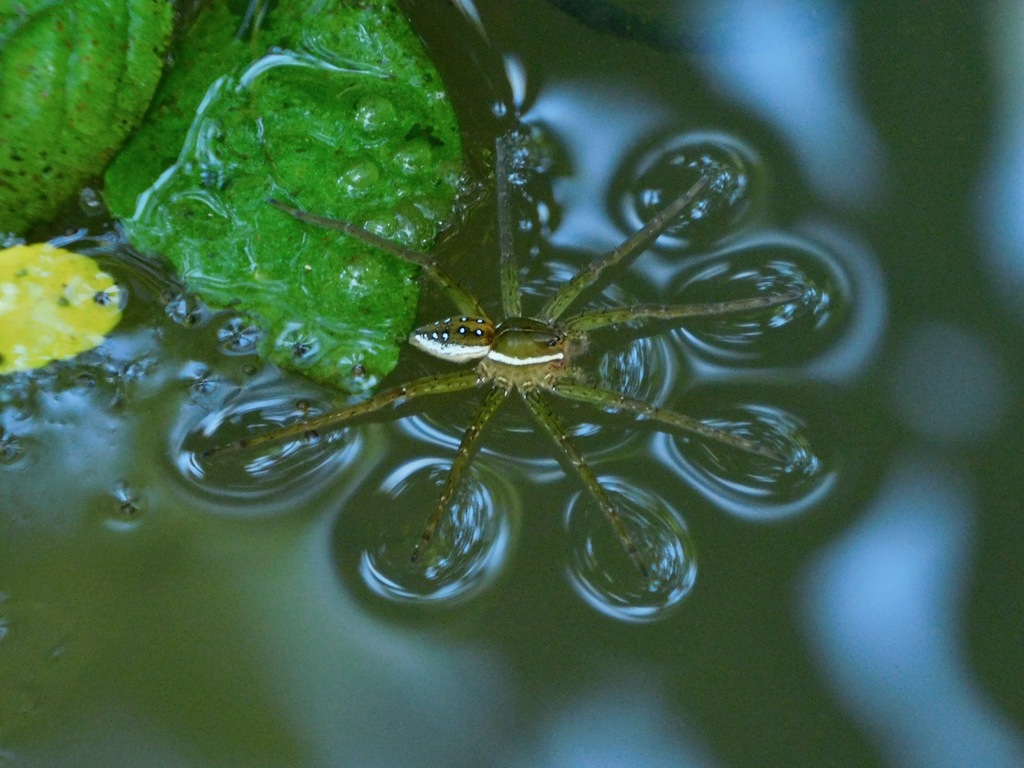
!Is the six-spotted fishing spider dangerous?
Only mildly. Not considered dangerous. Like most spiders, Dolomedes triton can bite if cornered or handled; bites are uncommon and typically cause localized pain, redness and swelling similar to a bee sting in sensitive people. Severe reactions are rare. Clean the wound, apply cold compress, and seek medical advice if symptoms worsen or allergy is suspected.
Pets
Generally not a threat to cats and dogs. A bite could cause local pain and mild swelling; large pets may react if bitten near the mouth or face. Monitor and consult a veterinarian if there are concerning symptoms.
📖Overview
Dolomedes triton is a semi-aquatic nursery-web spider common along ponds, streams and marsh edges in much of North America. It hunts from plant stems or rocks at the water's edge, detecting surface ripples to catch aquatic insects, tadpoles and sometimes small fish. Females carry an egg sac in their chelicerae and later construct a silken nursery web where spiderlings stay until dispersal. They are generally shy of people and will retreat when disturbed.
🔍How to identify a six-spotted fishing spider
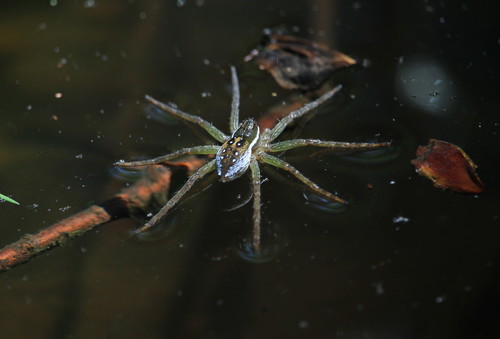
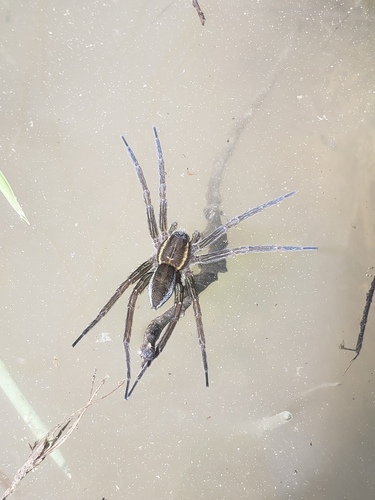
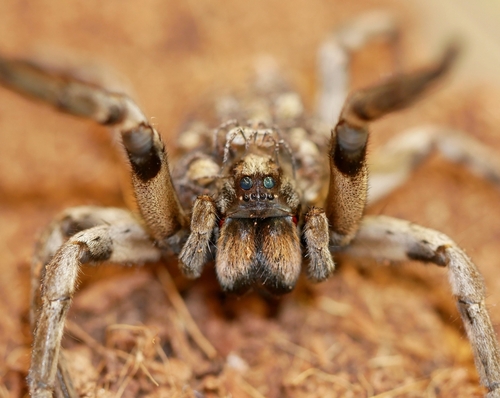
Adults are relatively large for a spider with long legs. The carapace is brown with a pale cream stripe along each side that continues down the sides of the abdomen; the abdomen has rows of small pale spots. The underside of the cephalothorax bears six dark spots that give the species its name. Legs are often held outstretched while the spider waits at the water surface or on vegetation. Females are noticeably larger and more robust than males.
- Large, long-legged spider typically found at pond or stream margins, often on emergent vegetation or rocks
- Pale stripe along each side of the body and six dark spots on the underside of the cephalothorax
- Holds legs outstretched parallel to the water surface when hunting; can run on water and detect ripples
- Females carry egg sacs in their jaws (chelicerae) and later guard a silk nursery web
Lookalikes
Dark fishing spider Dolomedes tenebrosus
D. tenebrosus is generally darker, more terrestrial and often found under bark or in houses rather than directly at water edges; D. triton has more aquatic habits and different abdominal patterning.
Striped fishing spider Dolomedes scriptus
Also found by water in eastern North America, but has wavy white W-shaped marks across the abdomen and lacks the bold pale side stripes of D. triton.
↻Life cycle
Egg sac
Female produces an egg sac and carries it with her chelicerae until she constructs a nursery web shortly before spiderlings hatch.
Juvenile (spiderling)
Spiderlings remain in the nursery web for a time after hatching, then disperse by walking or ballooning. Juveniles grow through successive molts to adulthood.
Adult
Adults mate, females produce and guard egg sacs, and the cycle repeats; adults commonly live through a single breeding season.
🍃Diet and predators
Young eat
Small aquatic and terrestrial invertebrates
Adults eat
Aquatic insects, water-surface prey, small tadpoles and occasionally small fish or terrestrial insects
Predators of the young
Aquatic predators (fish), predatory insects and parasitoids
Predators of adults
Birds, larger spiders, wasps, frogs and some fish when at the water edge
🌱Effect on plants and gardens
Does not damage plants; it is a predator of aquatic and terrestrial insects and can help control pest insect populations near water.
📍Where and when to find it
Look along pond edges, marsh vegetation, floating logs, rocks and dock pilings. Females with nursery webs are often on emergent plants or low shrubs near water.
Best time
Spring through autumn; crepuscular and nighttime are good for active hunting observations, but they can be seen in daylight.
Observation tips
Approach slowly, avoid sudden movements, use a long lens for photos at the water edge, and watch for ripples on the water which can reveal hunting spiders.
✨Fun facts
- Dolomedes triton can run on the water surface and detect prey from ripples using specialized leg sensors.
- Females carry their egg sacs in their jaws and build a silk 'nursery web' where spiderlings stay protected until they disperse.
- They sometimes catch tadpoles and very small fish, not just insects.
?Frequently asked questions
Are six-spotted fishing spiders dangerous to humans?
No — they are not considered dangerous. Bites are rare and usually cause only mild local pain and swelling.
Do fishing spiders bite people?
They can bite if mishandled or provoked, but they prefer to flee. Most encounters do not result in bites.
Why is this spider on my dock or in my house?
They hunt near water, so docks, boathouses and wetland edges attract them. They sometimes wander into buildings near water in search of prey or shelter.
How can I get rid of fishing spiders?
Reduce attractive habitat by trimming shoreline vegetation, removing debris and sealing gaps in buildings. For individual spiders, use a jar-and-paper release method. Chemical controls are rarely necessary and can harm non-target wildlife.
Where does the six-spotted fishing spider live?
Along ponds, marshes, lakes and slow streams across much of eastern and central North America, usually at the water's edge on vegetation, rocks or debris.
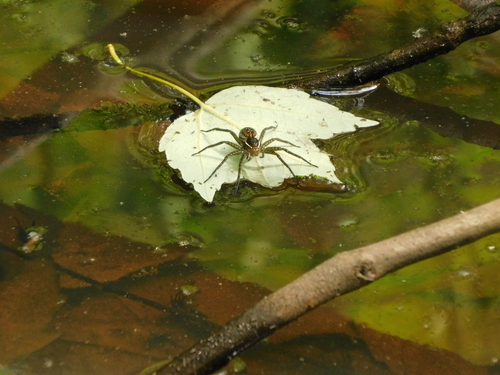
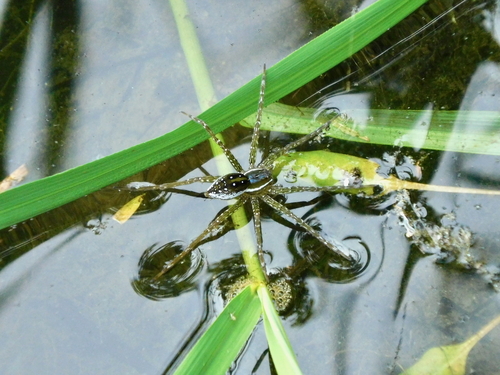
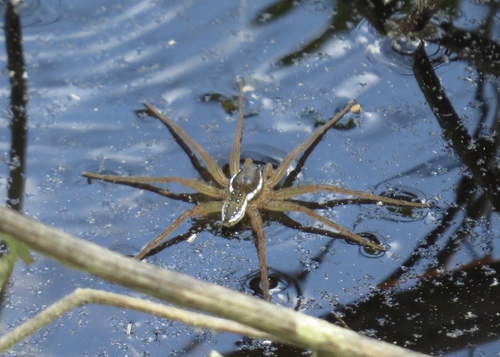
📷Photos of the six-spotted fishing spider
More spiders
This guide was written with AI assistance and fact-checked, last updated 2026-10-10. Identification from photos is never certain: don't handle insects you can't identify, and get medical advice for bites, stings or allergic reactions. More about the six-spotted fishing spider: iNaturalist, Wikipedia.