
Striped lynx spider
Oxyopes salticus · Lynx spiders
A small, daytime hunting spider common in vegetation and crops; active predator of insects and generally harmless to people.
!Is the striped lynx spider dangerous?
Only mildly. Not considered dangerous. Bites are rare, and reported reactions are usually localized pain, redness and brief swelling. Standard first aid: clean the area with soap and water, apply a cold pack for swelling, and use an over-the-counter pain reliever or antihistamine if needed. Seek medical attention if symptoms worsen, if there are signs of infection, or if an allergic reaction develops.
Pets
Unlikely to cause serious harm to cats or dogs; a bite could cause transient local pain or swelling but systemic illness is uncommon. Monitor pets and consult a veterinarian if symptoms are severe.
📖Overview
Oxyopes salticus is a diurnal (daytime) hunting spider in the lynx spider family (Oxyopidae). Instead of building webs to catch prey it runs and leaps to capture insects among grasses, shrubs and crop plants. It is widespread in North America (throughout the continental United States and into Mexico) and occurs in a variety of warm, open habitats including gardens, fields and roadside vegetation.
Striped lynx spiders are important generalist predators in agricultural and garden ecosystems, feeding on pest insects. They are not aggressive toward people; bites are uncommon and usually produce only minor, short-lived pain or irritation when they occur.
🔍How to identify a striped lynx spider
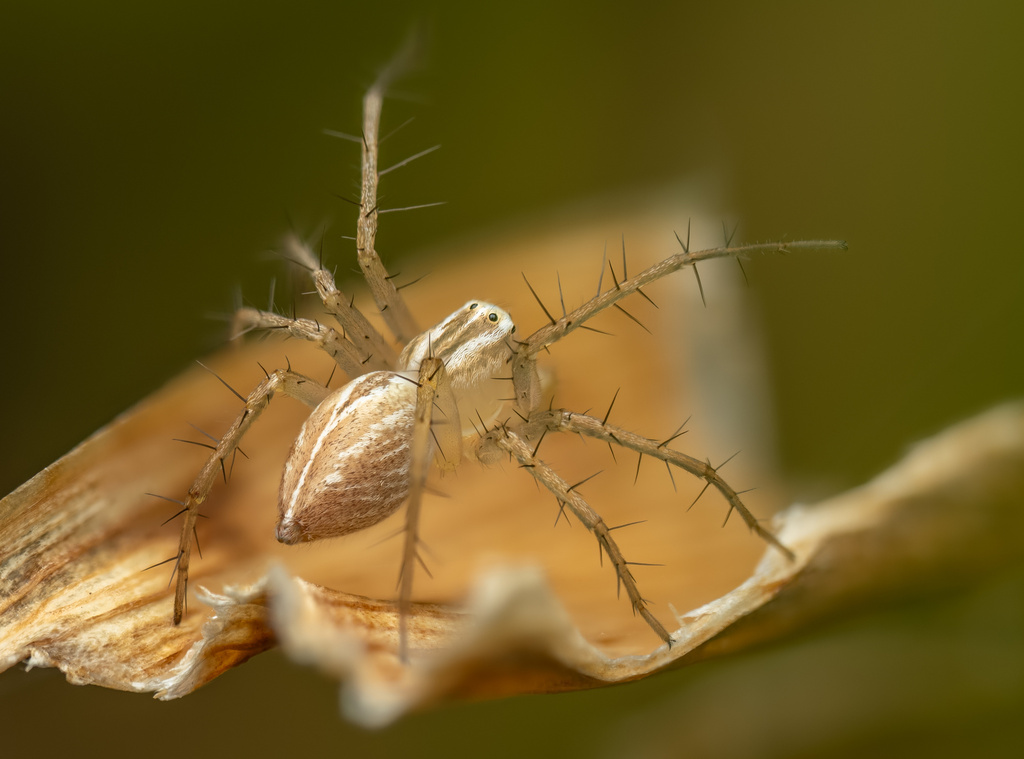
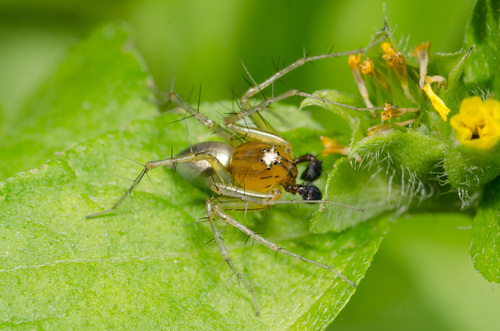
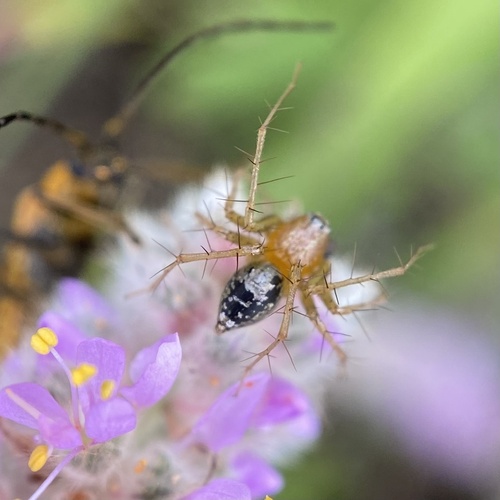
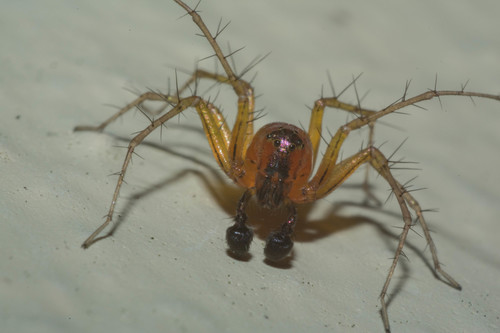
Adults are relatively small, elongate spiders with long spiny legs that give them a spiky appearance. The carapace and abdomen show longitudinal pale and dark stripes or streaks; many individuals are yellowish to greenish with brown or reddish markings. The legs are often banded and covered in conspicuous spines. Eyes are arranged in a compact hexagon on the front of the carapace, typical of the family, and the front legs and pedipalps are relatively robust for grasping prey.
- Daytime active, hunting spider seen on low vegetation or flowers rather than in webs
- Long, spiny legs and a spiky appearance typical of lynx spiders
- Distinct longitudinal pale and darker stripes or streaks on carapace and abdomen
- Small size (about 4-7 mm body length) with banded legs
Lookalikes
Green lynx spider Peucetia viridans
Green lynx is generally larger, brighter green and often lacks the distinct longitudinal brown striping; Peucetia has a more elongated abdomen and different eye spacing.
Western lynx spider Oxyopes scalaris
Similar overall shape but usually darker and browner, with chevron markings on the abdomen rather than the pale body with fine dark stripes of Oxyopes salticus.
↻Life cycle
Egg
Females lay egg sacs and often guard them. Eggs are enclosed in silk and attached to vegetation.
Juvenile (immature spider)
Young spiders hatch as miniature versions of adults and go through several molts while actively hunting in vegetation.
Adult
Sexually mature spiders that mate, produce egg sacs, and continue hunting; adults are most obvious during warmer months.
🍃Diet and predators
Young eat
Small soft-bodied insects such as aphids, flies and tiny moths
Adults eat
Varied insects including flies, leafhoppers, small moths, aphids and other arthropods captured by active hunting
Predators of the young
Predatory insects, parasitoid wasps, larger spiders and small birds
Predators of adults
Birds, larger spiders, predatory insects and some wasps
🌱Effect on plants and gardens
Feeds on a broad range of insect herbivores and pollinator insects that visit flowers; overall helps control pest populations in gardens and crops.
📍Where and when to find it
Look on flower heads, stems, low shrubs and grasses during the day; egg sacs are attached to plant stems and may be guarded by females.
Best time
Spring through early fall, during daylight hours on warm, sunny days.
Observation tips
Move slowly when approaching; their spiny legs and coloration make good subjects for close-up photography. Use a macro lens and a shallow angle to capture the long legs and striping.
✨Fun facts
- Unlike web-building spiders, striped lynx spiders chase and leap on prey, hence the name 'lynx'.
- They are common in crop fields and can help reduce pest outbreaks by preying on insect pests.
- Females attach their egg sacs to plants and stand guard over them until the spiderlings hatch.
?Frequently asked questions
Do striped lynx spiders bite people?
Bites are uncommon. If bitten, expect mild, short-lived pain and local swelling; serious reactions are rare.
Why is this spider in my house or garden?
They hunt for insects in vegetation and flowers; gardens, vegetable beds and crops provide abundant prey and shelter.
How can I get rid of them?
They are beneficial predators—avoid killing them if possible. To remove an individual indoors, capture it under a jar and release outside. Reduce outdoor populations only by removing dense ground cover and excess mulch, but this also reduces beneficial predators.
Are striped lynx spiders poisonous?
They are venomous to their insect prey but not dangerous to humans; their bite is not medically significant for most people.
Where do they live?
They live on low vegetation, flowers, shrubs and crop plants in warm, open habitats across much of North America and into Mexico.
📷Photos of the striped lynx spider
More spiders
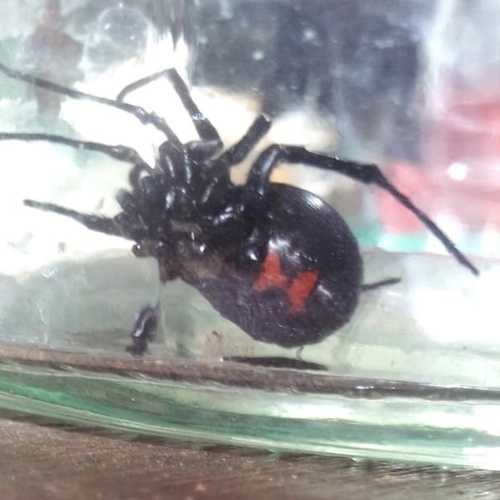
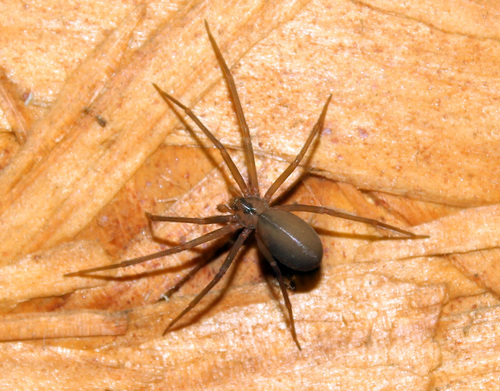
This guide was written with AI assistance and fact-checked, last updated 2026-10-10. Identification from photos is never certain: don't handle insects you can't identify, and get medical advice for bites, stings or allergic reactions. More about the striped lynx spider: iNaturalist, Wikipedia.