
Green lynx spider vs Striped lynx spider
These two are easy to mix up. Here's how to tell a green lynx spider from a striped lynx spider, and whether either one bites or stings.
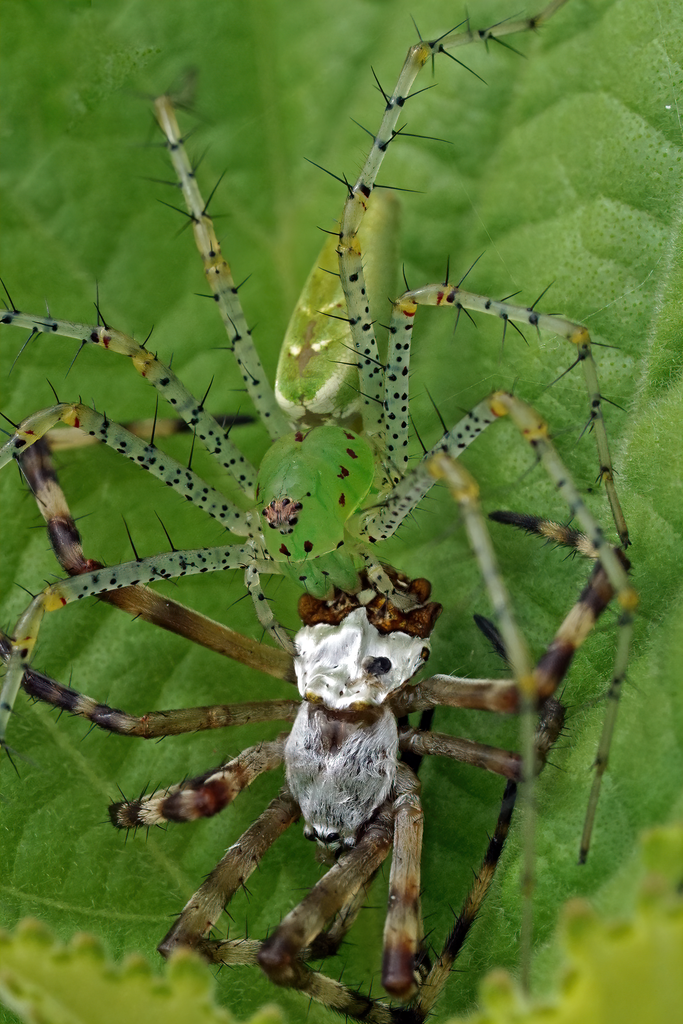
Green lynx spider
Peucetia viridans
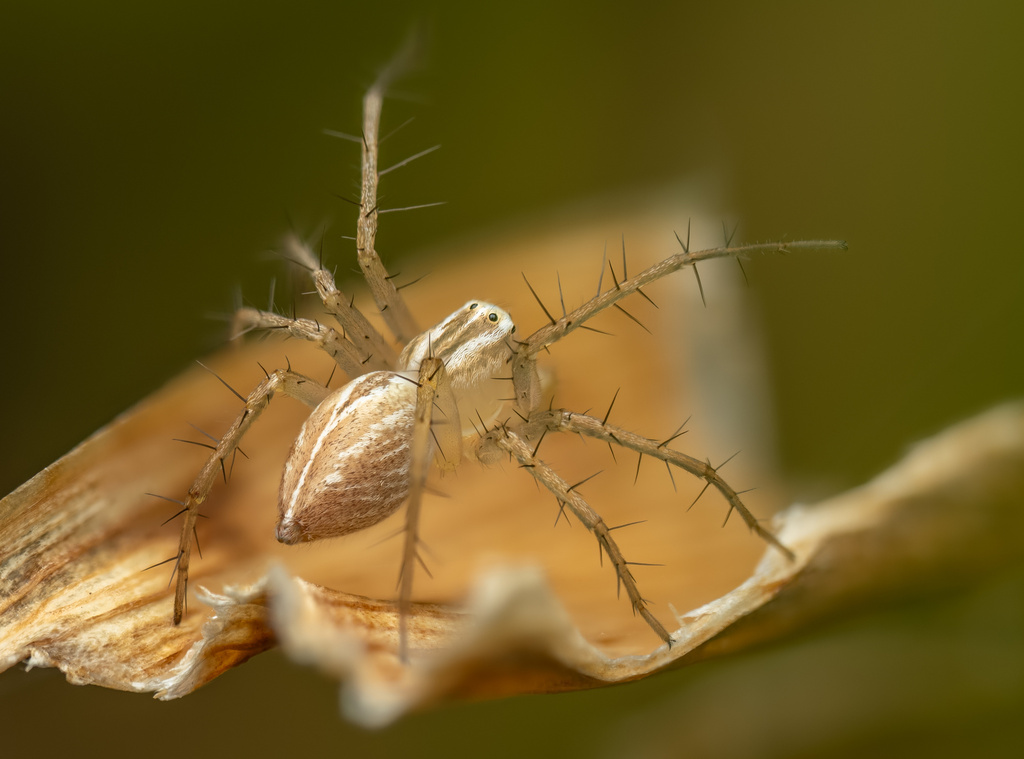
Striped lynx spider
Oxyopes salticus
≠The key differences
O. salticus is more brownish or orange with distinct striping rather than the uniform bright green of Peucetia viridans.
Green lynx is generally larger, brighter green and often lacks the distinct longitudinal brown striping; Peucetia has a more elongated abdomen and different eye spacing.
⚖︎Side by side
| Green lynx spider | Striped lynx spider | |
|---|---|---|
| To humans | Mildly venomous | Mild bite |
| Size | Females 8-22 mm body length; males 6-12 mm body length | Females about 5-7 mm body length; males about 4-6 mm (size varies by region) |
| Colours | Bright green, Yellow-green, Red (spots), Black (markings) | Yellow-green, Brown, Pale cream |
| Family | Oxyopidae | Oxyopidae |
| Habitat | Shrubs, bushes, tall grasses, garden plants and flowers; prefers warm, sunny vegetation where prey is abundant | Grasses, low shrubs, crop fields, gardens, hedgerows and roadside vegetation |
| Range | Southern United States from the Carolinas and Florida west through Texas and the Southwest to California, plus Mexico, Central America and the Caribbean | Widespread across the continental United States, parts of Mexico and adjacent regions of Central America; common in temperate to warm climates |
| Active | Daytime active (diurnal); most commonly seen spring through autumn in warm regions | Daytime active; most visible in warm months (spring through early fall) depending on latitude |
| Pest? | No | No |
🔍How to spot a green lynx spider
- Bright, uniform green body with long spiny legs arranged for jumping.
- Tapered abdomen often with small red or orange dorsal spots and black lateral markings.
- Diurnal on leaves and flowers; does not sit in a web waiting for prey.
🔍How to spot a striped lynx spider
- Daytime active, hunting spider seen on low vegetation or flowers rather than in webs
- Long, spiny legs and a spiky appearance typical of lynx spiders
- Distinct longitudinal pale and darker stripes or streaks on carapace and abdomen
- Small size (about 4-7 mm body length) with banded legs
?Frequently asked questions
What is the difference between a green lynx spider and a striped lynx spider?
O. salticus is more brownish or orange with distinct striping rather than the uniform bright green of Peucetia viridans. Green lynx is generally larger, brighter green and often lacks the distinct longitudinal brown striping; Peucetia has a more elongated abdomen and different eye spacing.
Is a green lynx spider or a striped lynx spider more dangerous?
Green lynx spider: Mildly venomous. Striped lynx spider: Mild bite. Bites are uncommon. Not considered dangerous.
Identification from photos is never certain: don't handle insects you can't identify, and get medical advice for bites, stings or allergic reactions.