
Long-bodied cellar spider
Pholcus phalangioides · Cellar spiders
A slender, long-legged house spider often found in dark corners and cellars; harmless to people and a common predator of household pests.
!Is the long-bodied cellar spider dangerous?
No. Bites are rare and typically produce no more than minor, localized redness or itching. This species' venom is not known to be medically significant to humans. If bitten, clean the area with soap and water and apply a cold compress if there is swelling; seek medical care if you experience an unusual allergic reaction.
Pets
Generally harmless to cats and dogs; bites are unlikely and would be of no medical consequence in most cases. Small pets that try to eat spiders may gag or show minor mouth irritation.
📖Overview
Pholcus phalangioides is a small, delicate long-legged spider commonly found in houses, cellars, garages and other sheltered structures around the world. It builds loose, irregular webs in corners and under furniture and is well known for its habit of vibrating the web when disturbed. This species is synanthropic (associated with human habitations) and is an effective predator of many small insects and other spiders, which makes it a common resident rather than a dangerous pest.
Although sometimes alarming because of its long legs and rapid movements, P. phalangioides is not considered medically dangerous to humans. It rarely bites, has small chelicerae that are usually unable to penetrate human skin deeply, and its venom is not known to cause serious effects in people. The species has been spread around the world via human transport.
🔍How to identify a long-bodied cellar spider
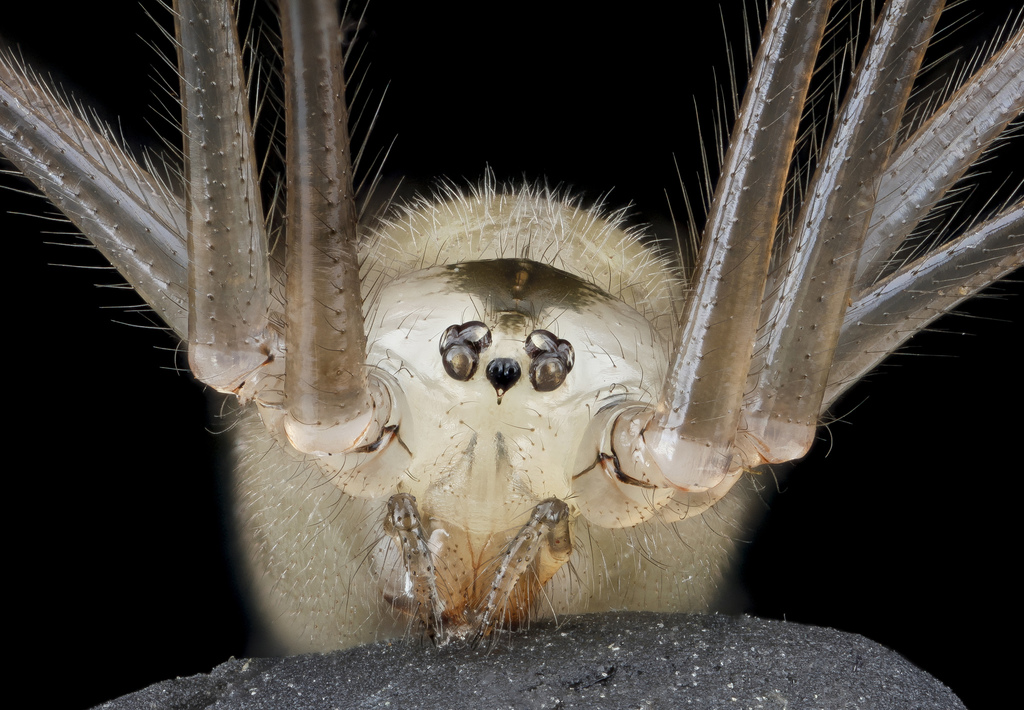
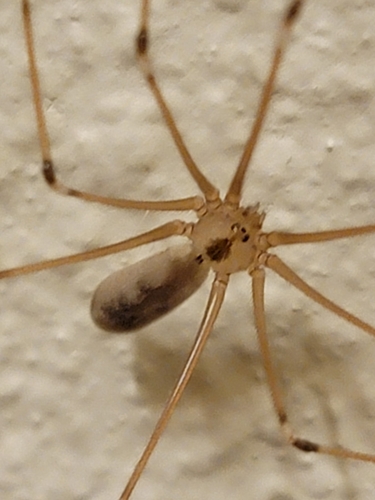
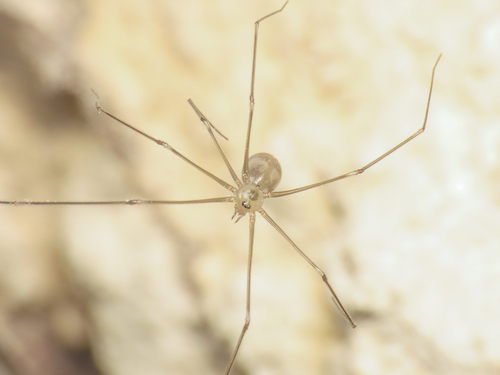
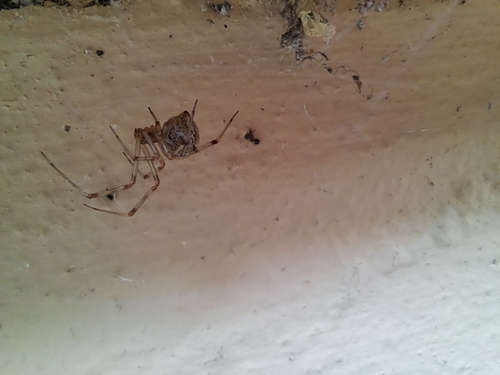
Adults have a small, oval to elongated abdomen and a very slender, cylindrical body. Legs are extremely long and thin relative to body size; the first pair is the longest. Coloration is generally pale yellowish-beige to light brown on the body with darker markings on the cephalothorax and a mottled abdomen. It has eight eyes: two groups of three larger eyes on a raised area plus a pair of tiny eyes in front, and the body appears fragile compared with sturdier house spiders.
- Very long, thin legs with a small, elongated abdomen and narrow cephalothorax.
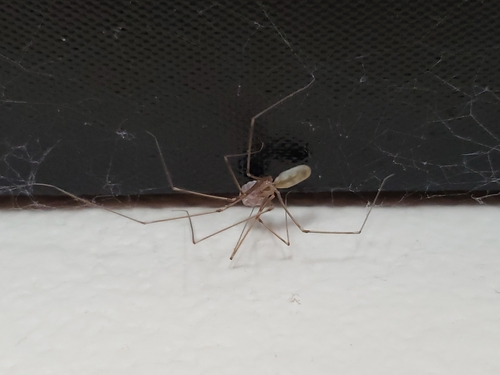
- Loose, messy irregular cobwebs in corners, ceilings and under furniture.
- When disturbed, often vibrates rapidly in its web, making it hard to see.
- Eight eyes: two groups of three larger eyes plus a pair of tiny median eyes.
Lookalikes
Common house spider Parasteatoda tepidariorum
Parasteatoda has a rounder, more robust abdomen and builds tidy tangle webs near light sources; Pholcus is much more slender with very long legs.
Harvestmen (daddy longlegs) Order Opiliones
Harvestmen are not spiders: they have a single fused, oval body with no waist, only two eyes, and produce no silk or webs; cellar spiders have a separate cephalothorax and abdomen and live in webs.
↻Life cycle
Egg sac
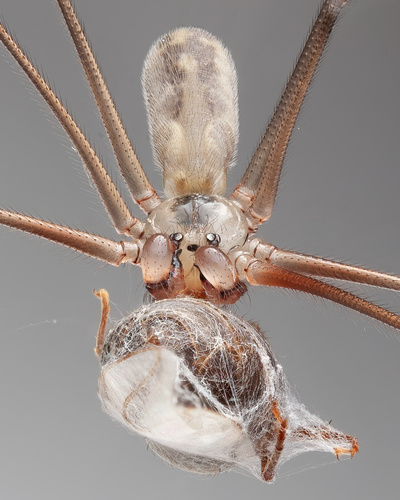
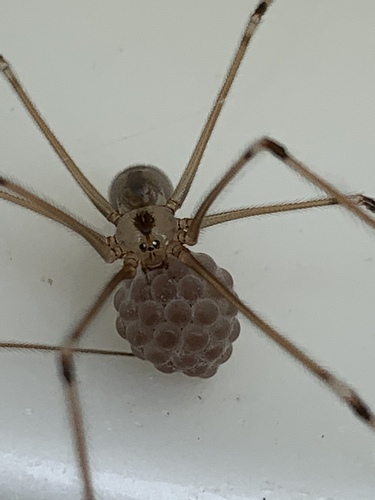
Females carry a loosely wrapped egg sac of a few dozen eggs in their jaws (chelicerae) until the spiderlings hatch.
Spiderling (juvenile)
Young spiders hatch as small versions of the adult and molt multiple times while remaining in the web or nearby until maturity.
Adult spider
Sexually mature spiders mate within the web; females may produce multiple egg sacs over their lifespan.
🍃Diet and predators
Young eat
Small flying insects and tiny arthropods trapped in the web; similar to adults but smaller prey items.
Adults eat
Small flying insects (flies, mosquitoes), other spiders, ants and household pests captured in irregular webs; they will sometimes invade other spiders' webs to steal prey.
Predators of the young
Predatory insects, ants, larger spiders and some parasitic wasps.
Predators of adults
Larger spiders, some species of wasps, birds and small mammals where accessible.
🌱Effect on plants and gardens
Does not feed on plants; beneficial as a predator of household insect pests.
📍Where and when to find it
Look in ceiling corners, cellars, basements, garages, attics, under eaves and behind furniture. Check for webs at night when spiders are more active.
Best time
Year-round indoors; best observed at night with a flashlight when they are active. Outdoors or unheated structures mainly spring to autumn evenings.
Observation tips
Approach slowly and shine a light at an angle to reveal webs. Photograph against darker backgrounds to show the thin legs and body shape; reducing camera shake helps capture the delicate legs.
✨Fun facts
- Long-bodied cellar spiders often 'vibrate' their webs when disturbed; this behavior likely helps blur their outline and may deter predators.
- They will sometimes invade another spider's web and capture or eat the resident spider.
- Because they eat mosquitoes and flies, they can be considered helpful household residents.
?Frequently asked questions
Are long-bodied cellar spiders dangerous?
No. They are not considered dangerous to people; bites are rare and cause at most minor local symptoms in most cases.
Do long-bodied cellar spiders bite?
They rarely bite. If a bite occurs it typically causes only minor redness or irritation.
Why do I find them in my house?
They prefer sheltered, dark, and undisturbed places where they can build webs and catch prey. Human buildings provide stable temperatures, humidity and abundant insects.
How can I get rid of them?
Remove webs with a vacuum or broom, reduce clutter and seal cracks and gaps. Reducing insect prey by improving sanitation and using window screens helps. Chemical sprays are usually unnecessary; if you must use them, follow label directions and consider professional pest control for large infestations.
Why do they shake their webs?
The rapid vibrating likely hides their shape, making it harder for predators to target them and may also help entangle or confuse prey.
📷Photos of the long-bodied cellar spider
More spiders
This guide was written with AI assistance and fact-checked, last updated 2026-10-09. Identification from photos is never certain: don't handle insects you can't identify, and get medical advice for bites, stings or allergic reactions.