
Common house spider vs Long-bodied cellar spider
These two are easy to mix up. Here's how to tell a common house spider from a long-bodied cellar spider, and whether either one bites or stings.
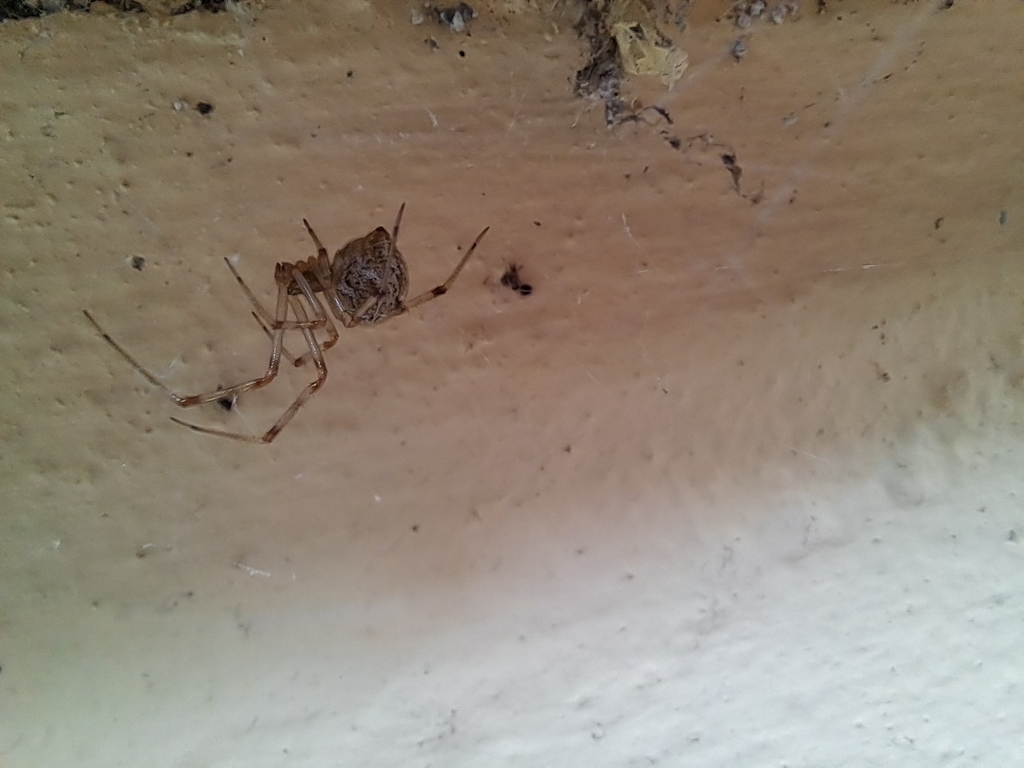
Common house spider
Parasteatoda tepidariorum
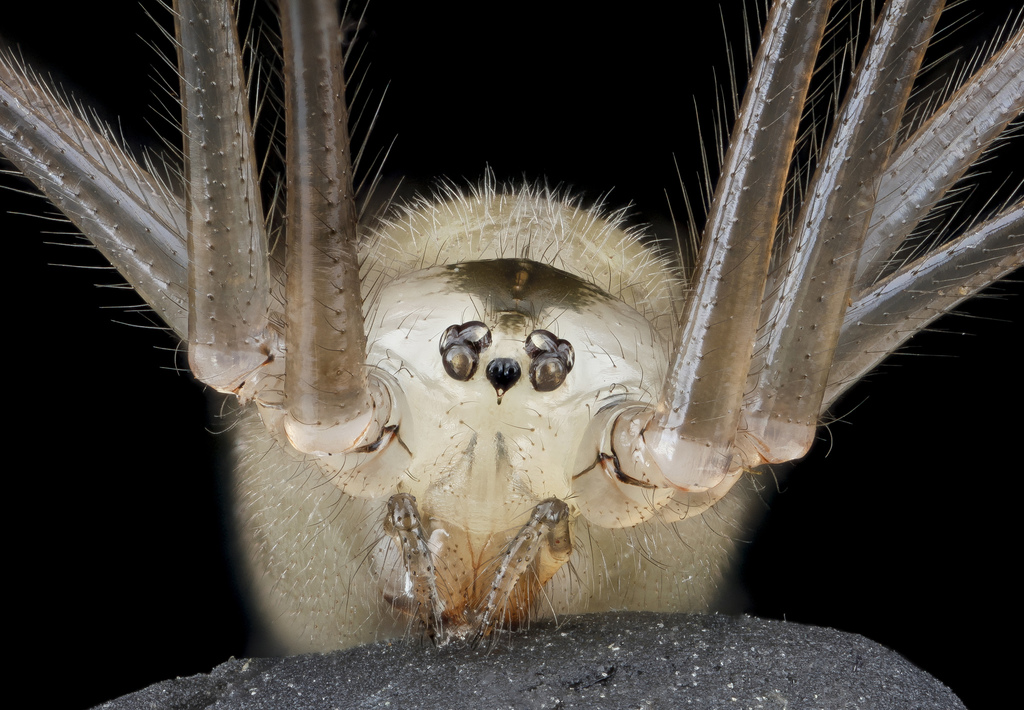
Long-bodied cellar spider
Pholcus phalangioides
≠The key differences
Parasteatoda has a rounder, more robust abdomen and builds tidy tangle webs near light sources; Pholcus is much more slender with very long legs.
⚖︎Side by side
| Common house spider | Long-bodied cellar spider | |
|---|---|---|
| To humans | Mild bite | Non-toxic |
| Size | Females 5-8 mm body length; males 3-6 mm body length | Body length 5-8 mm; legspan commonly 25-50 mm or more |
| Colours | Brown, Tan, Cream, Dark brown | Pale beige, Light brown, Gray-brown |
| Family | Theridiidae | Pholcidae |
| Habitat | Sheltered indoor and peridomestic sites: corners, ceilings, basements, attics, garages, window frames, behind furniture and under eaves. | Human structures (cellars, basements, attics, garages), sheltered corners, under furniture, eaves and window frames; also in caves and sheltered natural crevices in some regions. |
| Range | Probably native to South America but now cosmopolitan; found across North America, Europe, Asia, and other temperate regions often associated with human structures. | Cosmopolitan — spread worldwide by human transport and now found in buildings throughout temperate regions. |
| Active | Year-round indoors; most active at night when hunting and maintaining webs. | Year-round in heated buildings; outdoors or in unheated structures mainly spring to autumn; mostly nocturnal and most active at night. |
| Pest? | No | No |
🔍How to spot a common house spider
- Irregular, three-dimensional tangled web in sheltered indoor corners with a silken retreat.
- Rounded, somewhat bulbous abdomen with variable brown/tan markings.
- Females noticeably larger and more robust than males; males slimmer with visible pedipalps.
- Shorter legs relative to long-legged house spiders; abdomen often patterned rather than uniformly black.
🔍How to spot a long-bodied cellar spider
- Very long, thin legs with a small, elongated abdomen and narrow cephalothorax.
- Loose, messy irregular cobwebs in corners, ceilings and under furniture.
- When disturbed, often vibrates rapidly in its web, making it hard to see.
- Eight eyes: two groups of three larger eyes plus a pair of tiny median eyes.
?Frequently asked questions
What is the difference between a common house spider and a long-bodied cellar spider?
Parasteatoda has a rounder, more robust abdomen and builds tidy tangle webs near light sources; Pholcus is much more slender with very long legs.
Is a common house spider or a long-bodied cellar spider more dangerous?
Common house spider: Mild bite. Long-bodied cellar spider: Non-toxic. Bites are rare and usually occur only if the spider is trapped against skin. Bites are rare and typically produce no more than minor, localized redness or itching.
Identification from photos is never certain: don't handle insects you can't identify, and get medical advice for bites, stings or allergic reactions.