
European garden spider vs Marbled orbweaver
These two are easy to mix up. Here's how to tell an European garden spider from a marbled orbweaver, and whether either one bites or stings.
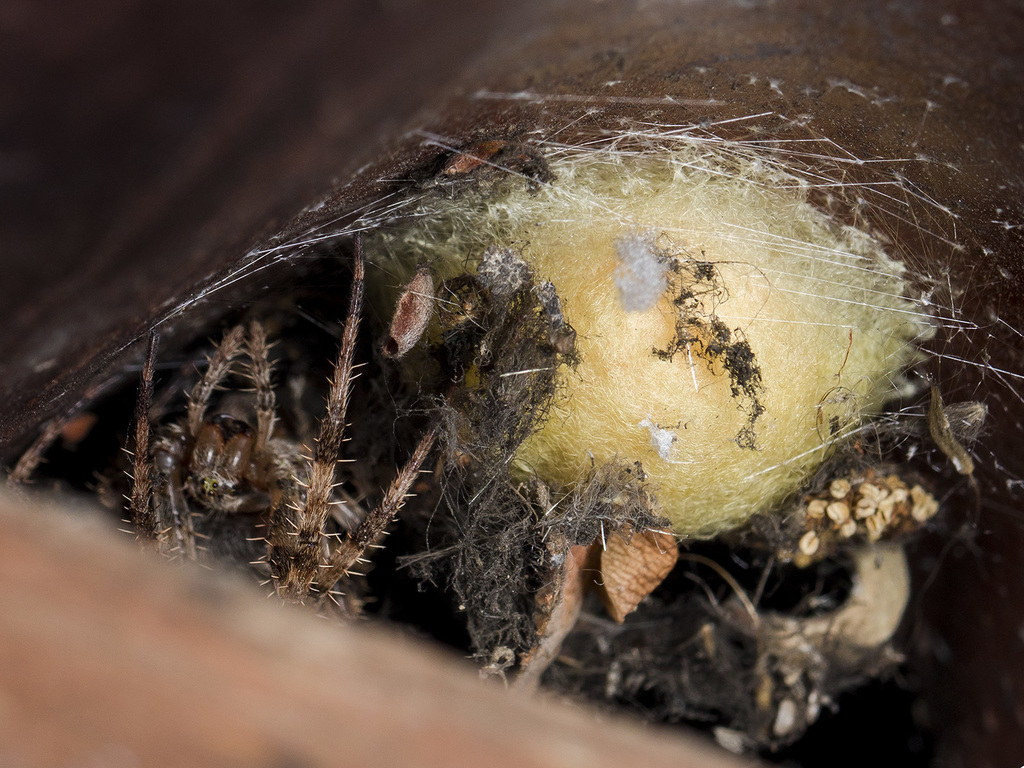
European garden spider
Araneus diadematus
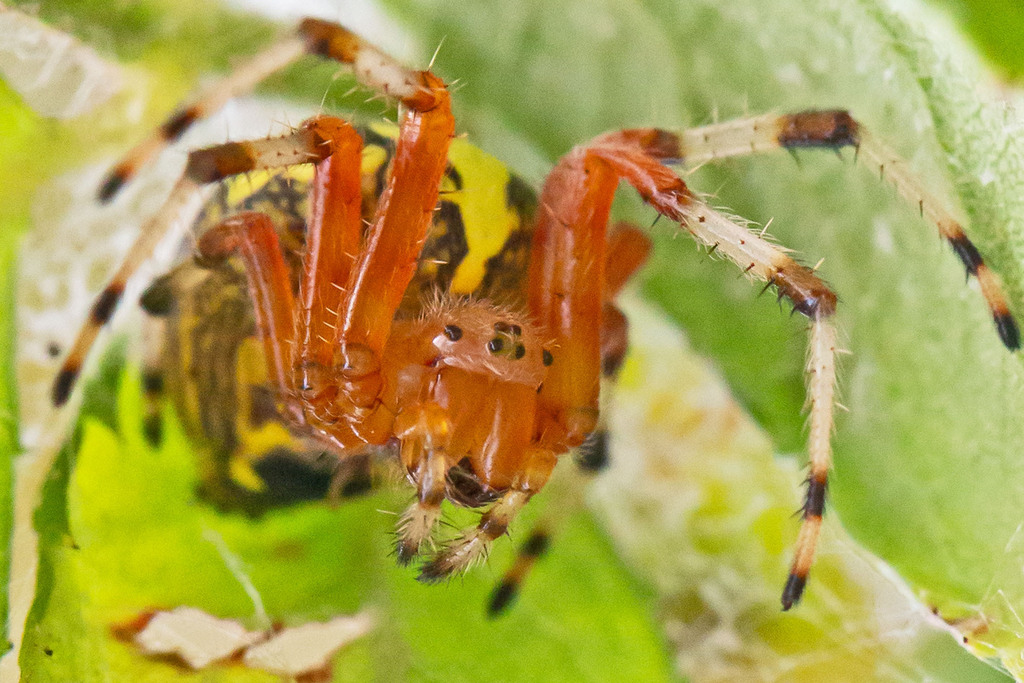
Marbled orbweaver
Araneus marmoreus
≠The key differences
A. marmoreus often has a marbled abdomen pattern rather than discrete cross spots and prefers woodland edges; look for more mottled markings.
Has a distinctive white cross of spots on the abdomen and usually less marbled patterning; Araneus diadematus is typically browner and lacks the bright orange morph.
⚖︎Side by side
| European garden spider | Marbled orbweaver | |
|---|---|---|
| To humans | Mild bite | Mild bite |
| Size | Females 6-20 mm body length; males 5-13 mm body length | Females 9-20 mm body length, males 5-9 mm body length |
| Colours | Brown, Pale yellow, Reddish-brown, Cream (cross spots) | Orange, Yellow, Brown, White, Black |
| Family | Araneidae | Araneidae |
| Habitat | Gardens, hedgerows, shrubs, wood edges, buildings — anywhere to anchor orb webs, often 0.5-3 m above ground | Woodland edges, shrubs, hedgerows, gardens, and other vegetated areas where they can anchor orb webs |
| Range | Native across Europe and parts of Asia; established in North America (introduced populations) | Holarctic: widespread in North America and Eurasia (temperate regions) |
| Active | Most visible late summer and autumn; adults are diurnal and nocturnal but build and tend webs day and night | Late spring to autumn; webs typically built at dusk and used overnight |
| Pest? | No | No |
🔍How to spot an European garden spider
- Look for a round orb web (classic wheel-shaped) often 20-50 cm across, with the spider sitting near the centre or in a retreat at the web edge.
- Observe the dorsal abdomen for a series of pale spots forming a rough cross-shaped pattern (white or cream), the species' characteristic marking.
- Females are noticeably larger and more rounded than males; colour varies from pale yellow-brown to reddish-brown but patterning remains consistent.
- Legs are relatively stout and may show faint banding; the abdomen shape is distinctly bulbous compared with long-legged orb weavers.
🔍How to spot a marbled orbweaver
- Look for a rounded, marbled abdomen with darker streaks on an orange or yellow background
- Female size larger and abdomen more swollen than males (9-20 mm vs 5-9 mm)
- Orb web placed in shrubs or low vegetation, often with the spider near the web hub or in a silk retreat connected by a signal line
- Two main color morphs: orange ("pumpkin") and yellow; both show marbled patterning
?Frequently asked questions
What is the difference between an European garden spider and a marbled orbweaver?
A. marmoreus often has a marbled abdomen pattern rather than discrete cross spots and prefers woodland edges; look for more mottled markings. Has a distinctive white cross of spots on the abdomen and usually less marbled patterning; Araneus diadematus is typically browner and lacks the bright orange morph.
Is an European garden spider or a marbled orbweaver more dangerous?
European garden spider: Mild bite. Marbled orbweaver: Mild bite. Bites are rare and typically occur only if the spider is handled or trapped against skin. Not dangerous to people.
Identification from photos is never certain: don't handle insects you can't identify, and get medical advice for bites, stings or allergic reactions.