
Long-bodied cellar spider vs Banded harvestman
These two are easy to mix up. Here's how to tell a long-bodied cellar spider from a banded harvestman, and whether either one bites or stings.
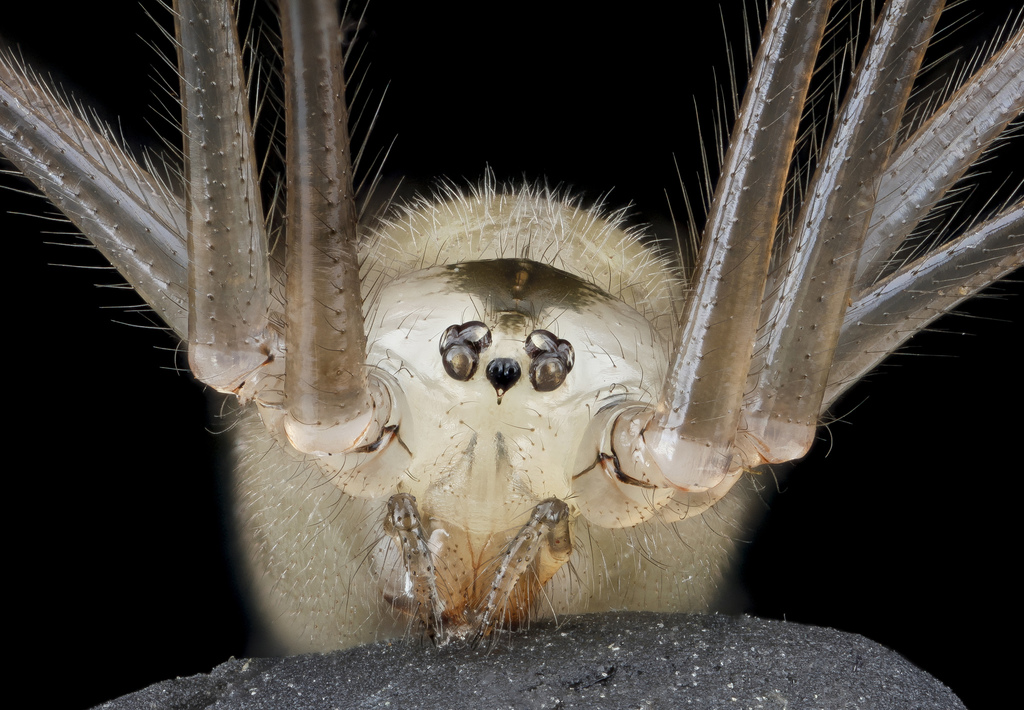
Long-bodied cellar spider
Pholcus phalangioides
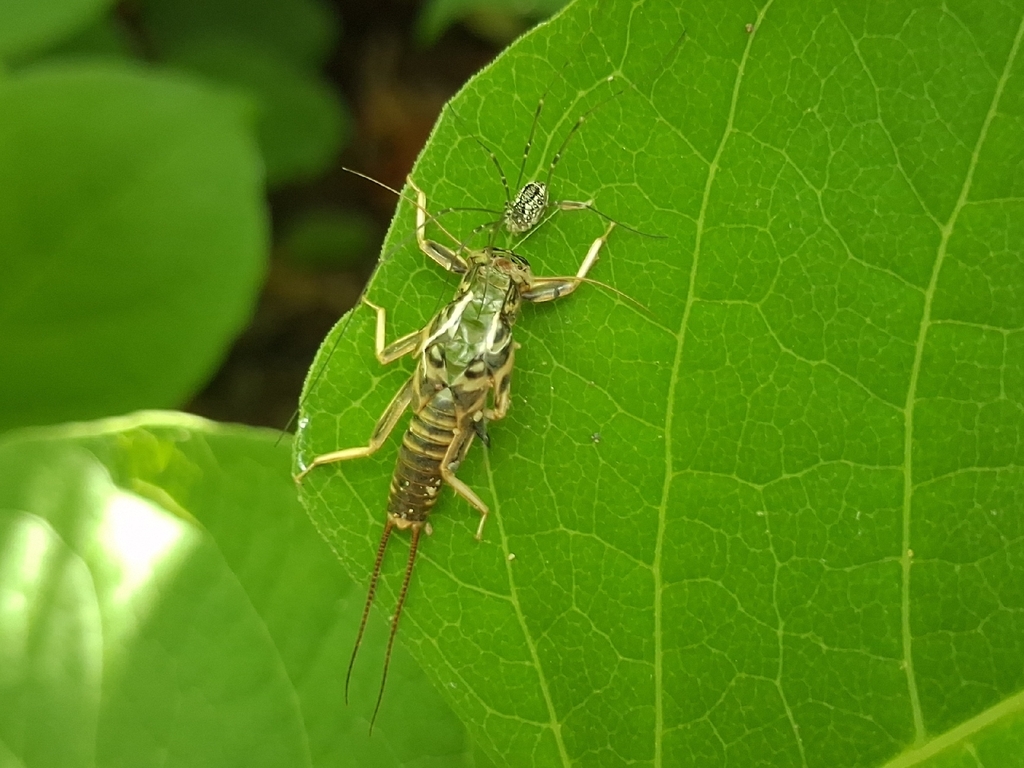
Banded harvestman
Leiobunum vittatum
≠The key differences
Not a harvestman (it's a true spider). Pholcus has a segmented body with a narrow waist and builds webs; Leiobunum does not build webs and has a single rounded body.
⚖︎Side by side
| Long-bodied cellar spider | Banded harvestman | |
|---|---|---|
| To humans | Non-toxic | Non-toxic |
| Size | Body length 5-8 mm; legspan commonly 25-50 mm or more | Body about 5-8.5 mm; leg span commonly 30-70 mm (legs highly variable) |
| Colours | Pale beige, Light brown, Gray-brown | Brown, Cream, Black, Reddish-brown |
| Family | Pholcidae | Sclerosomatidae |
| Habitat | Human structures (cellars, basements, attics, garages), sheltered corners, under furniture, eaves and window frames; also in caves and sheltered natural crevices in some regions. | Woodland edges, shrubs, gardens, fences, house walls, under bark and leaf litter |
| Range | Cosmopolitan — spread worldwide by human transport and now found in buildings throughout temperate regions. | Widespread in eastern and central North America; reported across parts of the United States and Canada |
| Active | Year-round in heated buildings; outdoors or in unheated structures mainly spring to autumn; mostly nocturnal and most active at night. | Spring to autumn, most active at night or in cool, damp conditions |
| Pest? | No | No |
🔍How to spot a long-bodied cellar spider
- Very long, thin legs with a small, elongated abdomen and narrow cephalothorax.
- Loose, messy irregular cobwebs in corners, ceilings and under furniture.
- When disturbed, often vibrates rapidly in its web, making it hard to see.
- Eight eyes: two groups of three larger eyes plus a pair of tiny median eyes.
🔍How to spot a banded harvestman
- Single, compact oval body (no narrow waist), golden to reddish-brown with a broad dark stripe down the back
- Very long, thin legs with dark knee segments and dark rings; the second pair is often waved like antennae
- Small eye tubercle near the front of the body instead of multiple eyes on separate segments
- Clusters or groups on walls and tree trunks at night; unlike spiders, no web or silk present
?Frequently asked questions
What is the difference between a long-bodied cellar spider and a banded harvestman?
Not a harvestman (it's a true spider). Pholcus has a segmented body with a narrow waist and builds webs; Leiobunum does not build webs and has a single rounded body.
Is a long-bodied cellar spider or a banded harvestman more dangerous?
Long-bodied cellar spider: Non-toxic. Banded harvestman: Non-toxic. Bites are rare and typically produce no more than minor, localized redness or itching. Banded harvestmen do not have venom glands and cannot sting.
Identification from photos is never certain: don't handle insects you can't identify, and get medical advice for bites, stings or allergic reactions.