
Golden silk orbweaver vs Joro spider
These two are easy to mix up. Here's how to tell a golden silk orbweaver from a joro spider, and whether either one bites or stings.
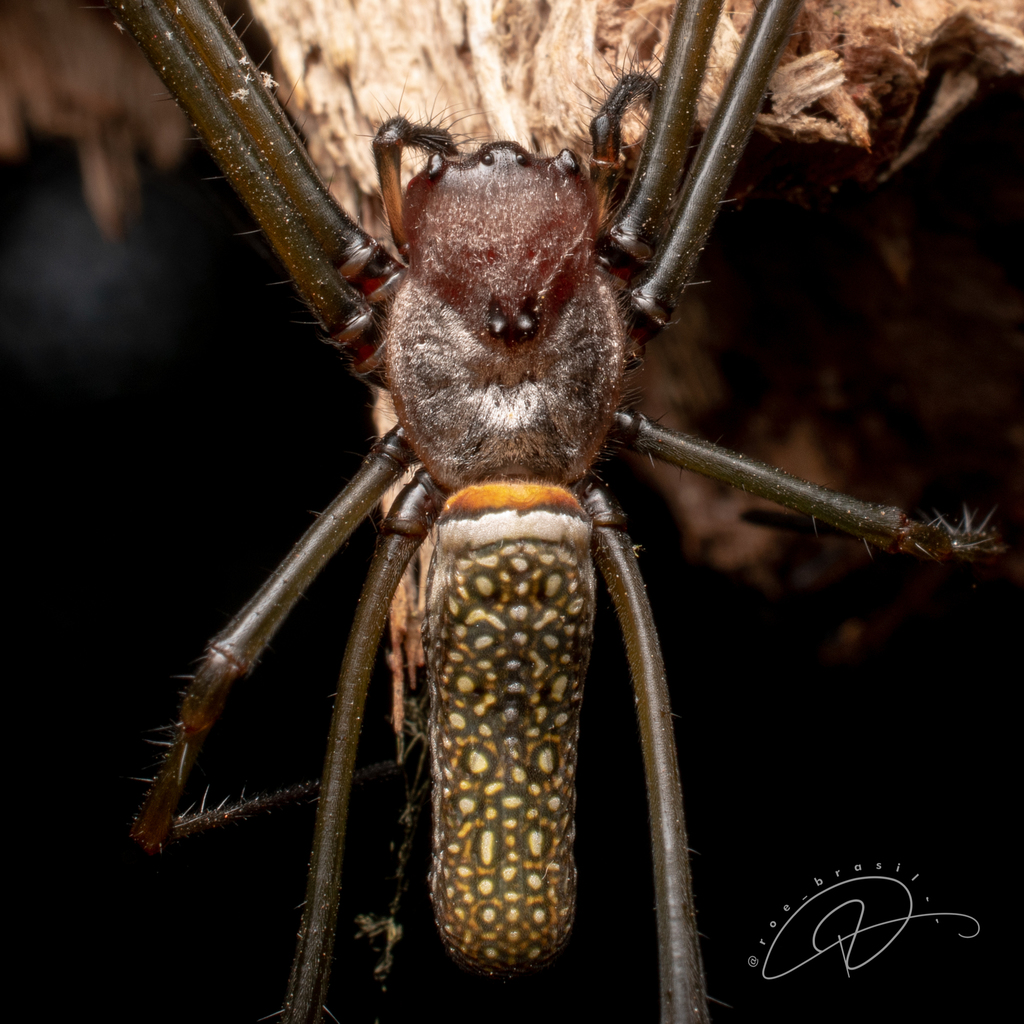
Golden silk orbweaver
Trichonephila clavipes
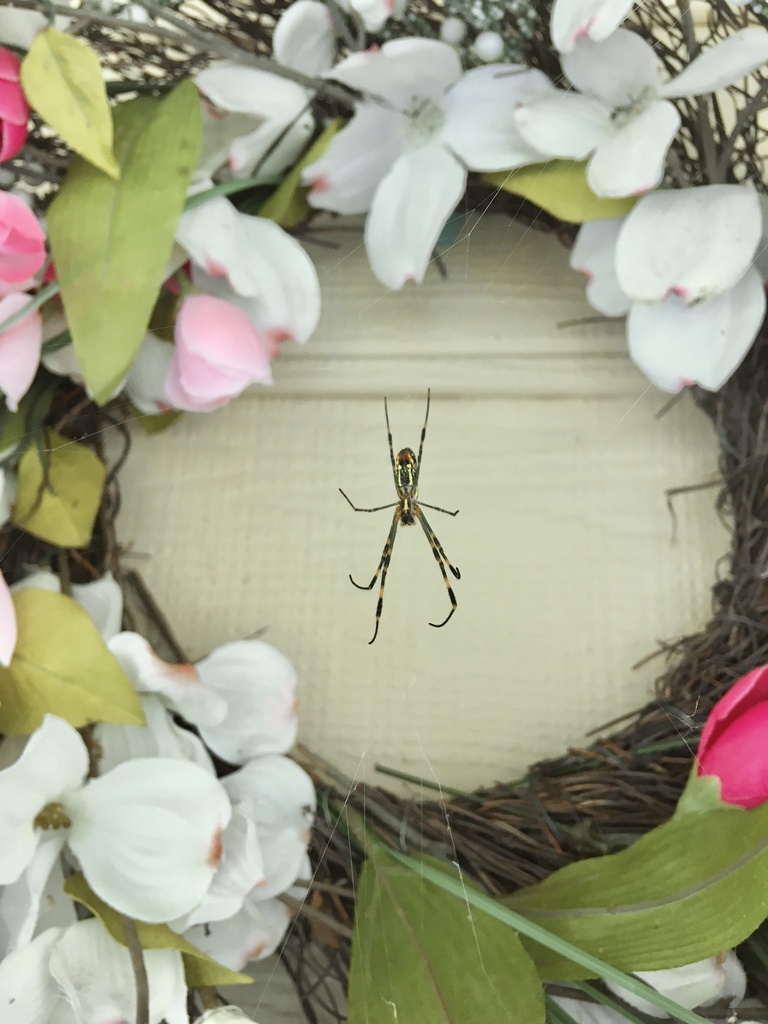
Joro spider
Trichonephila clavata
≠The key differences
Jorō females have a yellow abdomen with blue-black bands and red markings on the underside, and lack the hair tufts on the legs; native to East Asia, it has been introduced to the southeastern US (first found in Georgia around 2013).
T. clavipes has a more cylindrical abdomen with pale spots rather than broad yellow and blue-black bands, and feathery tufts of hair on its legs; it occurs in the southeastern US and Latin America.
⚖︎Side by side
| Golden silk orbweaver | Joro spider | |
|---|---|---|
| To humans | Mild bite | Mild bite |
| Size | Female body length 20-35 mm; male body length 4-6 mm | Females about 17-25 mm body length, males under 10 mm |
| Colours | Golden yellow, Brown, Black, Pale yellow | Yellow, Black, Red-orange, Golden silk (sheen) |
| Family | Araneidae | Araneidae |
| Habitat | Warm, sheltered sites: gardens, forest edges, shrubs, porches and eaves where large orb webs can be anchored | Forests, shrubby edges, gardens and around buildings where they can anchor large orb webs between vegetation or structures |
| Range | Southeastern United States through Central America, the Caribbean and much of South America | Native to Japan, Korea, Taiwan and China; introduced and established in the southeastern United States (first recorded in Georgia around 2013) and spreading. |
| Active | Warm months (spring to fall) in temperate zones; year-round activity in tropical regions; mostly active during daylight and dusk | Most noticeable in late summer and autumn when adult females reach full size; webs are maintained day and night. |
| Pest? | No | No |
🔍How to spot a golden silk orbweaver
- Large female with elongated abdomen showing yellow, brown and black patterning and a glossy sheen
- Distinctive golden-yellow tint to silk and web visible in sunlight
- Marked sexual dimorphism: tiny, dull-colored males near the female's web
- Long, banded legs often with tufts of hair
🔍How to spot a joro spider
- Look for large orb webs with a noticeable golden sheen to the silk in sunlight
- Adult females have a yellow and blue-black banded abdomen with red markings underneath near the rear
- Strong sexual size dimorphism: much larger, colourful females and much smaller, drab males
- Legs are long and yellow-banded; large webs are often built high between trees, shrubs, porches and power lines
?Frequently asked questions
What is the difference between a golden silk orbweaver and a joro spider?
Jorō females have a yellow abdomen with blue-black bands and red markings on the underside, and lack the hair tufts on the legs; native to East Asia, it has been introduced to the southeastern US (first found in Georgia around 2013). T. clavipes has a more cylindrical abdomen with pale spots rather than broad yellow and blue-black bands, and feathery tufts of hair on its legs; it occurs in the southeastern US and Latin America.
Is a golden silk orbweaver or a joro spider more dangerous?
Golden silk orbweaver: Mild bite. Joro spider: Mild bite. Bites are rare and usually occur only if the spider is handled or trapped against skin. Joro spiders are not aggressive.
Identification from photos is never certain: don't handle insects you can't identify, and get medical advice for bites, stings or allergic reactions.