
Joro spider
Trichonephila clavata · Golden orb-weavers
A large, conspicuously coloured orb-weaver native to East Asia, now established as an introduced species in parts of the United States.
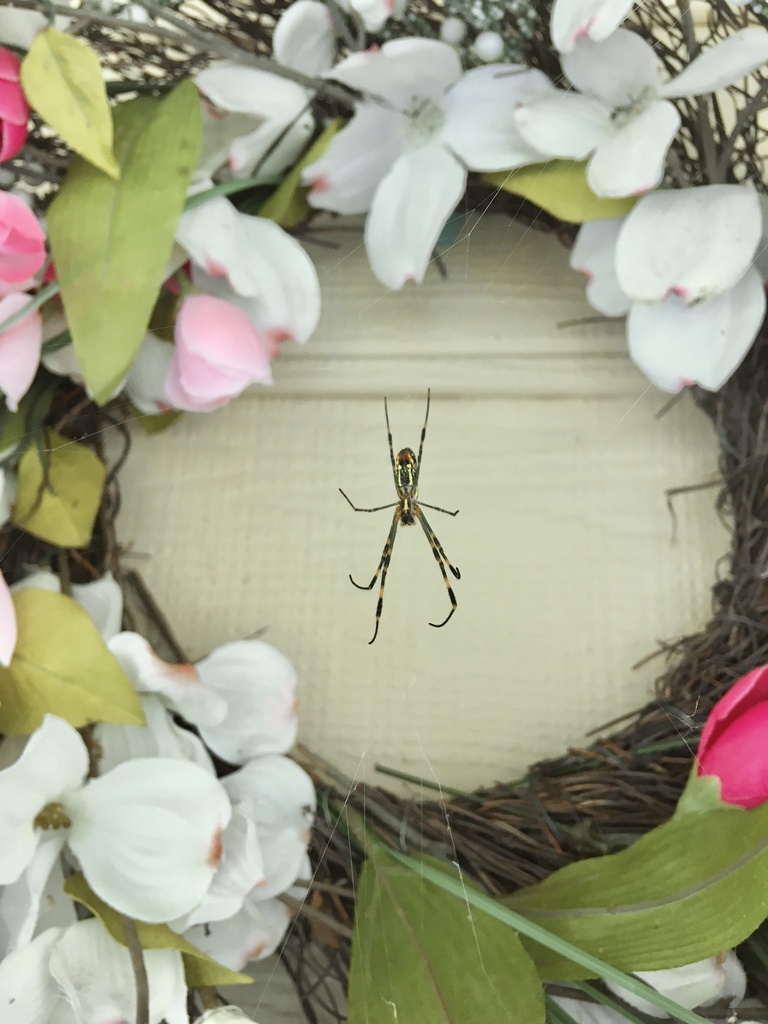
!Is the joro spider dangerous?
Only mildly. Joro spiders are not aggressive. Bites are rare and usually occur only if the spider is handled or trapped against skin; symptoms are typically mild local pain, redness and swelling similar to a bee sting. Serious allergic reactions are uncommon but anyone who develops severe symptoms (difficulty breathing, widespread swelling, or signs of infection) should seek medical attention.
Pets
Small dogs and cats are unlikely to be seriously harmed by a Joro spider bite; a bite may cause local pain and swelling. Monitor pets if bitten and contact a veterinarian if symptoms are severe or persist.
📖Overview
Trichonephila clavata is a large orb-weaving spider native to Japan, Korea, Taiwan and parts of China. Females build large, sticky orb webs in vegetation and around human structures to capture flying insects. Males are much smaller and often live on the edge of the female's web.
In recent years the species has become established in several areas of the eastern United States after accidental introduction. It is generally non-aggressive toward people, feeds on a wide range of flying insects, and is considered ecologically beneficial for reducing pest insects. The species can be very noticeable because of the bright colours of adult females and the large, strong webs they weave.
🔍How to identify a joro spider
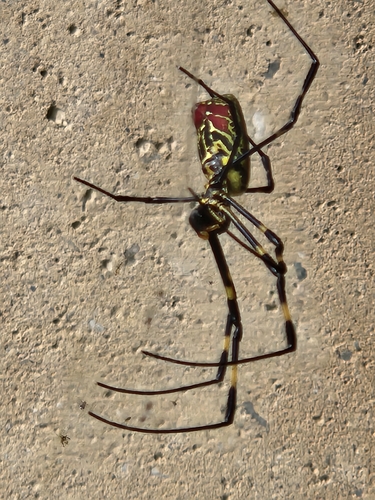
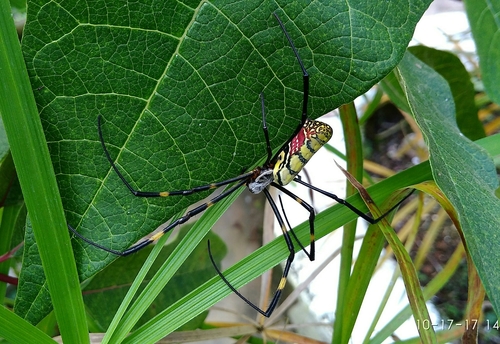
Adult females are large (body length about 17-25 mm, excluding legs) with long legs and an elongated abdomen. The abdomen is banded bright yellow and blue-black, with red markings on the underside towards the rear. Males are much smaller (under 10 mm) and duller brown. Legs are long, black with yellow bands; the web silk often has a golden tint in bright light.
- Look for large orb webs with a noticeable golden sheen to the silk in sunlight
- Adult females have a yellow and blue-black banded abdomen with red markings underneath near the rear
- Strong sexual size dimorphism: much larger, colourful females and much smaller, drab males
- Legs are long and yellow-banded; large webs are often built high between trees, shrubs, porches and power lines
Lookalikes
Golden silk orb-weaver Trichonephila clavipes
T. clavipes has a more cylindrical abdomen with pale spots rather than broad yellow and blue-black bands, and feathery tufts of hair on its legs; it occurs in the southeastern US and Latin America.
Giant golden orb-weaver Nephila pilipes
N. pilipes is larger and mostly black with yellow markings, with less distinct banding, and occurs in South and Southeast Asia and Australasia.
↻Life cycle
Egg sac
In autumn females lay eggs in silk sacs attached to bark or structures; the eggs overwinter and spiderlings hatch in spring.
Juvenile (spiderling)
Spiderlings hatch and disperse by ballooning (riding air currents on silk). Juveniles grow through several moults while building smaller orb webs.
Adult spider
Adults reach maturity in late summer to autumn; females build large webs to capture prey and males search for females to mate.
🍃Diet and predators
Young eat
Small flying insects, aphids and other tiny arthropods
Adults eat
Flying insects such as flies, mosquitoes, moths and small beetles captured in their orb webs
Predators of the young
Small birds, predatory insects and parasitoid wasps
Predators of adults
Birds, wasps (including spider-hunting wasps), and some small mammals
🌱Effect on plants and gardens
Joro spiders do not feed on plants; they capture flying insects and therefore can reduce pest insect numbers in gardens and agricultural edges.
📍Where and when to find it
Find adults and large webs in shrubs, trees, garden plants and around eaves or porch structures; egg sacs are attached to vegetation and may overwinter.
Best time
Late summer and autumn are best for observing adult females; webs are visible during daylight.
Observation tips
Photograph from a distance to avoid disturbing the spider. Backlighting highlights the golden sheen of the silk. Look up: webs are often high in trees, on porches and between utility lines.
✨Fun facts
- The silk of Joro spiders has a golden sheen that can be especially visible in sunlight.
- Juvenile spiderlings commonly disperse by 'ballooning' on silk and wind, which helped the species spread when introduced to new areas.
- Females sometimes remain on or near their webs for most of their adult life, while males are more mobile and often smaller.
?Frequently asked questions
Are Joro spiders dangerous?
Only mildly. They are not dangerous to humans; bites are rare and usually cause only mild, localized symptoms similar to a bee sting.
Do Joro spiders bite people?
They can bite if provoked or handled, but they are not aggressive and bites are uncommon.
Why is a Joro spider in my house or yard?
They build webs where flying insects are abundant; yards with lights, shrubs and sheltered corners provide good web sites. They may also anchor webs to porches, eaves and garden structures.
How do I get rid of Joro spiders?
Remove webs by sweeping or using a broom, reduce outdoor lighting that attracts prey, and trim vegetation near structures. Use gloves if you must handle webs or sacs. Chemical control is rarely necessary and not recommended for single spiders.
Are Joro spiders invasive?
They are an introduced, non-native species outside East Asia, with established populations in parts of the southeastern United States. Their long-term ecological impact is still being studied.
📷Photos of the joro spider
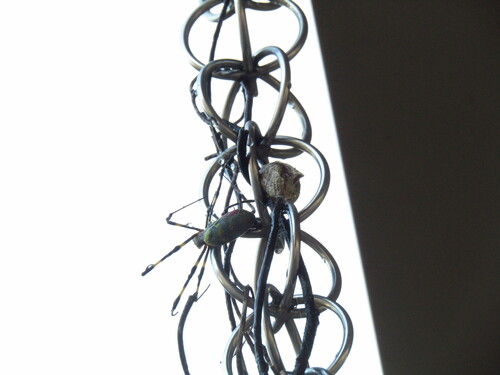
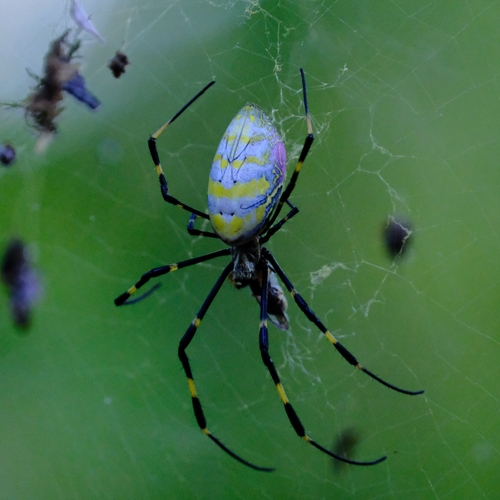
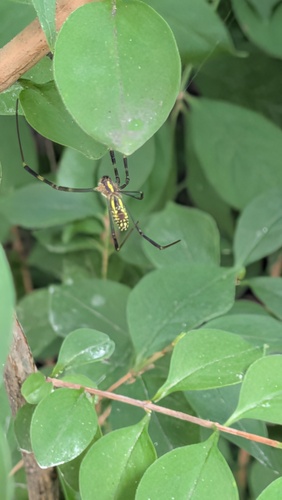
More spiders
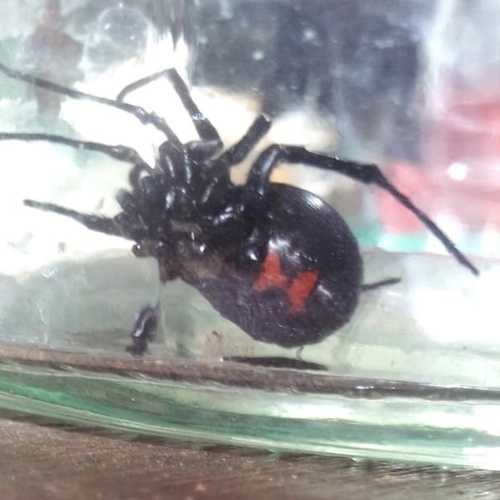
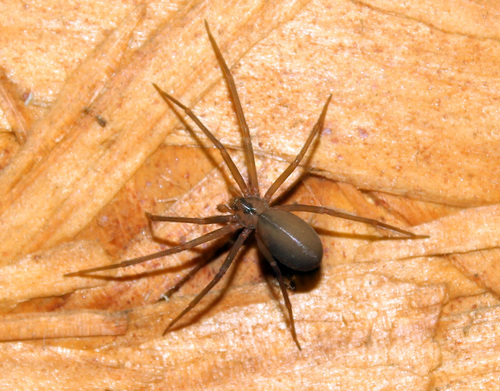
This guide was written with AI assistance and fact-checked, last updated 2026-10-10. Identification from photos is never certain: don't handle insects you can't identify, and get medical advice for bites, stings or allergic reactions. More about the joro spider: iNaturalist, Wikipedia.