
Pantropical huntsman spider
Heteropoda venatoria · Huntsman spiders
A large, flat-bodied nocturnal spider often found in warm buildings worldwide; fast and startling but rarely dangerous to people.

!Is the pantropical huntsman spider dangerous?
Only mildly. Bites are uncommon and usually occur only if the spider is provoked, trapped on skin, or handled. A bite can be painful with local swelling, redness and brief numbness; systemic symptoms are rare. Clean the wound, apply cold compress, and seek medical care if symptoms worsen or allergic reaction occurs.
Pets
Generally not dangerous to cats and dogs; very large bites could cause local pain or swelling in small pets. Monitor pets after any bite and consult a veterinarian if signs of illness appear.
📖Overview
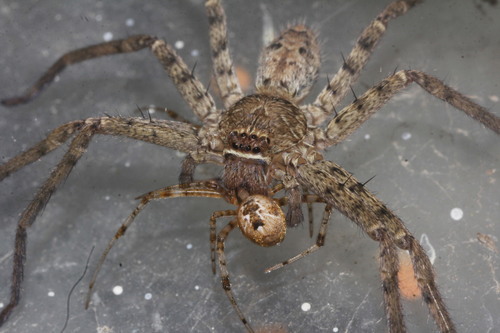
Heteropoda venatoria is a widespread tropical and subtropical huntsman spider that commonly lives in and around human structures. It is nocturnal, a swift active predator that hunts insects and other small arthropods rather than building a capture web. Because of its flattened body and laterigrade legs (legs that extend sideways), it can squeeze into narrow crevices, behind furniture, and into door and window frames.
This species has been transported by humans and is now found across pantropical regions and in heated buildings in temperate zones worldwide. It is not aggressive toward people but will bite if pressed or handled roughly. Bites are usually painful and may cause localized swelling, but serious medical reactions are uncommon. H. venatoria is valued by many homeowners as a predator of household pest insects and cockroaches.
🔍How to identify a pantropical huntsman spider
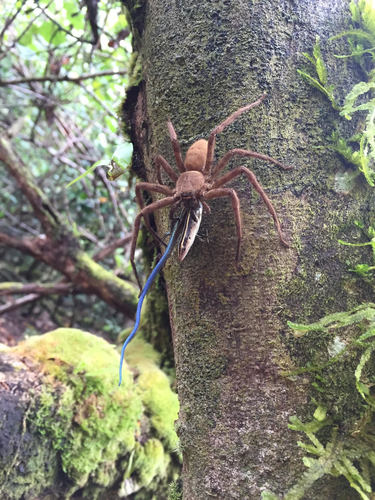
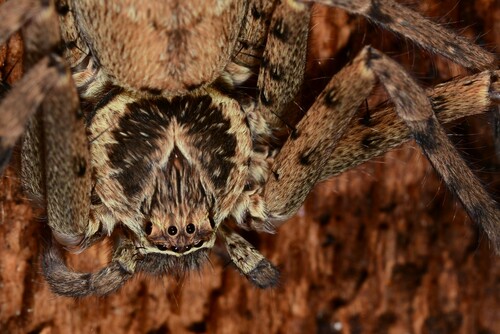
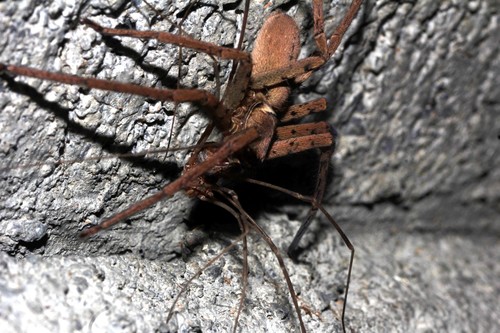
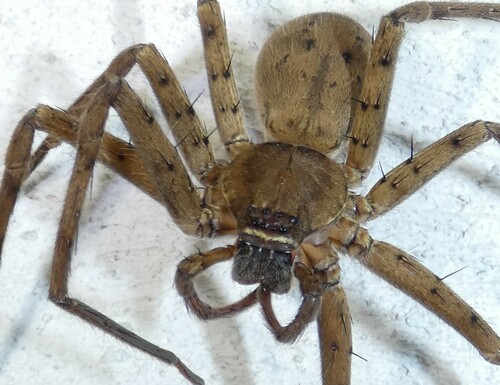
Adults have a broad, flattened carapace and long, laterally oriented legs that give a crab-like appearance. Body (cephalothorax and abdomen) is mottled brown to tan with subtle patterning; legs are similarly patterned, often with faint banding. Eye arrangement typical of huntsman spiders (eight eyes in two rows). Female and male general shapes are similar, though males are more slender and may have enlarged palps. When resting the legs are held extended sideways, making the spider appear wider than its body length.
- Large, flattened body with legs held sideways (laterigrade), giving a crab-like profile
- Mottled brown to tan coloration with faint banding on legs
- Very long legspan (often 7-12 cm) compared with body length
- Found in warm buildings, behind furniture, under bark or in leaf litter; active at night
Lookalikes
Olios huntsman spiders Olios spp.
Olios species are also large huntsman spiders but often have different eye arrangements and subtly different body proportions and leg spination; identification to species often requires close examination of genitalia.
Barn funnel weaver Tegenaria domestica
Tegenaria (funnel weavers) have longer, more upright legs and build sheet/funnel webs; they do not have the laterigrade, crab-like leg posture of Heteropoda.
↻Life cycle
Egg sac
Females produce silk egg sacs and guard them in a sheltered spot; sac contains multiple eggs and is sometimes carried or guarded near the female.
Spiderling (nymph)
Young spiders hatch as miniature versions of adults and go through successive molts (instars) as they grow, remaining predatory.
Adult
Sexually mature spiders that mate and repeat the reproductive cycle; adults are the large, fast-moving spiders commonly seen indoors at night.
🍃Diet and predators
Young eat
Small insects and arthropods, including tiny cockroaches and flies
Adults eat
Larger insects and other spiders; strong predators of cockroaches and household pests
Predators of the young
Ants, predatory insects, larger spiders, small lizards
Predators of adults
Birds, larger lizards, centipedes, and small mammals where present
🌱Effect on plants and gardens
Does not feed on plants; beneficial as a predator of nuisance insects and cockroaches
📍Where and when to find it
Look indoors at night on walls, ceilings, behind furniture, in garages and sheds; outdoors under loose bark, in rock crevices and leaf litter.
Best time
Night-time year-round in warm regions; in temperate zones primarily during the warm months and inside heated buildings during winter.
Observation tips
Use a torch at night to spot active hunters on walls. Photograph from a distance to avoid provoking the spider; a macro setting helps capture eye arrangement and leg posture.
✨Fun facts
- H. venatoria is often introduced by humans and has spread widely alongside shipping and trade.
- Rather than using webs to catch prey, huntsman spiders actively hunt and subdue insects with speed and strength.
- Their flattened bodies allow them to hide in narrow cracks, under bark and inside buildings where other large spiders cannot fit.
?Frequently asked questions
Are pantropical huntsman spiders dangerous?
No — they are not considered dangerous to healthy adults. Bites can be painful and cause local effects, but serious medical problems are rare.
Do pantropical huntsman spiders bite people?
Bites are uncommon and usually occur only when the spider is trapped against skin or handled roughly. Avoid provoking or grabbing the spider.
Why do I find them in my house?
They are attracted to warm, sheltered places with abundant prey (flies, cockroaches). Buildings provide protected hiding spots and stable temperatures.
How can I get rid of them humanely?
Seal entry points, reduce insect prey by cleaning and storing food properly, remove clutter and capture individuals with a jar and card for release outdoors. Professional pest control can be used if populations are large.
Will insecticide sprays kill these spiders?
Direct contact insecticide may kill individual spiders, but long-term control is better achieved by reducing shelter and prey. Use insecticides per label directions or consult a pest professional.
📷Photos of the pantropical huntsman spider
More spiders
This guide was written with AI assistance and fact-checked, last updated 2026-10-10. Identification from photos is never certain: don't handle insects you can't identify, and get medical advice for bites, stings or allergic reactions. More about the pantropical huntsman spider: iNaturalist, Wikipedia.