
European garden spider
Araneus diadematus · Orb weavers
A common orb-weaving spider with a white cross pattern on its back, often building garden webs in late summer and autumn.
!Is the european garden spider dangerous?
Only mildly. Bites are rare and typically occur only if the spider is handled or trapped against skin. Venom causes mild, local pain, redness and swelling in most people; severe reactions are uncommon. Treat bites like any minor bite: wash with soap and water, apply a cold pack for swelling, and seek medical advice if symptoms worsen or if there are signs of an allergic reaction.
Pets
Generally not dangerous to cats or dogs; a bite could cause local irritation. Larger pets may be able to eat these spiders without harm, though small pets could show temporary mouth or digestive irritation.
📖Overview
Araneus diadematus is a widespread orb-weaving spider known for the symmetrical webs it constructs in gardens, hedgerows and around buildings. Females are stockier and larger than males; adults are most conspicuous in late summer and autumn when mature and mating. They capture flying insects in their circular webs and are non-aggressive toward people. The species is native to Europe and parts of Asia and has established populations in North America.
🔍How to identify a european garden spider
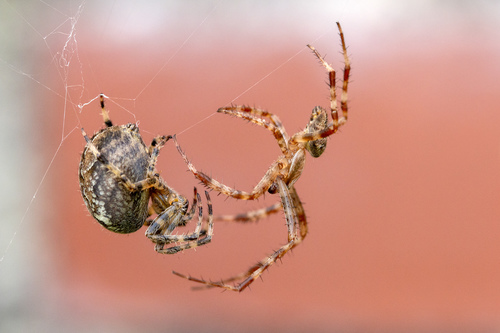
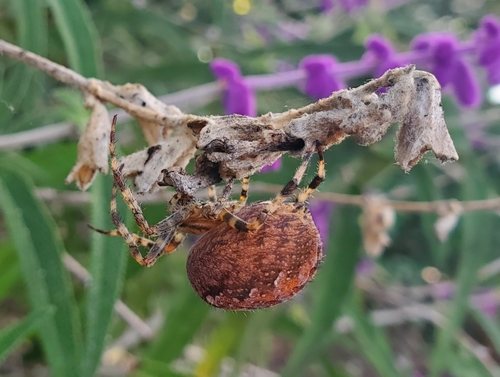
Adults have a rounded, bulbous abdomen with a variable ground colour ranging from pale yellow-brown to dark reddish-brown. A series of lighter spots on the dorsal abdomen usually form a roughly cross-shaped pattern of white or cream markings. Legs are banded and relatively stout. Females are noticeably larger and more robust than males.
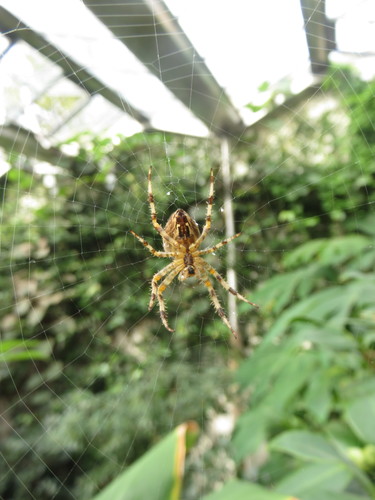
- Look for a round orb web (classic wheel-shaped) often 20-50 cm across, with the spider sitting near the centre or in a retreat at the web edge.
- Observe the dorsal abdomen for a series of pale spots forming a rough cross-shaped pattern (white or cream), the species' characteristic marking.
- Females are noticeably larger and more rounded than males; colour varies from pale yellow-brown to reddish-brown but patterning remains consistent.
- Legs are relatively stout and may show faint banding; the abdomen shape is distinctly bulbous compared with long-legged orb weavers.
Lookalikes
Four-spotted orb-weaver Araneus quadratus
Araneus quadratus is heavier with a rounder abdomen marked by four large white spots rather than a cross of smaller spots, and usually builds its web lower in tall grass and heather.
Marbled orb-weaver Araneus marmoreus
A. marmoreus often has a marbled abdomen pattern rather than discrete cross spots and prefers woodland edges; look for more mottled markings.
↻Life cycle
Egg sac
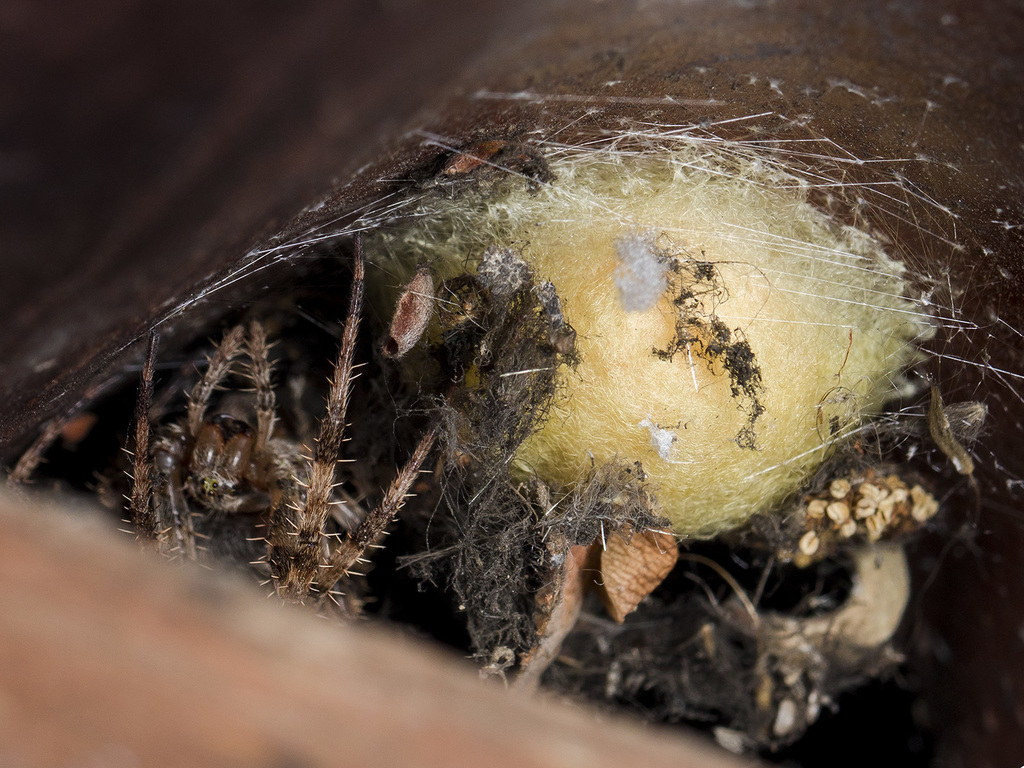
Female lays eggs inside a silken sac, often attached to vegetation or hidden in crevices; sacs overwinter in temperate areas.
Spiderling (juvenile)
Spiderlings hatch in spring or early summer, disperse by 'ballooning' on silk threads, and build small webs as they grow.
Adult spider
Maturing in late summer, adults build full orb webs to capture prey, mate, and then females produce egg sacs before dying as temperatures fall.
🍃Diet and predators
Young eat
Small flying insects and tiny arthropods captured in small orb webs
Adults eat
Flying insects such as flies, midges, moths and other small to medium-sized arthropods caught in their orb webs
Predators of the young
Birds, predatory insects, other spiders
Predators of adults
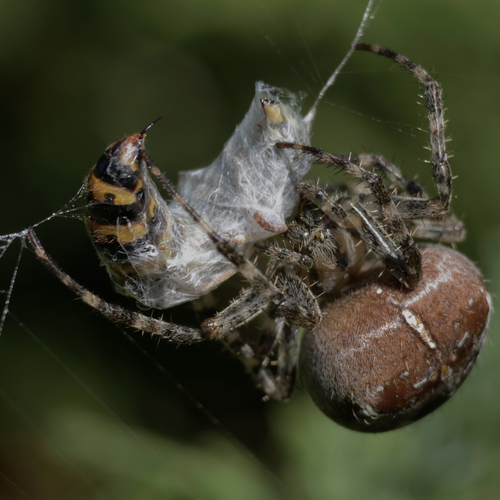
Birds, shrews, wasps, parasitic flies and other larger predators; some wasps may paralyze spiders to provision nests
🌱Effect on plants and gardens
Feeds on flying insects that might otherwise damage plants; does not feed on or damage plants itself.
📍Where and when to find it
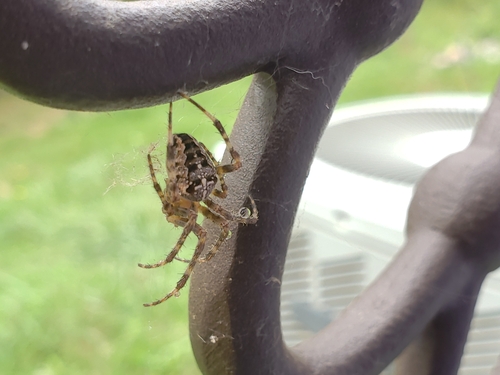
Look for orb-shaped webs in gardens, between shrubs, on fences and near porch lights. Check foliage and corners of structures for egg sacs and retreats.
Best time
Late summer to early autumn; dawn and dusk are good times to see active prey capture and web maintenance.
Observation tips
Approach slowly to avoid disturbing the web, use a macro or close-focus lens for detailed photos, and photograph against a dark background to show the cross pattern clearly.
✨Fun facts
- The "cross" of pale spots on the abdomen inspired the common name 'cross spider' and is one of the species' most reliable field marks.
- Spiderlings disperse by 'ballooning' on silk threads, which can carry them on the wind for many kilometers.
- Orb webs are rebuilt frequently; some orb weavers consume and recycle the silk of old webs before spinning new ones.
?Frequently asked questions
Are European garden spiders dangerous?
No — they are not dangerous to people. Bites are uncommon and usually cause only mild, local symptoms.
Do European garden spiders bite?
They can bite if provoked or trapped against the skin, but bites are rare and normally minor.
Why is there a web in my doorway or on my porch?
These spiders build webs where flying insects are plentiful and where they can anchor the orb across gaps — doorways, porches and shrubs are ideal spots.
How do I get rid of a European garden spider?
If you need to remove one, use a stick or broom to gently take down the web and transfer the spider to a jar or the garden. Avoid killing spiders when possible, as they control pests. Seal gaps and reduce outdoor lighting to make the area less attractive to flying insects.
Where do they live and when will I see them?
They live in gardens, hedgerows and near buildings. Adults are most visible in late summer and autumn when webs are largest and mating occurs.
📷Photos of the european garden spider
More spiders
This guide was written with AI assistance and fact-checked, last updated 2026-10-09. Identification from photos is never certain: don't handle insects you can't identify, and get medical advice for bites, stings or allergic reactions.