
Common house spider vs Barn funnel weaver
These two are easy to mix up. Here's how to tell a common house spider from a barn funnel weaver, and whether either one bites or stings.
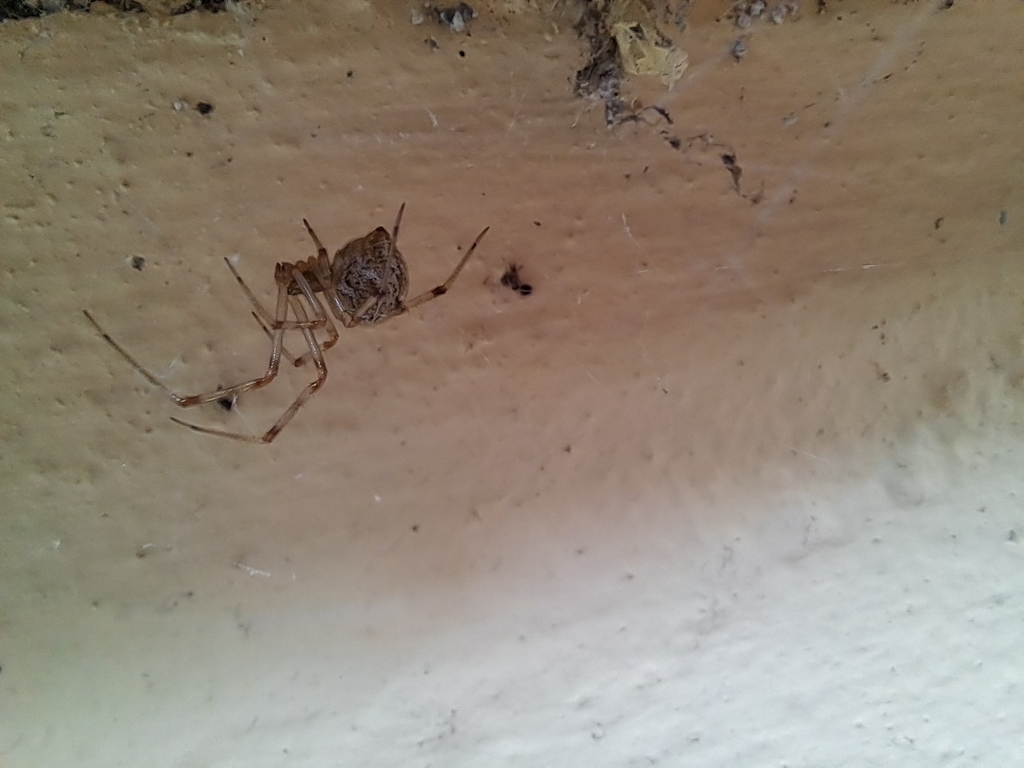
Common house spider
Parasteatoda tepidariorum
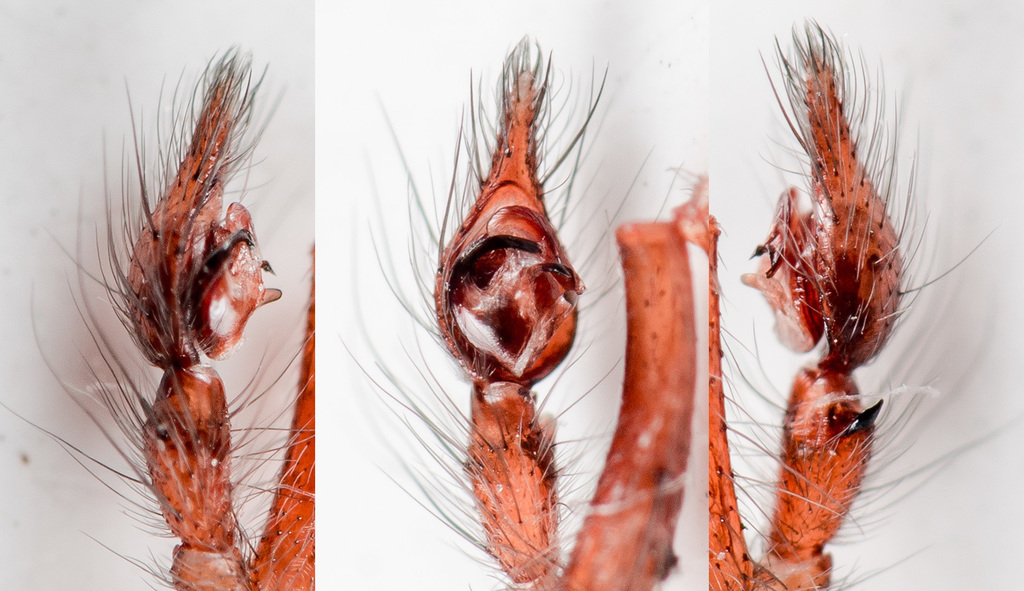
Barn funnel weaver
Tegenaria domestica
≠The key differences
Tegenaria builds flat sheet-like or funnel-shaped webs and has much longer legs and a more elongated body compared with the compact, rounded-bodied Parasteatoda.
⚖︎Side by side
| Common house spider | Barn funnel weaver | |
|---|---|---|
| To humans | Mild bite | Mild bite |
| Size | Females 5-8 mm body length; males 3-6 mm body length | Body length about 6-12 mm; legspan up to about 50 mm |
| Colours | Brown, Tan, Cream, Dark brown | Brown, Tan, Dark brown, Yellowish-tan |
| Family | Theridiidae | Agelenidae |
| Habitat | Sheltered indoor and peridomestic sites: corners, ceilings, basements, attics, garages, window frames, behind furniture and under eaves. | Human structures (houses, barns, basements, garages), cellars, woodpiles and sheltered outdoor crevices |
| Range | Probably native to South America but now cosmopolitan; found across North America, Europe, Asia, and other temperate regions often associated with human structures. | Native to Europe; widely introduced and common in North America and other temperate regions, especially inside buildings |
| Active | Year-round indoors; most active at night when hunting and maintaining webs. | Nocturnal; active year-round indoors and outdoors mainly in summer-autumn for mating and dispersal |
| Pest? | No | No |
🔍How to spot a common house spider
- Irregular, three-dimensional tangled web in sheltered indoor corners with a silken retreat.
- Rounded, somewhat bulbous abdomen with variable brown/tan markings.
- Females noticeably larger and more robust than males; males slimmer with visible pedipalps.
- Shorter legs relative to long-legged house spiders; abdomen often patterned rather than uniformly black.
🔍How to spot a barn funnel weaver
- Look for a horizontal sheet web with a funnel-shaped retreat tucked into a corner, gap or crevice.
- Body tan to brown with two dark bands on the cephalothorax and a mottled, chevron-marked abdomen; long legs ringed with darker bands.
- Found in undisturbed corners of basements, attics, barns and garages — typically inside human structures.
- Males are more slender with proportionally longer legs and may be seen wandering in late summer.
?Frequently asked questions
What is the difference between a common house spider and a barn funnel weaver?
Tegenaria builds flat sheet-like or funnel-shaped webs and has much longer legs and a more elongated body compared with the compact, rounded-bodied Parasteatoda.
Is a common house spider or a barn funnel weaver more dangerous?
Common house spider: Mild bite. Barn funnel weaver: Mild bite. Bites are rare and usually occur only if the spider is trapped against skin. Not dangerous to humans.
Identification from photos is never certain: don't handle insects you can't identify, and get medical advice for bites, stings or allergic reactions.