
Carolina wolf spider vs Rabid wolf spider
These two are easy to mix up. Here's how to tell a Carolina wolf spider from a rabid wolf spider, and whether either one bites or stings.
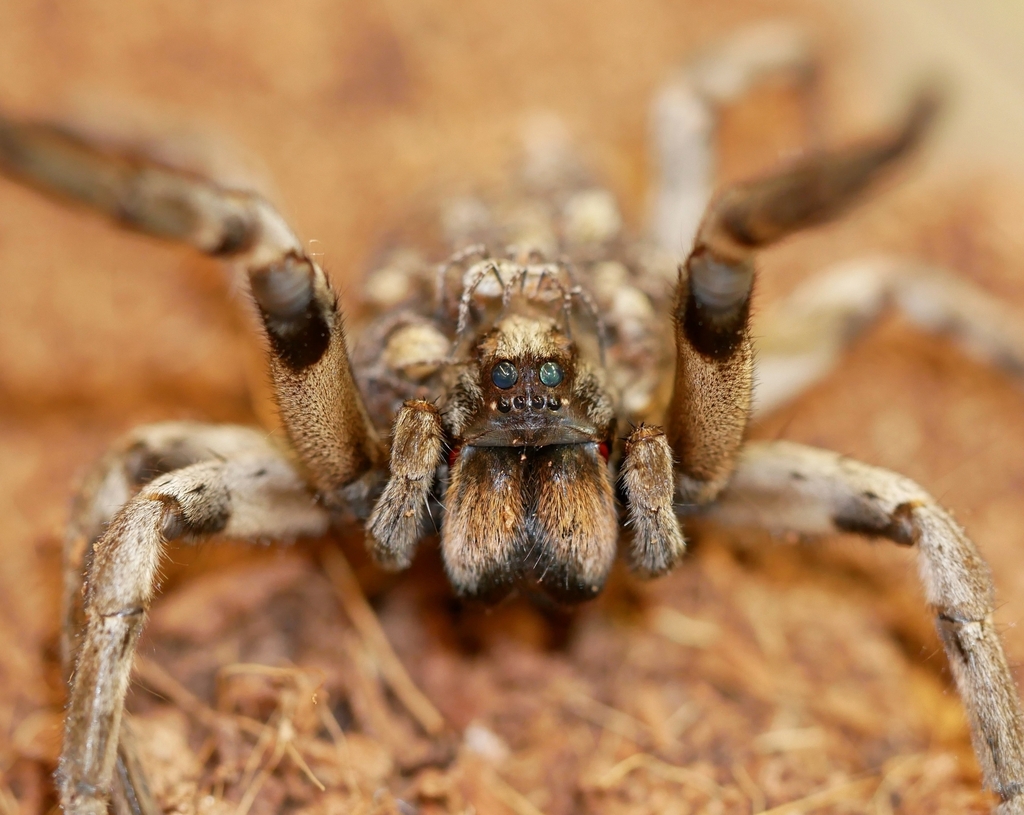
Carolina wolf spider
Hogna carolinensis
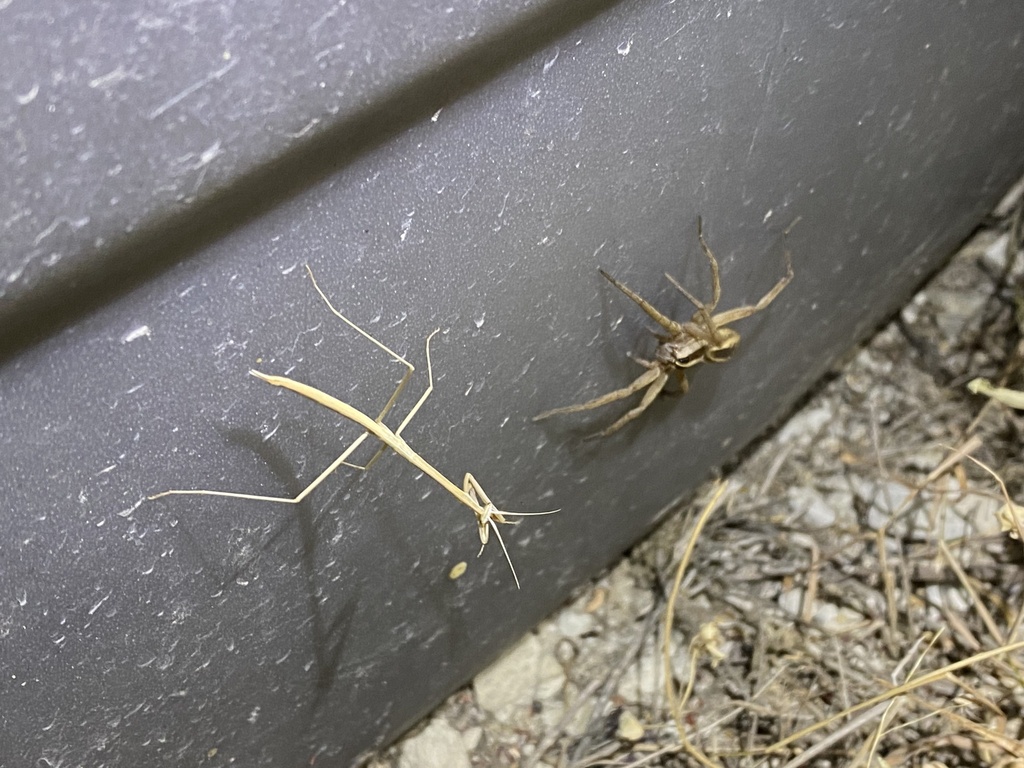
Rabid wolf spider
Rabidosa rabida
≠The key differences
Smaller (females up to about 20 mm) and paler, with two dark stripes on the cephalothorax and a dark central band on the abdomen; often found on low vegetation rather than in ground burrows.
⚖︎Side by side
| Carolina wolf spider | Rabid wolf spider | |
|---|---|---|
| To humans | Painful bite | Painful bite |
| Size | Females about 22-35 mm body length; males about 18-20 mm (legspan larger, can appear 7-10 cm) | 10-20 mm body length (legs much longer) |
| Colours | Brown, Dark brown, Cream, Black | Brown, Tan, Dark brown, Cream |
| Family | Lycosidae | Lycosidae |
| Habitat | Open ground, grassy areas, leaf litter, forest edges, gardens, and sometimes inside buildings (basements, garages). Prefers dry, sheltered microhabitats and hunting areas at ground level. | Ground level: grasslands, meadows, woodland edges, leaf litter, gardens, and sometimes inside buildings or garages. |
| Range | Widespread across much of North America, from the eastern United States west to California and south into northern Mexico; the state spider of South Carolina. | Widespread in eastern and central North America; ranges into parts of the Midwest and adjacent regions. |
| Active | Spring through fall in temperate regions; primarily nocturnal (most hunting at night). | Spring to autumn; mostly nocturnal but may be active by day. Peak activity in warm months. |
| Pest? | No | No |
🔍How to spot a Carolina wolf spider
- Large, heavy-bodied wolf spider with female body length commonly 22-35 mm and substantial legspan.
- Distinctive eye arrangement: two very large middle forward-facing eyes (excellent night vision).
- Dorsal pattern of mottled brown with a pale median stripe on the abdomen and banded legs.
- Female often seen carrying a round silk egg sac attached to the spinnerets; spiderlings sometimes ride on the mother's back.
🔍How to spot a rabid wolf spider
- Look for a robust, hairy wolf spider with two dark stripes on the carapace separated by a pale central stripe and a dark band down the abdomen.
- Check eye arrangement: two very large anterior eyes give a shiny, forward-looking appearance typical of wolf spiders.
- Size: noticeably larger than many house spiders, with long powerful legs adapted for running.
- Females may be seen carrying a round silk egg sac attached to the spinnerets; spiderlings may be carried on the mother's back.
?Frequently asked questions
What is the difference between a Carolina wolf spider and a rabid wolf spider?
Smaller (females up to about 20 mm) and paler, with two dark stripes on the cephalothorax and a dark central band on the abdomen; often found on low vegetation rather than in ground burrows.
Is a Carolina wolf spider or a rabid wolf spider more dangerous?
Carolina wolf spider: Painful bite. Rabid wolf spider: Painful bite. Bites are uncommon and usually occur only if the spider is handled or trapped against skin. Rabidosa rabida can bite if handled or threatened.
Identification from photos is never certain: don't handle insects you can't identify, and get medical advice for bites, stings or allergic reactions.