
Hobo spider vs Giant house spider
These two are easy to mix up. Here's how to tell a hobo spider from a giant house spider, and whether either one bites or stings.
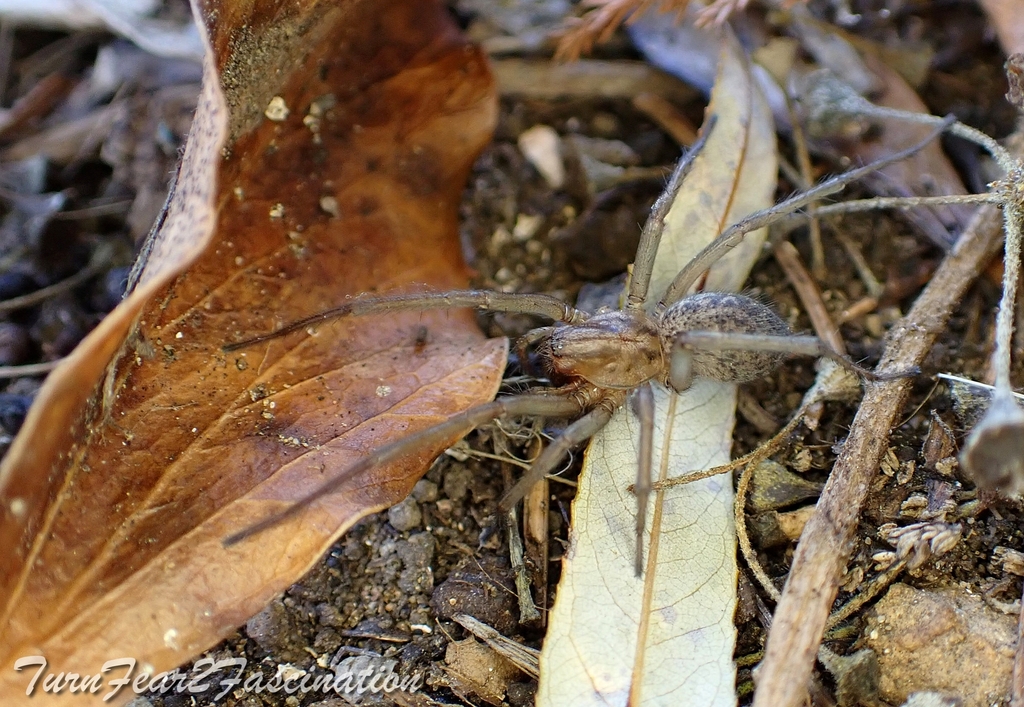
Hobo spider
Eratigena agrestis
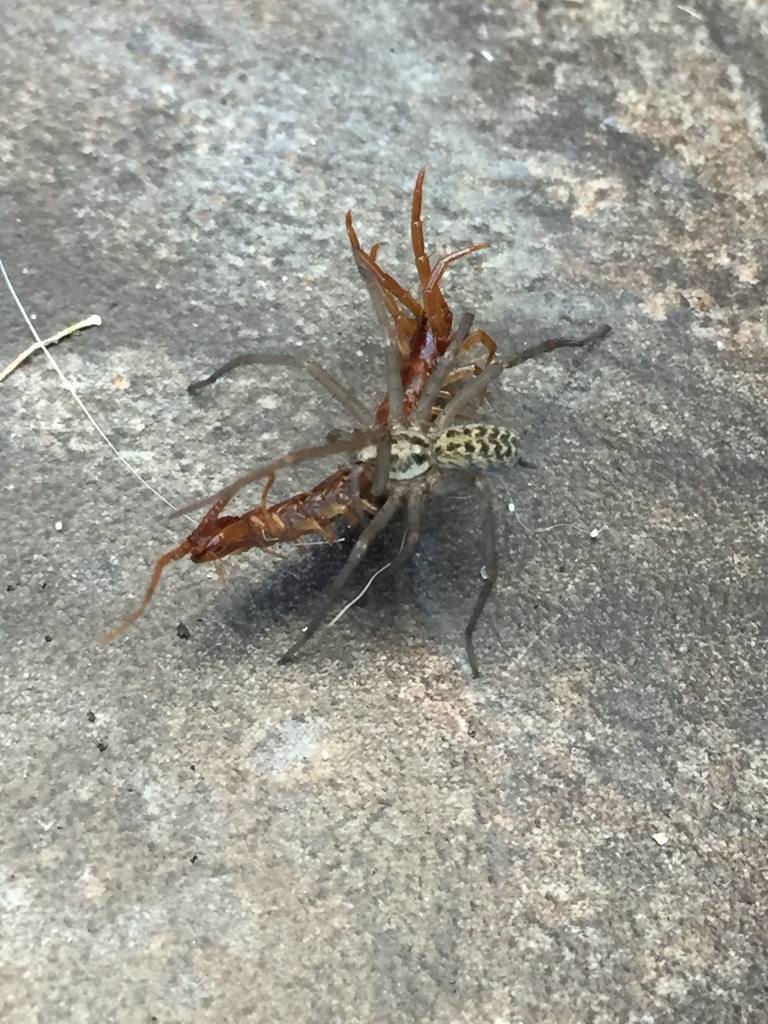
Giant house spider
Eratigena atrica
≠The key differences
Usually larger, with longer, hairier legs that often show faint banding; builds similar funnel webs. Reliable separation from the hobo spider often requires a close look at the genitalia under magnification.
⚖︎Side by side
| Hobo spider | Giant house spider | |
|---|---|---|
| To humans | Mild bite | Mild bite |
| Size | 6-14 mm body length (females usually larger than males) | 6-18 mm body length; legspan up to 45-75 mm |
| Colours | Light brown, Dark brown, Tan | Brown, Tan, Dark brown |
| Family | Agelenidae | Agelenidae |
| Habitat | Undisturbed corners of buildings (basements, crawl spaces, garages, sheds), woodpiles, rock crevices and foundations; also in low vegetation in Europe. | Human structures (houses, sheds, cellars), under eaves, in cracks and corners, occasionally in vegetation and stone walls |
| Range | Native to Europe and parts of Asia; introduced and established in western North America (Pacific Northwest, some inland areas). | Native to Europe; similar species in the Eratigena atrica species complex have been introduced and established in parts of North America |
| Active | Mostly active spring through autumn; nocturnal (most activity at night). | Most active late summer to autumn (mating season); nocturnal and more active at night |
| Pest? | Yes | No |
🔍How to spot a hobo spider
- Look for a horizontal sheet web with a silken funnel or tunnel at one edge where the spider hides.
- Body color brown to tan with darker abdominal markings; long legs compared with body length.
- Found in low, undisturbed corners of basements, sheds and around foundations rather than high ceiling corners.
🔍How to spot a giant house spider
- Large funnel-web spider with long, spindly legs and a visible funnel retreat in the web
- Mottled brown abdomen with indistinct patterned markings and banded or uniformly brown long legs
- Fast, smooth running when disturbed; adult legspan noticeably larger than common house spiders
- Definitive species ID requires examination of genitalia (pedipalps in males, epigyne in females) by a specialist
?Frequently asked questions
What is the difference between a hobo spider and a giant house spider?
Usually larger, with longer, hairier legs that often show faint banding; builds similar funnel webs. Reliable separation from the hobo spider often requires a close look at the genitalia under magnification.
Is a hobo spider or a giant house spider more dangerous?
Hobo spider: Mild bite. Giant house spider: Mild bite. Bites are uncommon and typically occur if the spider is trapped against skin. Not dangerous to humans.
Identification from photos is never certain: don't handle insects you can't identify, and get medical advice for bites, stings or allergic reactions.