
Hobo spider
Eratigena agrestis · Funnel weavers
A brown, funnel-weaving house spider native to Europe and introduced to North America, often found in basements and sheds.
!Is the hobo spider dangerous?
Only mildly. Bites are uncommon and typically occur if the spider is trapped against skin. Most reported bites cause brief pain, redness and localized swelling. Historical reports linking this species to severe skin necrosis are not well supported by modern medical reviews. Seek medical attention for severe pain, spreading redness, systemic symptoms (fever, chills), or if a lesion worsens; clean the wound with soap and water and monitor.
Pets
Generally low risk to cats and dogs; a bite could cause localized pain or swelling. Very rarely, small pets may show greater sensitivity and should be examined by a veterinarian if bitten.
📖Overview
Eratigena agrestis is a medium-sized funnel-weaver spider that builds sheet-like webs with a silken funnel retreat. Native to Europe, it was introduced to parts of western North America in the 20th century and commonly lives in and around buildings. It is mainly nocturnal and captures crawling insects that fall onto its sheet web. Medical concerns from bites were debated in the past; current evidence indicates bites rarely produce serious necrosis in healthy people, though local irritation can occur.
🔍How to identify a hobo spider
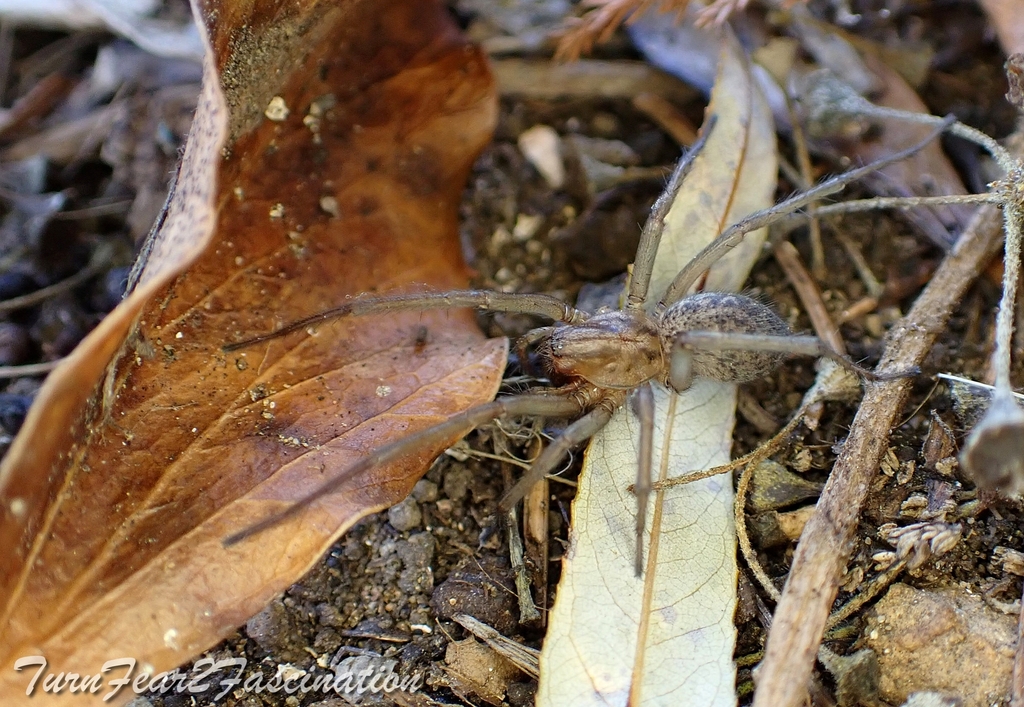
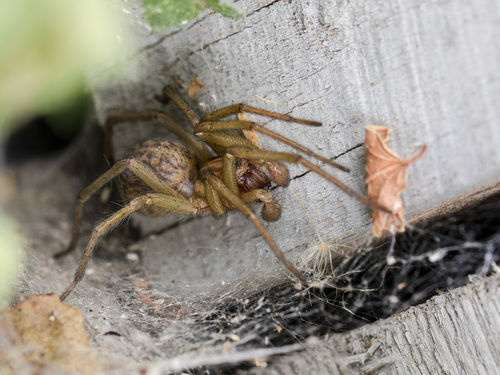
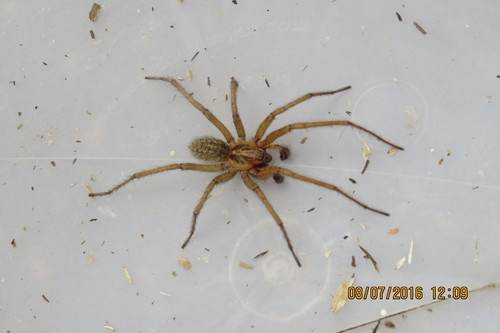
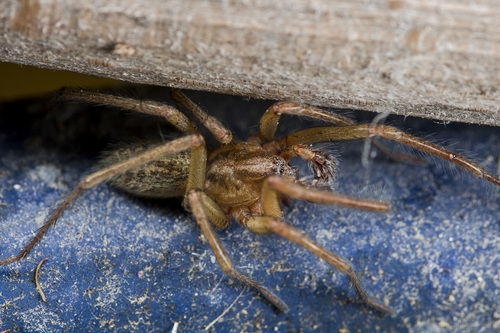
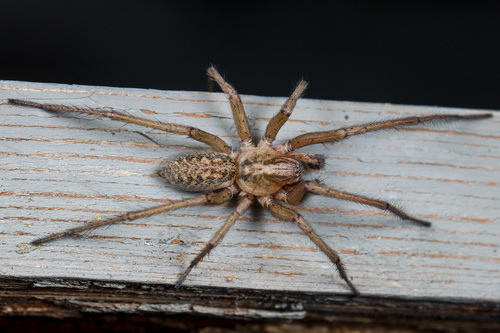
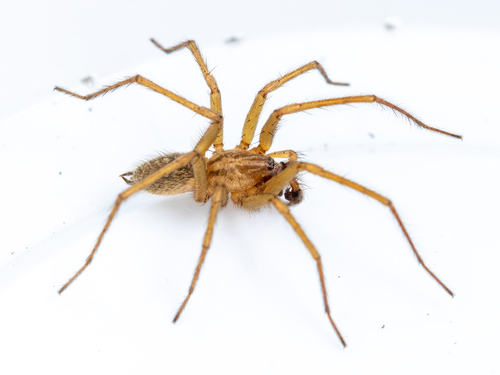
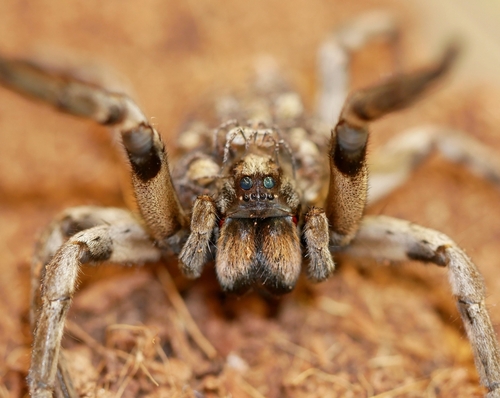
Adults are elongated, with long legs and a tapered abdomen. Colouration is generally brown to tan with variable darker chevrons or streaking on the abdomen and a darker cephalothorax. Legs are uniformly brown without distinct dark banding. Females have a more robust abdomen; males are slimmer with longer legs and palps.
- Look for a horizontal sheet web with a silken funnel or tunnel at one edge where the spider hides.
- Body color brown to tan with darker abdominal markings; long legs compared with body length.
- Found in low, undisturbed corners of basements, sheds and around foundations rather than high ceiling corners.
Lookalikes
Giant house spider Eratigena duellica
Usually larger, with longer, hairier legs that often show faint banding; builds similar funnel webs. Reliable separation from the hobo spider often requires a close look at the genitalia under magnification.
Grass spider Agelenopsis spp.
Similar funnel-web structure, but Agelenopsis species (North America) often have more pronounced striping on the carapace and different leg banding; range and web position (more outdoors) can help separate them.
Wolf spider Lycosidae family (various species)
Wolf spiders do not build webs to catch prey and have a stockier build and different eye arrangement; if you see a hunting spider that moves quickly, it is not a hobo spider.
↻Life cycle
Egg sac
Females produce egg sacs in late summer to autumn, attached in sheltered spots near the web; each holds dozens to over a hundred eggs, which typically hatch the following spring.
Spiderling (juvenile)
Spiderlings hatch and disperse by crawling or ballooning, then molt multiple times over months as they grow.
Adult
Adults mature in summer; males wander in search of females in late summer and autumn, and some females can survive through one winter in sheltered sites.
🍃Diet and predators
Young eat
Small flying and crawling insects and other tiny arthropods caught on the web.
Adults eat
Insects and other arthropods that contact their sheet web, such as flies, ants and moths.
Predators of the young
Other spiders, predatory insects, ants and small vertebrates like lizards.
Predators of adults
Larger spiders, birds, centipedes and small mammals.
🌱Effect on plants and gardens
Does not feed on plants; helps control insects and other arthropods around homes.
How to get rid of hobo spiders
Reduce clutter and seal gaps around doors, windows and foundation to prevent entry. Lower humidity and remove woodpiles or debris near the house. Use a vacuum to remove webs and spiders, or sticky traps along walls. For heavy infestations, targeted residual insecticide around foundation cracks may help; consider a pest professional if needed. Avoid harming non-target beneficial spiders when possible.
📍Where and when to find it
Check ground-level corners of basements, crawl spaces, garages, sheds, under eaves, and among exterior foundation cracks. Look for horizontal sheet webs with a funnel retreat.
Best time
Spring through autumn evenings and nights when spiders are most active.
Observation tips
Use a flashlight at floor level to spot sheet webs; photograph the web and the spider from above and from the side to show the funnel. Vacuum or sweep webs before handling areas.
✨Fun facts
- The name 'hobo spider' comes from the idea that it spread to distant cities along railways, often being found near railroad tracks.
- It was originally placed in the genus Tegenaria; modern taxonomy moved it to Eratigena.
- Hobo spiders are more often encountered on the ground and low walls, not high on ceilings.
?Frequently asked questions
Are hobo spiders dangerous?
They are not considered dangerous to healthy people. Bites may cause localized pain and swelling; claims of widespread necrotic wounds are not supported by recent medical reviews.
Do hobo spiders bite people?
Bites are uncommon and usually occur when the spider is trapped against skin. Most bites result in minor symptoms.
Why do I find hobo spiders in my house?
They seek sheltered, undisturbed areas with access to prey—basements, crawl spaces, garages and sheds provide ideal conditions.
How do I get rid of hobo spiders?
Reduce clutter, seal entry points, remove webs with a vacuum, lower humidity and use sticky traps or targeted insecticide barriers if necessary; consult a pest professional for large infestations.
Where do hobo spiders live?
Native to Europe, they live in low vegetation and structures; introduced populations are established in western North America, especially in the Pacific Northwest.
📷Photos of the hobo spider
More spiders
This guide was written with AI assistance and fact-checked, last updated 2026-10-09. Identification from photos is never certain: don't handle insects you can't identify, and get medical advice for bites, stings or allergic reactions.