
Noble false widow
Steatoda nobilis · Cobweb spiders
A glossy, bulbous cobweb spider often found in and around buildings; bites are uncommon and usually cause mild to moderate local symptoms.
!Is the noble false widow dangerous?
Only mildly. Bites are uncommon and occur when the spider is squeezed or trapped against skin. Typical effects are immediate sharp pain, redness, swelling and sometimes local blistering, tiredness, headache, nausea or flu-like symptoms lasting hours to days. Severe systemic reactions are rare but can occur; seek medical care for heavy swelling, breathing difficulties, severe pain, or signs of infection. First aid: wash the wound with soap and water, apply a cold pack to reduce swelling, and seek medical advice if symptoms worsen or systemic signs develop.
Pets
Bites to small pets (young animals) could cause localized pain and swelling; larger pets rarely suffer serious effects. Consult a veterinarian if a pet is bitten and shows marked lethargy, vomiting, difficulty breathing, or pronounced swelling.
📖Overview
Steatoda nobilis is a medium-sized cobweb spider in the family Theridiidae that commonly lives in and around human structures. Originally native to the Macaronesian islands, it has spread widely in Europe and parts of North America. It builds tangled, irregular webs in sheltered spots and feeds on flying and crawling insects and sometimes other spiders. Females are larger and longer-lived than males; both sexes can be found in houses, sheds and garden structures.
This species gained public attention because it can bite if provoked, but medically serious effects are rare. Most bites cause local pain, swelling and sometimes nausea; severe systemic reactions are uncommon. The spider plays a useful role by preying on pest insects and other spiders, so its presence is ecologically beneficial even when unwanted indoors.
🔍How to identify a noble false widow
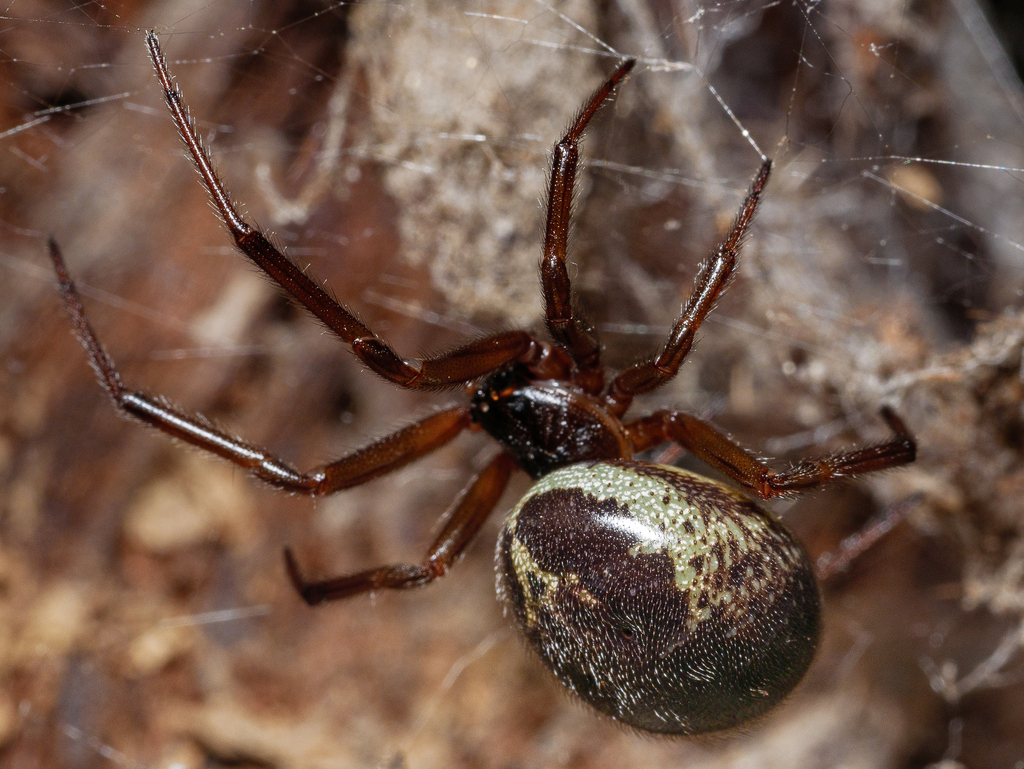
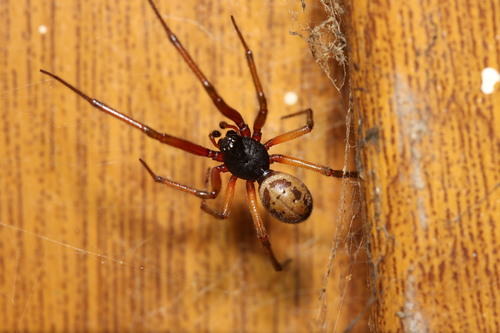
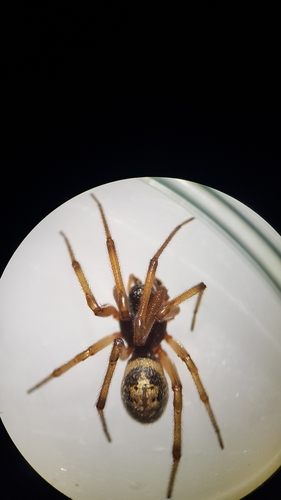
Adults have a smooth, rounded abdomen and a relatively small cephalothorax. Colour ranges from dark brown to purplish-brown with variable pale markings on the dorsal abdomen that can form irregular bands or blotches; some individuals show a lighter, cream to tan pattern near the rear of the abdomen. Legs are moderately short and often the same brown shade as the body. Females typically reach a larger, more bulbous abdomen than males. Webs are messy, three-dimensional cobwebs built in sheltered corners, under eaves, in garages, sheds and inside buildings.
- Rounded, glossy abdomen with variable pale cream or tan markings on a dark brown to purplish background.
- Body length about 6-14 mm with females noticeably larger and more bulbous.
- Messy, three-dimensional cobwebs in sheltered corners of buildings, sheds or eaves.
- Legs relatively short compared with some other house spiders and no prominent long spines.
Lookalikes
Cupboard spider (false black widow) Steatoda grossa
S. grossa is generally more uniformly dark and lacks the lighter, sometimes patterned dorsal markings often seen in S. nobilis; S. grossa also tends to have a less glossy abdomen.
Common house spider Parasteatoda tepidariorum
Parasteatoda tepidariorum usually has a more mottled, less shiny abdomen and different patterning; body shape and genitalia are reliable distinguishing features for experts.
Rabbit hutch spider Steatoda bipunctata
Smaller (females about 4.5-7 mm), dark brown with a pale band across the front of the abdomen and a faint pale midline; lacks the larger cream, often skull-like pattern of S. nobilis.
↻Life cycle
Egg
Females lay eggs in silk sacs tucked into the web or sheltered crevices; each sac contains multiple eggs and the female guards or stays near them until spiderlings emerge.
Juvenile (nymph)
Small spiderlings hatch and undergo several molts as they grow; juveniles disperse by walking or ballooning on silk threads to find new shelters and build small webs.
Adult
Adults reach maturity after several molts; males search for females to mate and often die soon after mating, while females may produce multiple egg sacs during their lifetime.
🍃Diet and predators
Young eat
Small flying and crawling insects and tiny arthropods caught in their cobwebs.
Adults eat
Flying and crawling insects (flies, wasps, moths), other spiders, and other invertebrates that blunder into their tangled webs.
Predators of the young
Predatory insects, ants, parasitoid wasps, birds and larger spiders.
Predators of adults
Birds, wasps (including spider-hunting wasps), larger spiders and small mammals.
🌱Effect on plants and gardens
Does not harm plants; helps control flying and crawling insect pests and occasionally other spiders.
📍Where and when to find it
Look in sheltered corners of rooms, lofts, garages, sheds, behind picture frames, under eaves and in wall cavities; egg sacs and small webs may be found in hidden crevices.
Best time
Year-round for indoor sites; outdoors most visible spring to autumn, especially at night.
Observation tips
Check nooks and behind stored items with a torch; use a long-handled brush or vacuum to remove webs; photograph from a safe distance rather than disturbing the spider.
✨Fun facts
- Steatoda nobilis is native to Macaronesia (Madeira and Canary Islands) and spread to mainland Europe and beyond, likely via human transport.
- Females can survive for over a year and sometimes produce several egg sacs during their life.
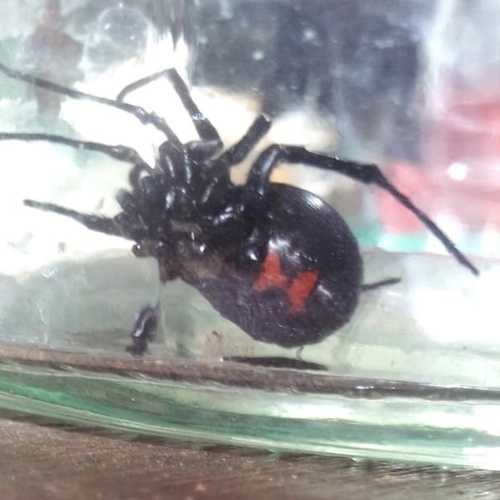
- Despite the nickname 'false widow', its bite is generally much less harmful than true widow spiders (genus Latrodectus); serious envenomations are rare.
?Frequently asked questions
Is the noble false widow dangerous?
Not usually. It is mildly venomous and can bite, but bites rarely cause severe or life-threatening symptoms. Most cases cause local pain and swelling; severe reactions are uncommon.
Do noble false widow spiders bite people?
They can bite if trapped against skin or provoked, but bites are uncommon because the spiders prefer to retreat.
Why do I find them in my house?
They seek sheltered, dry places with stable temperatures and available prey, so houses, garages and sheds provide ideal habitat and food.
How do I get rid of noble false widow spiders?
Reduce clutter and seal cracks, remove webbing with a vacuum or broom, keep outdoor lights off or change to yellow bulbs to reduce prey attraction, and clear webs from eaves and outbuildings. Chemical control is rarely necessary; for heavy infestations consider professional pest control.
Are noble false widows increasing in my region?
In many temperate regions they have expanded their range in recent decades, likely helped by human buildings and mild climates.
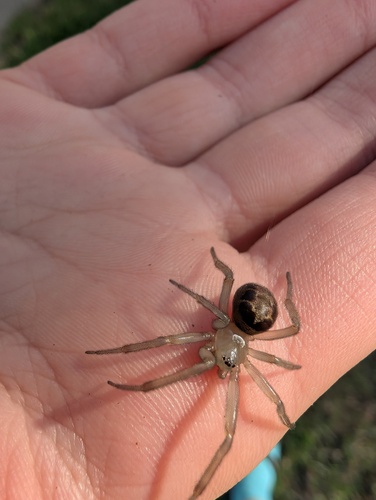
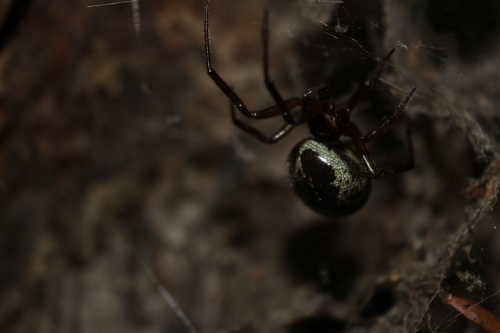
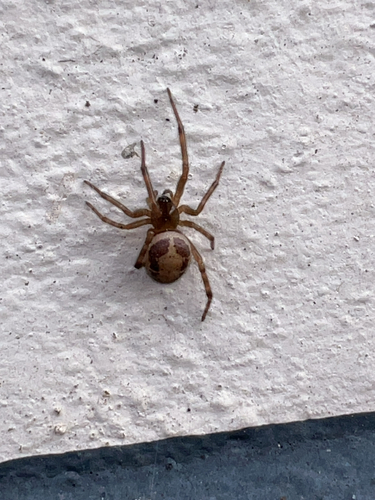
📷Photos of the noble false widow
More spiders
This guide was written with AI assistance and fact-checked, last updated 2026-10-09. Identification from photos is never certain: don't handle insects you can't identify, and get medical advice for bites, stings or allergic reactions.