
Yellow garden spider
Argiope aurantia · Orb weaver spiders
Large, striking black-and-yellow orb weaver that builds vertical webs with a conspicuous zigzag silk stabilimentum.
!Is the yellow garden spider dangerous?
Only mildly. Bites are rare and typically occur only if the spider is handled or trapped against skin. Venom is used to subdue insect prey and is not dangerous to healthy adults; a bite may cause localized pain, redness and swelling similar to a bee sting. Seek medical care if you have severe swelling, allergic symptoms or signs of infection.
Pets
Small household pets could receive a defensive bite if they grab a spider; reactions are usually minor but monitor for swelling or distress. Consult a veterinarian if symptoms are severe.
📖Overview
Argiope aurantia is a common orb-weaving spider found across much of North America. Females are much larger and more vividly marked than males. They build large, vertical wheel-shaped webs in gardens, fields and along paths where flying insects are plentiful. Adults are most noticeable in late summer and early fall when mature females occupy webs and produce egg sacs.
🔍How to identify a yellow garden spider
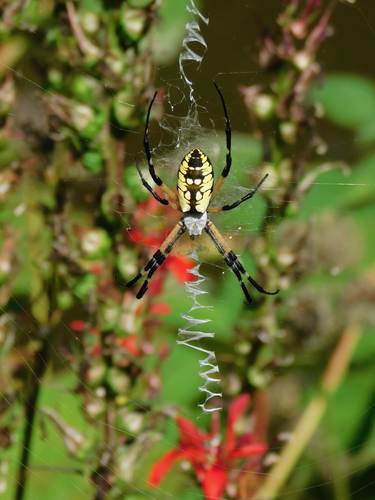
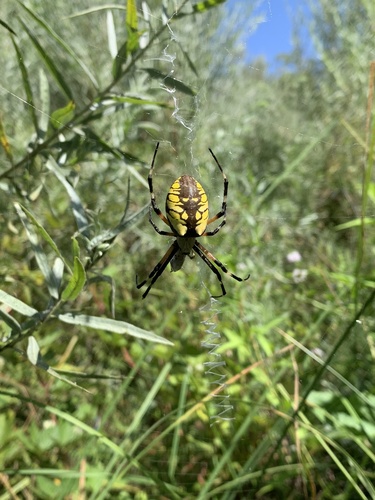
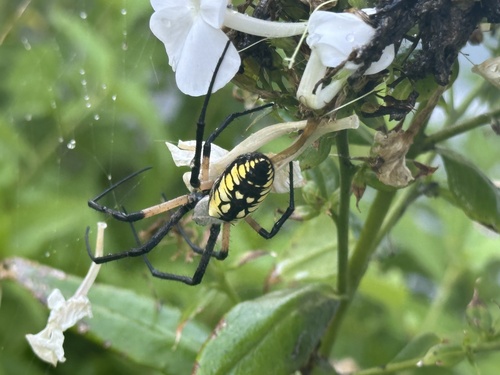
Females have a robust abdomen patterned in yellow, white and black; legs are banded black and brown and held in an X shape at rest. Males are much smaller and duller, often brownish. The web commonly contains a thick zigzag of white silk (the stabilimentum) near the hub; this feature and the bold abdomen pattern make the species easy to recognise at a distance.
- Large female with bright yellow and black patterned abdomen and banded legs held in an X posture
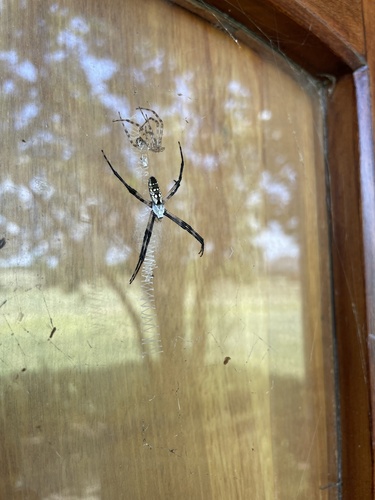
- Orb web with a prominent zigzag white silk stabilimentum near the center
- Females much larger than males (about 3-5 times body length)
Lookalikes
Banded garden spider Argiope trifasciata
Argiope trifasciata has many thin crosswise silver, yellow and black bands on a more pointed abdomen; both occur in similar habitats, but A. aurantia has bolder, larger yellow-and-black patches.
European wasp spider Argiope bruennichi
A. bruennichi (mainly Eurasia) has distinct yellow-and-black striping resembling a wasp; range separates most records, though appearance is superficially similar.
↻Life cycle
Egg sac
Female produces one or more round, papery silk egg sacs in autumn; eggs hatch inside and the spiderlings overwinter in the sac, emerging in spring.
Spiderling
Young spiders disperse by ballooning on silk threads, establish small webs and grow through successive molts.
Adult (mature spider)
Matures in summer; females build large orb webs, mate, then produce egg sacs before dying in autumn.
🍃Diet and predators
Young eat
Small flying insects and other tiny arthropods
Adults eat
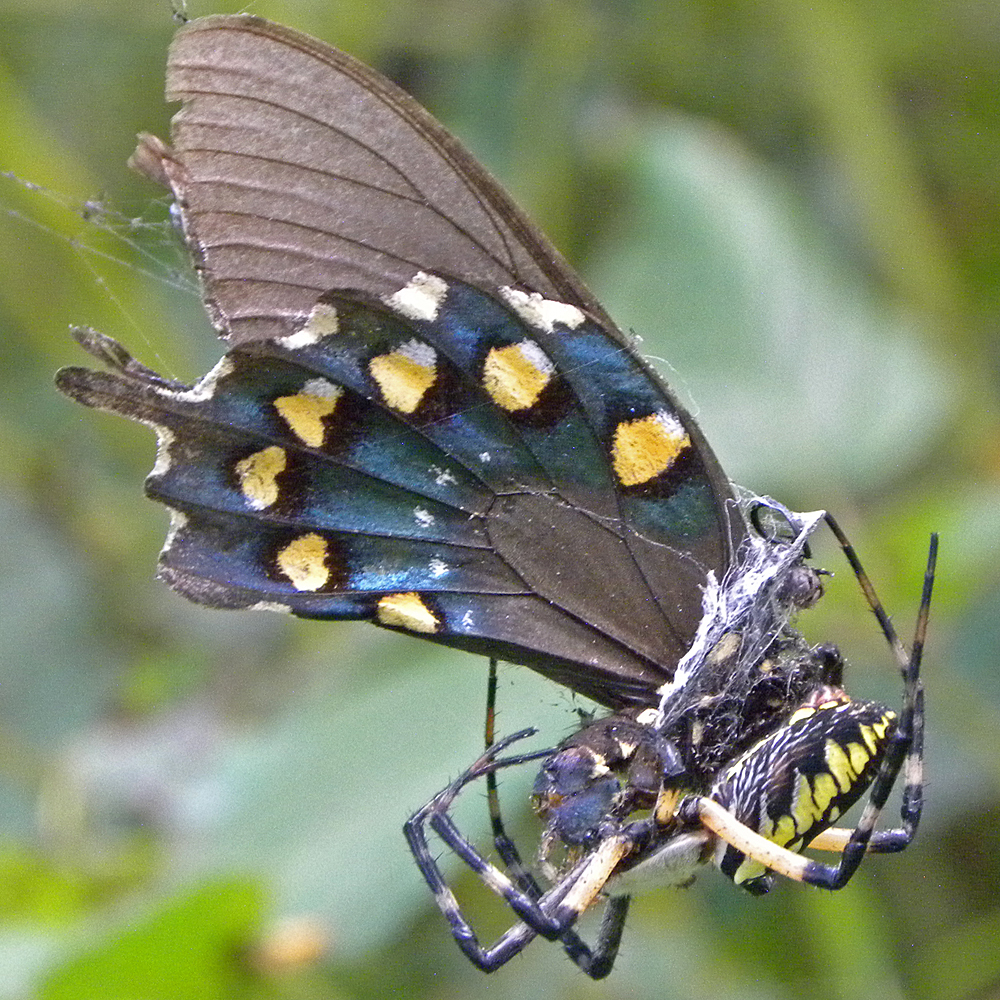
Flying insects such as flies, bees, moths and small beetles captured in the orb web
Predators of the young
Birds, predatory insects, other spiders
Predators of adults
Birds, wasps (including spider-hunting wasps), some mammals and parasitic flies or wasps
🌱Effect on plants and gardens
Consumes flying insects that might otherwise feed on garden plants; does not eat or damage plants itself.
📍Where and when to find it
Look for large vertical orb webs attached between shrubs, tall plants, fences, and porch supports. Adult females sit in the web center; juveniles occupy smaller webs in similar spots.
Best time
Late summer and early fall are best for observing mature females during daylight hours and dusk.
Observation tips
Approach slowly to avoid startling the spider; use a long lens to photograph from a distance. Dusk and morning light bring out abdominal colours and web details.
✨Fun facts
- The zigzag silk (stabilimentum) has multiple proposed functions: making the web more visible to large animals, attracting prey with UV reflection, or strengthening the hub, but its exact purpose is still debated.
- Females are dramatically larger than males; males often build a small web near or at the edge of a female's web while waiting to mate.
- Spiderlings can 'balloon' on silk threads and disperse long distances on air currents.
?Frequently asked questions
Are yellow garden spiders dangerous?
No. They have venom for subduing insects but are not dangerous to most people. Bites are uncommon and usually cause only mild, localized symptoms.
Do yellow garden spiders bite?
They can bite if handled or trapped against skin, but they rarely bite and their bites are generally minor.
Why is there a big web in my garden?
Argiope aurantia builds large orb webs to catch flying insects; gardens offer good places with vegetation for attachment and abundant prey.
How do I get rid of yellow garden spiders?
Removal is usually unnecessary because they control pest insects. To discourage webs, reduce outdoor lighting at night, trim vegetation and remove anchor points. If needed, gently relocate the spider at dusk using a container and cardboard.
Will these spiders come inside my house?
They prefer outdoor web sites and are not indoor dwellers. Occasional individuals may enter garages or sheds, but they do not commonly infest homes.
📷Photos of the yellow garden spider
More spiders
This guide was written with AI assistance and fact-checked, last updated 2026-10-09. Identification from photos is never certain: don't handle insects you can't identify, and get medical advice for bites, stings or allergic reactions.