
Mexican red-knee tarantula
Brachypelma hamorii · Tarantulas
A slow-moving, docile New World tarantula with striking black legs and orange-red knee joints, commonly kept as a pet.
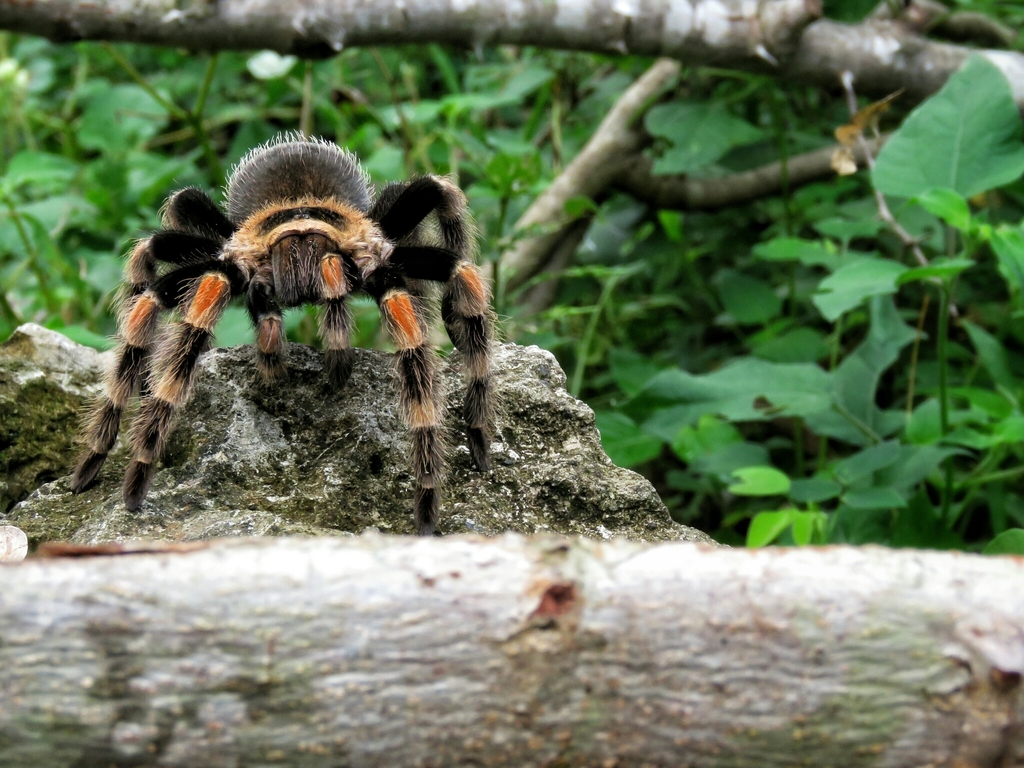
!Is the Mexican red-knee tarantula dangerous?
Only mildly. Bites are rare and for most people result in local pain, swelling and redness similar to a bee sting. Brachypelma hamorii has mild venom not considered medically significant for healthy adults, but individual allergic reactions are possible. The species also has urticating hairs on the abdomen that it can flick; these hairs cause skin irritation and can irritate eyes and mucous membranes. First aid: wash bitten area, apply cold compress, monitor for allergic reaction; flush eyes with water if hairs contact eyes and seek medical help for persistent problems or signs of severe allergy.
Pets
Small pets (young rodents, small reptiles) may be injured or killed if offered as prey. Dogs or cats that play roughly with a tarantula can be exposed to urticating hairs causing skin or ocular irritation; a bite is uncommon but could cause local pain.
📖Overview
Brachypelma hamorii is a terrestrial tarantula from the Pacific coast of western Mexico noted for its black carapace and legs with bright orange-red patches on the joints. It is a burrowing, mostly nocturnal spider that feeds on insects and other small animals. This species is popular in the pet trade because of its calm temperament and attractive coloration. Wild populations were reduced by collecting for the pet trade, and the species (and related Brachypelma) has been subject to conservation attention and trade regulation.
🔍How to identify a Mexican red-knee tarantula
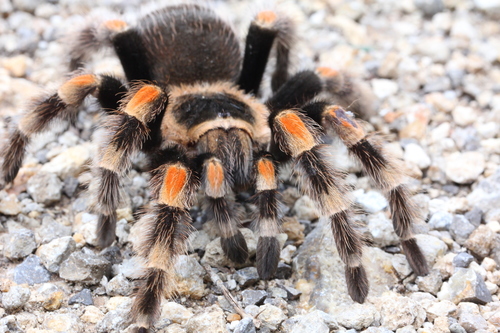
Adults have a stocky body with a carapace and legs that are mostly black to very dark brown. The most distinctive feature is the orange to red patches on the patella (the "knee" area) of the legs; the abdomen (opisthosoma) often shows some reddish or orange setae (hairs) and a faint banding. Females are larger and bulkier than males; mature males are leggier and have modified pedipalps. Body and leg hair (setae) may be reddish or grayish depending on individual and wear.
- Black or very dark legs and carapace with distinct bright orange-red patches on the patella (knee area).
- Stocky, terrestrial build with dense hairs; females bulkier than males.
- Legspan about 10-15 cm (4-6 inches) in adults; noticeable reddish hairs on the abdomen in many specimens.
- When threatened may raise front legs and kick urticating hairs rather than bite.
Lookalikes
Mexican red-rump tarantula Brachypelma vagans
B. vagans is black without orange knee bands and has long red hairs on the abdomen; it lives in southeastern Mexico and Central America.
Mexican red-knee tarantula (Guerrero) Brachypelma smithi
B. hamorii and B. smithi were long confused under one name; B. smithi comes from Guerrero, tends to have paler, more orange knee bands and differs in reproductive structures, so origin or expert ID is often needed.
↻Life cycle
Egg
Females lay eggs in a silk brood sac and guard them. Incubation lasts several weeks depending on temperature.
Spiderling (immature)
Spiderlings hatch from the egg sac and disperse after several weeks to months; they molt repeatedly as they grow.
Adult
Mature males develop palpal bulbs and tibial apophyses, leave burrows to search for females, and typically die within a year of maturity; females remain near or in burrows and can live decades.
🍃Diet and predators
Young eat
Small insects, other arthropods, and tiny invertebrates.
Adults eat
Insects, large arthropods and occasionally small vertebrates such as lizards or mice if available.
Predators of the young
Wasps (notably tarantula hawks), small mammals, birds, and larger arthropods.
Predators of adults
Large birds, mammals, and specialized wasps. Humans (collection for pet trade) also reduce populations.
🌱Effect on plants and gardens
Not a plant pest; as a predator it helps control insects and other small invertebrates.
📍Where and when to find it
Look near or inside burrows, under rocks, logs, and in rodent holes at ground level. Spiderlings may be found near the maternal burrow after dispersal.
Best time
Warm months and at night are best for observing activity.
Observation tips
Use a flashlight with a red filter to avoid startling nocturnal spiders; for photos, a low-angle shot showing the leg knees helps ID. Maintain distance to avoid provoking defensive hair flicking.
✨Fun facts
- This species was one of the first tarantulas to be popular in the pet trade because of its calm temperament and striking coloration.
- Like other New World tarantulas, it relies on urticating hairs for defense rather than potent venom.
- Females may live 25-30 years in captivity, far longer than most other spiders.
?Frequently asked questions
Do Mexican red-knee tarantulas bite?
They can bite if provoked, but bites are uncommon. Venom is mild and usually causes only local pain and swelling; monitor for allergic reactions.
Are Mexican red-knee tarantulas dangerous to humans?
Only mildly. They are considered low-risk to healthy adults, though urticating hairs can cause significant irritation to skin and eyes.
Why is there a Mexican red-knee tarantula in my house?
If you live within their native range they may wander in looking for shelter or prey; in other regions, escaped or released pets can appear indoors.
How do I remove one from my home safely?
Do not grab with bare hands. Gently coax the spider into a clear container using a piece of cardboard, then slide a lid underneath and release outdoors away from homes. If uncomfortable, call local animal control or a pest professional.
Can I keep a Mexican red-knee tarantula as a pet?
Yes, they are commonly kept and generally considered good beginner tarantulas due to their calm nature, but they require species-appropriate enclosures, temperature, humidity, and responsible sourcing.
Is this species threatened or protected?
Wild collecting has reduced populations in some areas; many Brachypelma species have trade protections (CITES). Buy captive-bred animals and check local regulations.
📷Photos of the Mexican red-knee tarantula


More spiders
This guide was written with AI assistance and fact-checked, last updated 2026-10-10. Identification from photos is never certain: don't handle insects you can't identify, and get medical advice for bites, stings or allergic reactions. More about the Mexican red-knee tarantula: iNaturalist, Wikipedia.