
Western black widow
Latrodectus hesperus · Comb-footed spiders
A shiny black, highly venomous cobweb spider of western North America; females have a distinctive red hourglass on the underside of the abdomen.
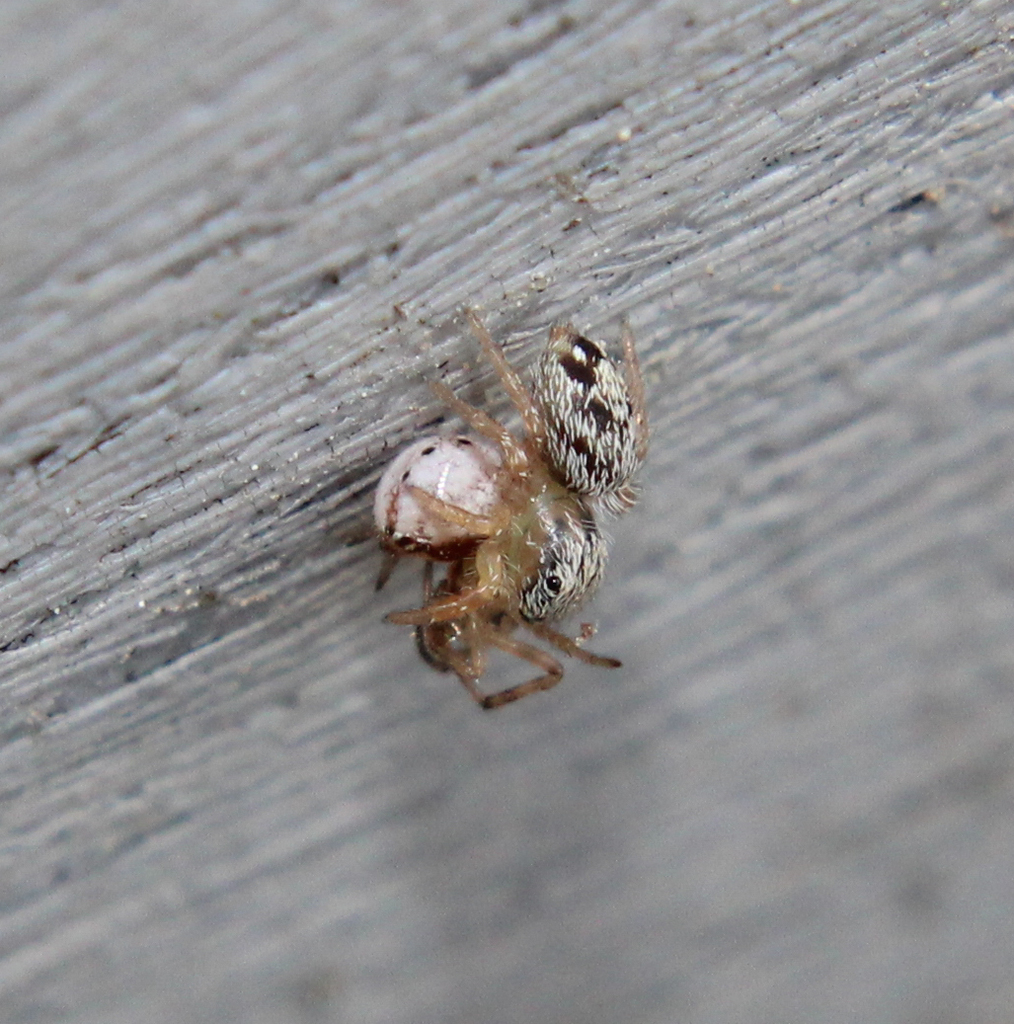
!Is the western black widow dangerous?
Yes, it can be. Females are venomous; bites can cause latrodectism (local pain, muscle cramps, sweating, nausea, elevated blood pressure). Severe reactions are more likely in young children, the elderly or medically compromised people. First aid: keep the person calm and still, wash the bite area with soap and water, apply a cold pack to reduce pain, and get medical care promptly; contact a poison control center for advice. Call emergency services if there is severe pain, spreading muscle cramps, chest pain, difficulty breathing, or if a child is bitten. Do not attempt to suck out venom, cut the wound or apply tourniquets.
Pets
Bites can seriously affect small pets (cats, small dogs). If a pet is bitten, seek veterinary care immediately. Keep pets away from known webs and sheltered hiding spots.
📖Overview
Latrodectus hesperus is a species of widow spider found across western North America. Females are noticeably larger and more robust than males and build irregular, tangled webs in sheltered, dry locations. They are nocturnal hunters that sit in or near their webs and subdue insect prey with venomous bites.
The species is medically important: bites can cause a syndrome called latrodectism (muscle pain, cramping, sweating) but fatalities are rare with modern medical care. Males are much smaller and slender and are not considered medically significant; they are often seen near female webs during the mating season.
🔍How to identify a western black widow
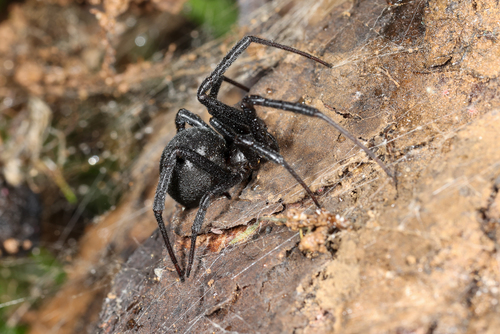
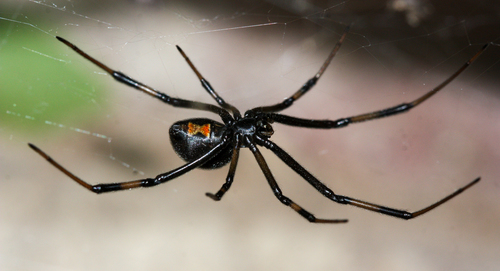
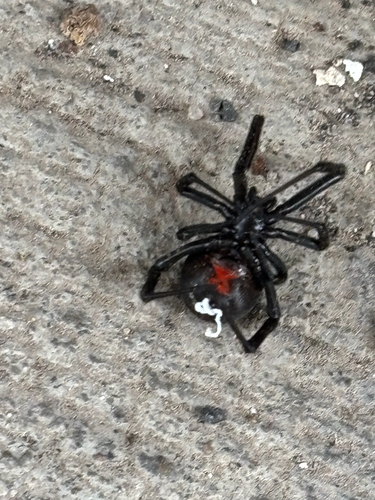
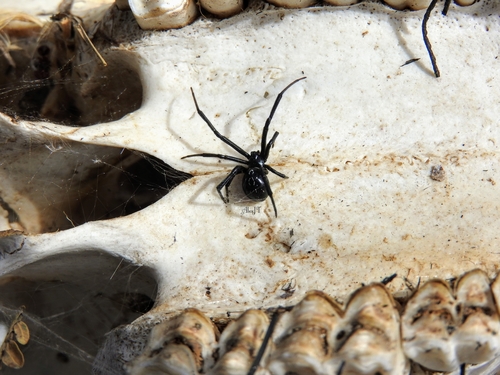
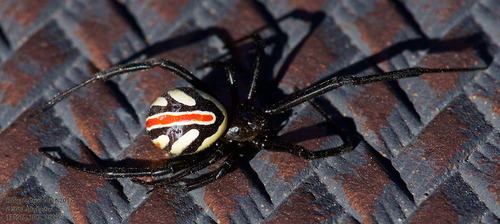
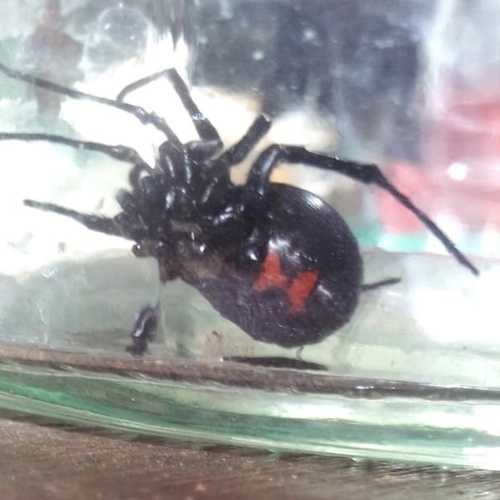
Adult female western black widows are glossy black with a rounded abdomen and usually show a red to orange hourglass marking on the ventral side of the abdomen; dorsal markings (red or white spots or stripes) may also occur in some individuals. Males are much smaller, often brownish or patterned with white and red markings, and lack the prominent hourglass. Legs are long and slender; bodies are smooth and not hairy like some other spiders.
- Shiny black, globose abdomen on females with a red or red-orange hourglass marking on the underside
- Females larger (7-13 mm) and more robust than males (3-6 mm); males are often brownish with dorsal patterns
- Irregular, tangled cobwebs in sheltered, low locations (near the ground, under eaves, inside sheds)
- Smooth, glossy abdomen (not notably hairy) and relatively long, slender legs
Lookalikes
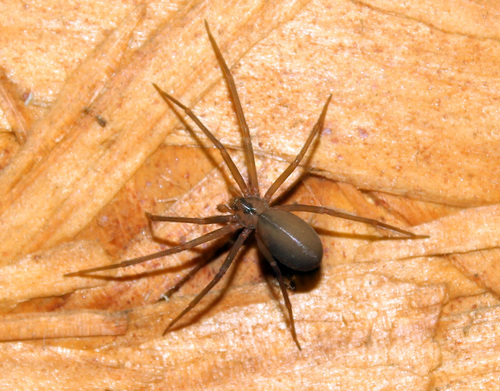
False black widow Steatoda grossa
More uniformly brown or purplish, no bright red hourglass; body shape less glossy; bites are less medically significant.
Southern black widow Latrodectus mactans
Very similar in appearance; geographic ranges overlap in parts of the US—identification often requires range and subtle pattern differences or expert examination.
Northern black widow Latrodectus variolus
Also similar; differs in distribution and some dorsal markings. Expert identification or geographic context helps distinguish species.
↻Life cycle
Egg
Females lay eggs in silk sacs (dozens to hundreds of eggs per sac) and guard or remain near sacs until spiderlings hatch.
Spiderling (juvenile)
Young spiders hatch and disperse (sometimes by ballooning) and go through several molts as they grow.
Adult
Mature males seek females to mate and typically die soon after; females can reproduce multiple times over their lifespan.
🍃Diet and predators
Young eat
Small flying and crawling insects caught in silk webs
Adults eat
Insects and other arthropods (flies, mosquitoes, beetles, grasshoppers) captured in their tangled web
Predators of the young
Birds, small mammals, other spiders, parasitic wasps
Predators of adults
Mud dauber wasps and other spider-hunting wasps, some birds, small mammals; parasitoids and pathogens can also affect populations
🌱Effect on plants and gardens
Does not feed on or damage plants; consumes insects and may reduce pest insect numbers.
How to get rid of western black widows
Reduce clutter and seal cracks to deny sheltered sites; store firewood off the ground and away from the house; remove rock piles, brush and junk near buildings. Use gloves and boots when reaching into dark sheltered spaces. For indoor infestations, vacuum webs and egg sacs, then discard vacuum bag contents. Professional pest control can be used for heavy infestations or if you are uncomfortable removing spiders yourself.
📍Where and when to find it
Look in undisturbed, sheltered locations: under eaves, inside woodpiles, garages, sheds, crawl spaces, rock crevices, and dense shrubbery. Check lower walls and corners near the ground for tangled webs.
Best time
Spring through fall, after dark (nocturnal activity); warm evenings are best for spotting them near webs.
Observation tips
Use a flashlight and look for glossy abdomens in web centers. Wear gloves and long sleeves when checking woodpiles or storage boxes. Photograph from a safe distance and avoid touching webs.
✨Fun facts
- Female western black widows sometimes eat the male after or during mating, which inspired the "widow" name, but this behavior is not guaranteed.
- Black widows produce very strong silk and build irregular, sticky webs rather than the neat orb webs many people imagine.
- Spider-hunting wasps, such as mud daubers, regularly prey on widow spiders and are one of their main natural checks.
?Frequently asked questions
Are western black widow spiders dangerous?
Yes. Their venom is medically significant and can cause severe pain and systemic symptoms; however, deaths are rare with prompt medical treatment.
Do western black widow spiders bite humans?
They bite only when threatened, trapped against skin, or accidentally disturbed (for example inside shoes or clothing). Females are responsible for most bites.
Why is a black widow in my house?
They seek sheltered, undisturbed places with insect prey—garages, basements, crawl spaces, storage boxes, and woodpiles are common indoor-associated sites.
How can I get rid of black widows?
Reduce clutter and seal entry points, remove webs and egg sacs by vacuuming or using a stick on gloves, store items off the floor, and call a pest professional for large infestations. Always use caution and protective clothing when working in likely hiding spots.
What should I do if I'm bitten by a black widow?
Clean the bite with soap and water, apply a cold pack for pain, keep the person still and calm, and seek medical care promptly; contact a poison control center for advice. Call emergency services for severe pain, spreading cramps, chest pain, breathing difficulty or if a child is bitten. Tell medical staff that a black widow bite is suspected.
📷Photos of the western black widow
More spiders
This guide was written with AI assistance and fact-checked, last updated 2026-10-10. Identification from photos is never certain: don't handle insects you can't identify, and get medical advice for bites, stings or allergic reactions. More about the western black widow: iNaturalist, Wikipedia.