
Western conifer seed bug
Leptoglossus occidentalis · Leaf-footed bugs
A medium-sized leaf-footed bug that feeds on conifer seeds and commonly enters buildings as a winter 'hitchhiker'.
!Is the western conifer seed bug dangerous?
Only mildly. They do not seek to bite people and are not venomous. If handled or crushed they can release a strong, unpleasant odor and may cause mild skin irritation in sensitive individuals. No major human disease transmission is associated with this species. If a skin reaction occurs, wash with soap and water and seek medical advice if severe.
Pets
Not toxic to pets. Pets may be annoyed by the odor or try to eat the bug; ingestion could cause mild gastrointestinal upset but serious poisoning is unlikely.
📖Overview
Leptoglossus occidentalis is a species of leaf-footed bug native to western North America that feeds mainly on the developing cones and seeds of conifer trees. Adults are distinctively shaped with expanded, leaf-like hind tibiae and a white zigzag band across the wings. Since the late 20th century the species has spread outside its native range and is now established in much of Europe and parts of Asia, where it is considered an invasive pest of conifer seed crops.
These bugs are most often noticed when adults move into warm, sheltered places in autumn to overwinter — they commonly enter houses and buildings through small gaps, windows, and vents. They do not attack people or structures, but their presence can be a nuisance because they can emit a strong, unpleasant odor when disturbed or crushed.
🔍How to identify a western conifer seed bug
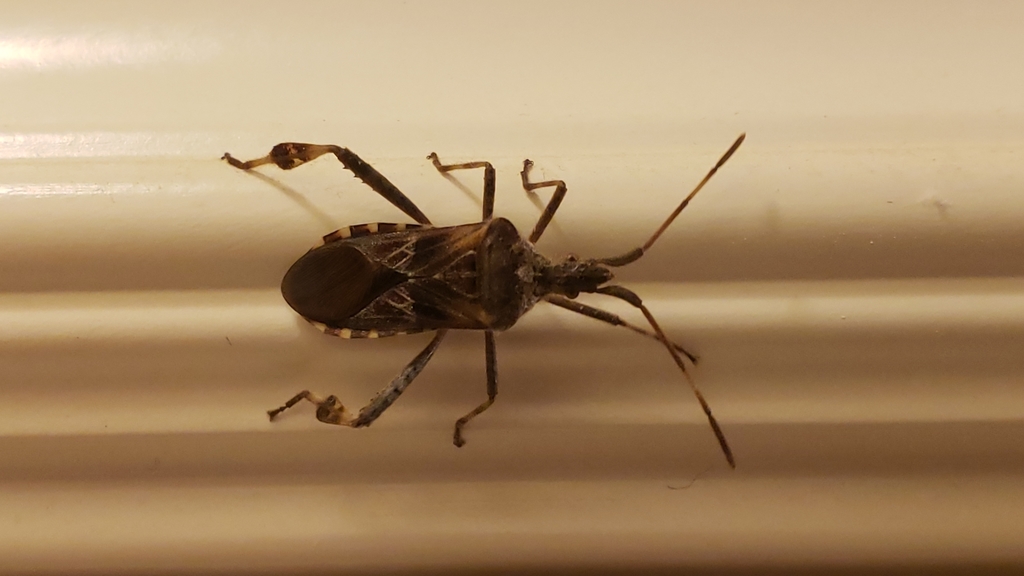
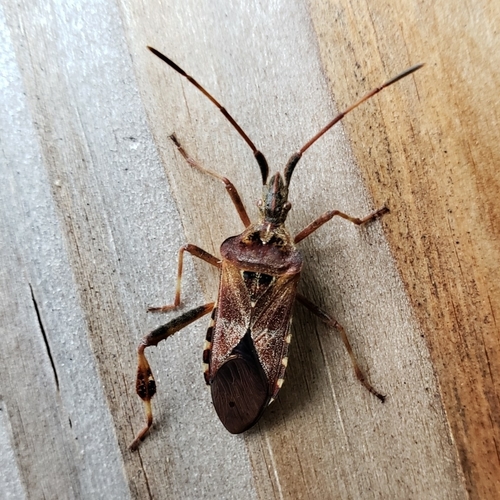
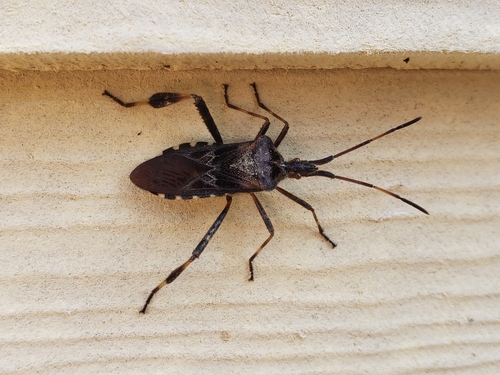
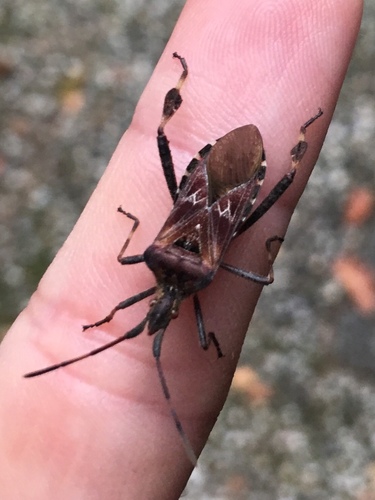
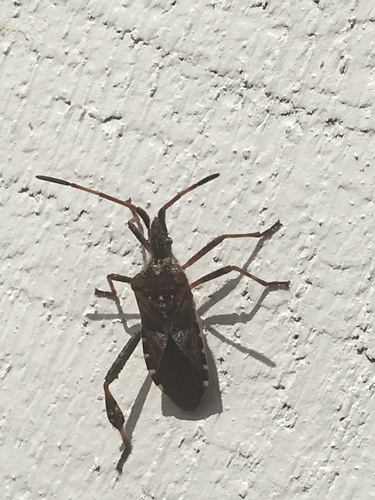
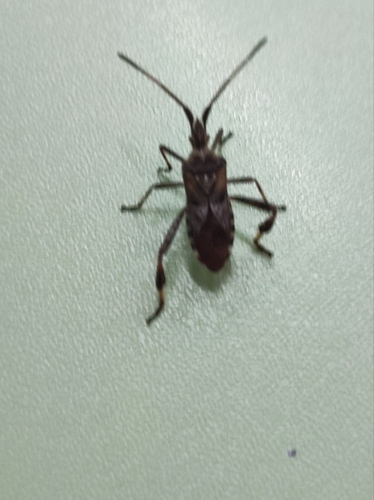
Adult western conifer seed bugs are elongated and flattened with a distinct leaf-like expansion on each hind tibia. They measure about 16-20 mm in body length. The wings show a pale white or cream zigzag transverse band across the hemelytra (forewings). The overall body color is brown to reddish-brown, often with lighter markings on the pronotum and wing edges. Nymphs are wingless and go through several instars; early instars are orange-red and later instars become darker and develop the leaf-like hind leg expansion before adulthood.
- 16-20 mm elongated body with a distinct white or cream zigzag band across the forewings
- Leaf-like widened hind tibiae (appears as a 'leaf-foot' on the rear legs)
- Brown to reddish-brown overall color with lighter markings on the pronotum and wing edges
- When disturbed adults may emit a strong, unpleasant odor
Lookalikes
Eastern leaf-footed bug Leptoglossus phyllopus
L. phyllopus is similar in shape but has a straight pale band across the wings (not a zigzag) and feeds on broadleaf plants, fruits and vegetables rather than conifer cones; it occurs in the southern US.
Brown marmorated stink bug Halyomorpha halys
Also overwinters in houses, but is shield-shaped and broader, with white bands on the antennae and along the abdominal edge, and lacks leaf-like expansions on the hind legs.
↻Life cycle
Egg
Females lay small clusters of barrel-shaped eggs on needles, twigs or cones in spring and early summer.
Nymph (immature)
Nymphs hatch and pass through five instars over several weeks, growing from bright orange-red early instars to darker, wingless later instars that begin to show hind-leg expansions.
Adult
Adults emerge with full wings and the characteristic leaf-like hind tibia. They feed on conifer seeds and reproduce; adults move to sheltered sites to overwinter.
🍃Diet and predators
Young eat
Sap from developing cones and seeds of conifers
Adults eat
Mostly seeds and developing tissue of conifer cones; occasionally sap from stems or fruits
Predators of the young
Birds, predatory insects (assassin bugs, lacewings), spiders
Predators of adults
Birds, predatory insects, small mammals; overwintering adults may be preyed on by rodents or spiders in buildings
🌱Effect on plants and gardens
Feeds on developing cones and seeds of conifers (pines, firs, spruces, cedars). Heavy infestations can reduce seed viability and affect seed production in plantations and nurseries.
How to get rid of western conifer seed bugs
Seal cracks and gaps around windows, doors and vents to prevent overwintering adults entering buildings. For infestations in trees or seed crops, monitor cone damage and consult local forestry extension for integrated pest management; chemical controls are sometimes used in commercial seed orchards but are rarely necessary for home trees. Vacuuming indoor bugs is an easy, non-chemical removal method; do not crush them to avoid odor.
📍Where and when to find it
Look on the needles, twigs and cones of pines, firs, spruces and cedars for feeding adults and nymphs; in autumn check sunny house walls, window frames and eaves for overwintering adults.
Best time
Best observed from late spring through autumn for feeding and in autumn/winter when adults enter buildings; daytime when they are basking.
Observation tips
Photograph the dorsal view to capture the transverse white band and leaf-like hind tibiae for clear identification. Use slow approach as they may drop or fly away if disturbed.
✨Fun facts
- This species is a prolific 'hitchhiker' and has spread across continents largely by human transport of timber and nursery stock.
- When handled it releases a sharp odor that many people compare to pine resin or bitter apples.
- First reported established in Europe in the late 1990s, it spread rapidly and is now common across much of the continent.
?Frequently asked questions
Do western conifer seed bugs bite?
They are not aggressive and rarely bite people; a defensive bite can occur if handled roughly but is not poisonous and typically causes only minor, temporary pain.
Are western conifer seed bugs dangerous to my home?
They do not damage structures or household items. They are a nuisance when large numbers overwinter indoors because of smell and their presence.
Why is this bug in my house?
Adults seek warm, sheltered locations to overwinter and will enter buildings through small gaps in autumn. They are attracted to sunny walls and lighted areas.
How can I get rid of them?
Prevent entry by sealing cracks and gaps, use screens on vents, and remove individuals indoors with a vacuum or jar-and-paper method. For outdoor population control in plantations consult forestry pest management guidance.
Will they harm my pine trees?
They feed on developing cones and seeds and can reduce seed viability, especially in seed orchards and nurseries. Damage to mature tree growth is usually minor.
📷Photos of the western conifer seed bug
More true bugs
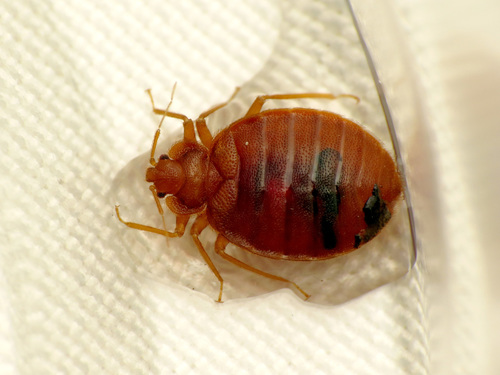
Bites cause itching
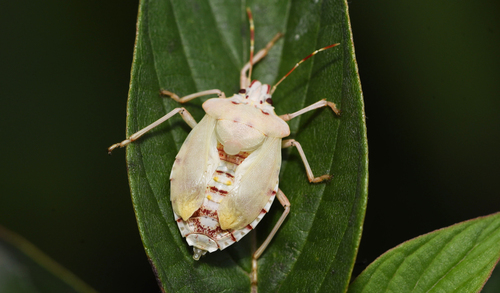
Non-venomous nuisance
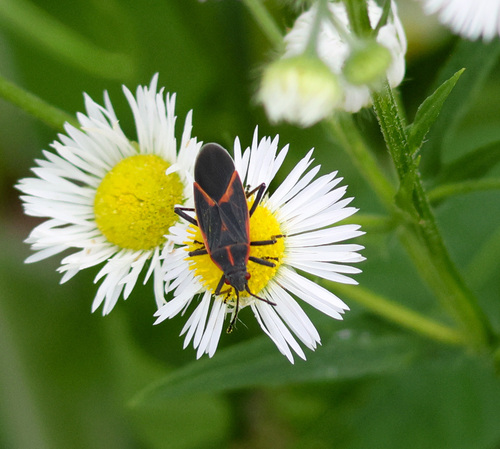
Non-toxic
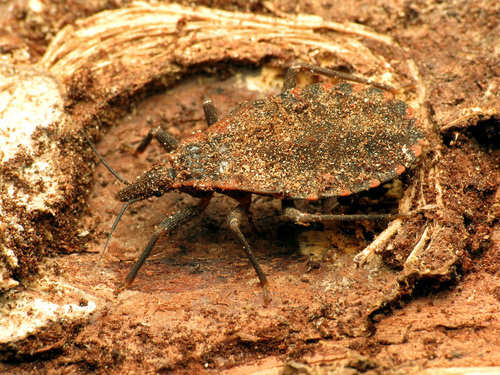
Potential disease vector
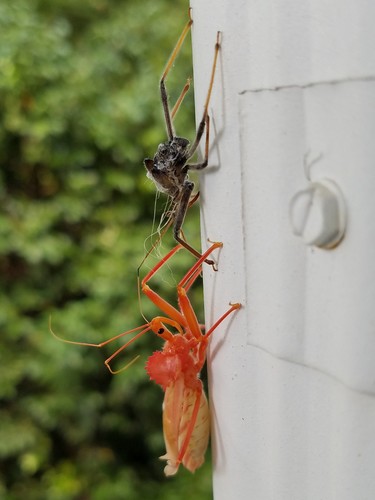
Painful bite
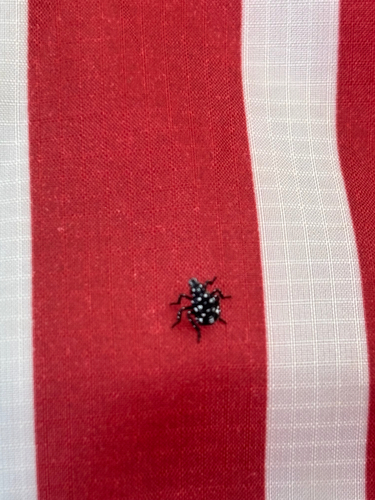
Non-toxic
This guide was written with AI assistance and fact-checked, last updated 2026-10-09. Identification from photos is never certain: don't handle insects you can't identify, and get medical advice for bites, stings or allergic reactions.