
Wheel bug
Arilus cristatus · Assassin bugs
A large predatory assassin bug with a distinctive semicircular 'wheel' crest on its thorax; beneficial predator but delivers a very painful bite if handled.
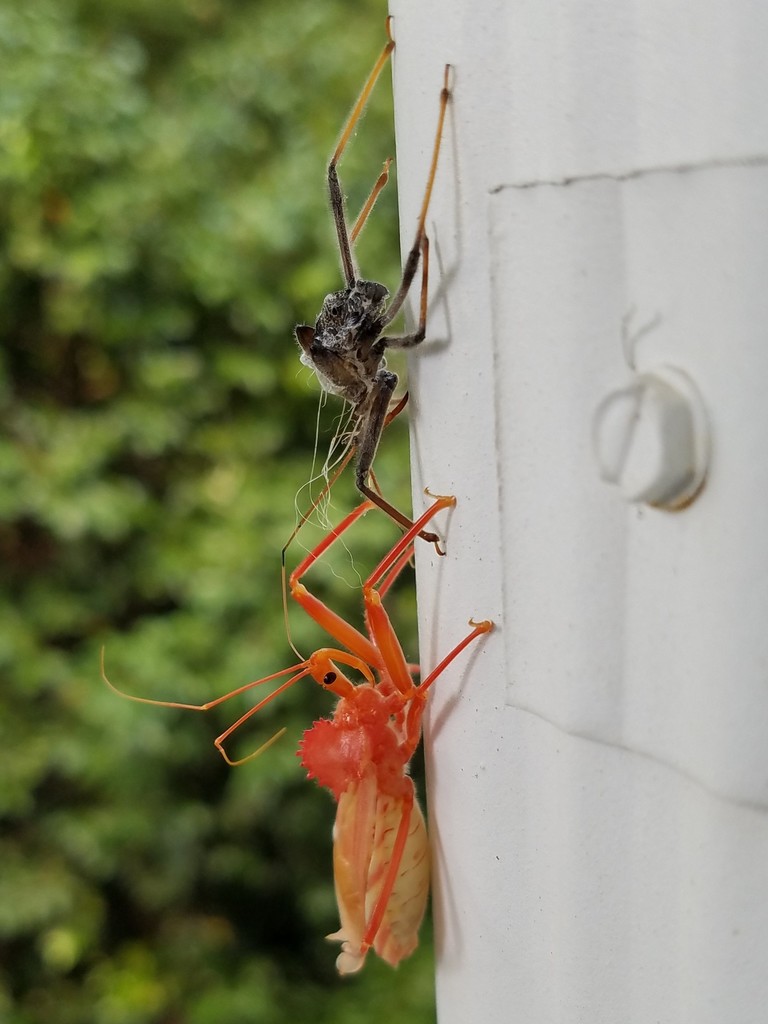
!Is the wheel bug dangerous?
Only mildly. Wheel bugs are not aggressive but can deliver a very painful stab-like bite when handled or crushed. Bites are not known to be deadly; symptoms typically include immediate sharp pain, localized swelling, and redness that can last hours to days. Some people may experience stronger allergic reactions; seek medical care if swelling is extensive, breathing is affected, or signs of infection appear. Basic first aid: wash the area with soap and water, apply a cold pack for swelling, and consider analgesics or antihistamines for pain and itching. If there are signs of severe reaction, consult a healthcare professional.
Pets
Unlikely to bite pets unless the insect is provoked by a curious pet. A bite can be painful and cause local swelling; serious systemic reactions are rare. If your pet is injured or shows unusual symptoms after contact, contact your veterinarian.
📖Overview
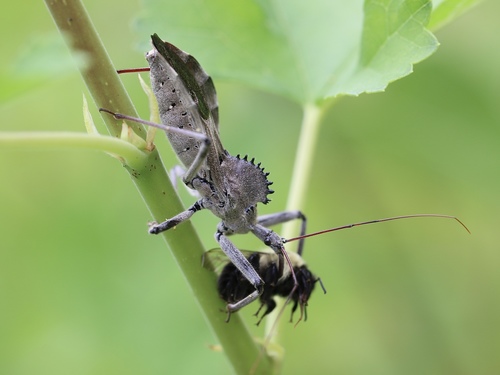
The wheel bug is a North American assassin bug notable for the cog-like or semicircular crest on the pronotum that gives it its common name. Adults are slow-moving ambush predators that capture and feed on a wide range of other insects, including caterpillars and beetles. They are common along woodland edges, hedgerows, gardens and orchards where prey is available. Wheel bugs are solitary and not aggressive toward people, but they will stab in self-defense if grabbed or handled, producing a sharp, painful bite.
🔍How to identify a wheel bug
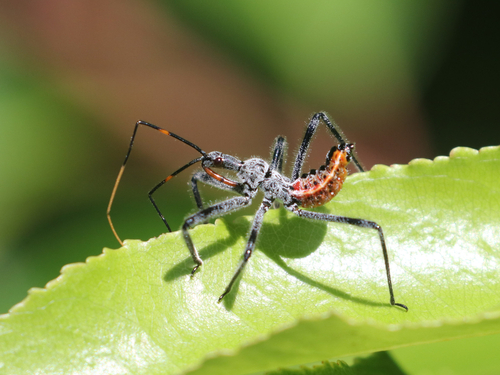
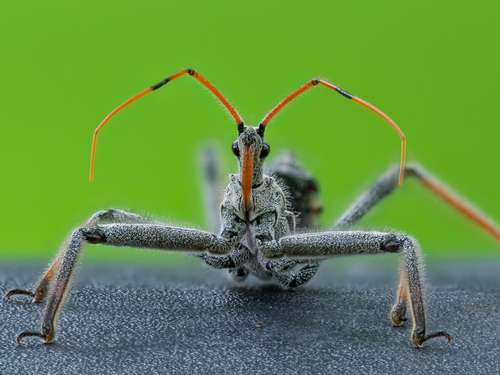
Adults are relatively large, elongate true bugs with a stout, curved proboscis used to pierce prey and inject digestive enzymes. The most distinctive feature is the semicircular, toothed crest (the 'wheel') on the pronotum behind the head. Body texture is rough and somewhat mottled; wings fold flat over the back. Nymphs (immature stages) lack the wheel crest and are reddish-orange when young, becoming browner as they grow.
- Look for the semicircular, toothed 'wheel' or crest on the pronotum behind the head — unique in its region.
- Large, elongate body 25-40 mm with rough, mottled gray-brown coloration and folded wings.
- Nymphs are reddish-orange when young and lack the wheel crest (wheel develops only in adults).
- Long, three-segmented proboscis (beak) folded under the head used for piercing prey.
Lookalikes
Milkweed assassin Zelus longipes
Smaller (about 15-19 mm) and slender with very long legs, often reddish-orange with black markings, and lacks the pronotal wheel.
Other Reduviidae (assassin bugs) Various species
Other assassin bugs are smaller and do not have the distinctive semicircular crenulated pronotum that defines Arilus cristatus.
↻Life cycle
Egg cluster
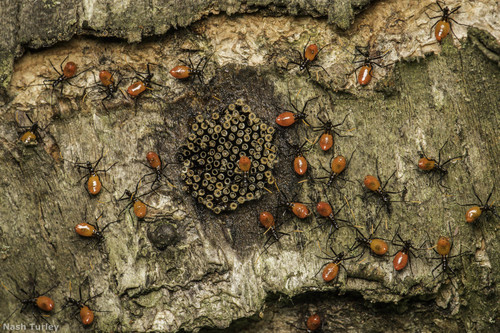
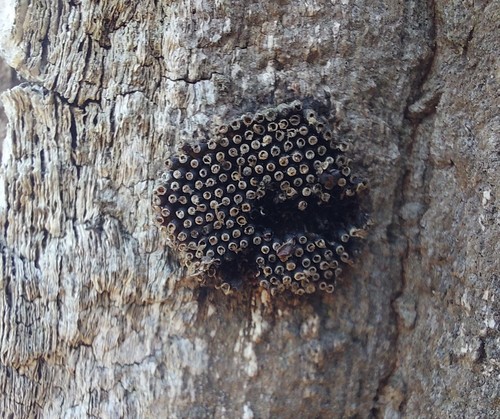
Females lay clusters of barrel-shaped eggs, usually on twigs, stems or fence posts. Eggs overwinter and hatch in spring.
Nymph (juvenile)
Nymphs hatch reddish and lack the adult wheel crest; they go through multiple molts, growing larger and darker each instar while hunting smaller prey.
Adult
Adults develop wings and the characteristic pronotal wheel. They hunt by ambush or slow stalking, mate in late summer and fall, and die with the first hard frosts after the females lay eggs.
🍃Diet and predators
Young eat
Predatory on soft-bodied insects and small arthropods such as caterpillars, aphids, and young beetles.
Adults eat
Predatory generalist feeding on a variety of insects and other arthropods; uses a piercing-sucking rostrum to inject enzymes and consume liquefied tissues.
Predators of the young
Birds, spiders, predatory insects and small vertebrates.
Predators of adults
Birds, spiders, mammals and larger predatory insects; eggs and young nymphs are vulnerable to parasitoids and predators.
🌱Effect on plants and gardens
Wheel bugs do not feed on plants; they help control pest insects such as caterpillars, beetles, and other soft-bodied pests in gardens and orchards.
📍Where and when to find it
Look on tree trunks, branches, shrubs, fences and tall plants. Eggs appear on twigs and stems; nymphs on foliage where small prey are found.
Best time
Late spring through early fall; daytime and dusk are good times to observe them when they hunt or warm in the sun.
Observation tips
Photograph from a distance to avoid provoking a bite. Nymphs are more active and colorful; adults are slower and easier to approach but still will defend themselves if touched.
✨Fun facts
- The toothed 'wheel' on the pronotum is found only on adults and is unique among most local insects, making the wheel bug easy to recognize.
- Wheel bugs inject digestive enzymes into their prey and then suck out the liquefied tissues — a feeding method common to true bugs.
- Because they feed on pest insects, wheel bugs are considered beneficial in gardens and orchards.
?Frequently asked questions
Do wheel bugs bite?
Yes. They are capable of delivering a very painful defensive bite with their proboscis if handled or crushed.
Are wheel bug bites dangerous?
Bites are painful and can cause swelling and redness but are not normally dangerous to healthy adults. Severe allergic reactions are uncommon; seek medical care if symptoms are severe.
Why is a wheel bug in my house?
They occasionally wander indoors while seeking shelter, prey, or overwintering sites. Most often they are just accidental visitors and not nesting indoors.
How do I get rid of wheel bugs?
Do not handle with bare hands. Gently usher them outside using a container and stiff paper or let them leave on their own. As beneficial predators, avoid killing them if possible. Seal entry points to prevent indoor strayings.
Where do wheel bugs live?
They prefer sunny edges of woodlands, hedgerows, gardens and orchards across much of North America where insect prey is plentiful.
📷Photos of the wheel bug
More true bugs
Bites cause itching
Non-venomous nuisance
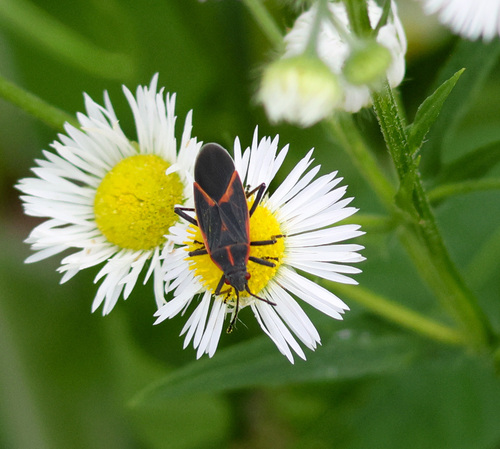
Non-toxic
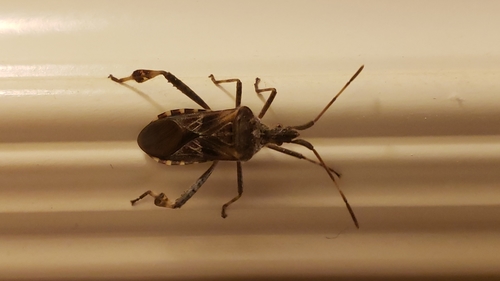
Smelly secretion
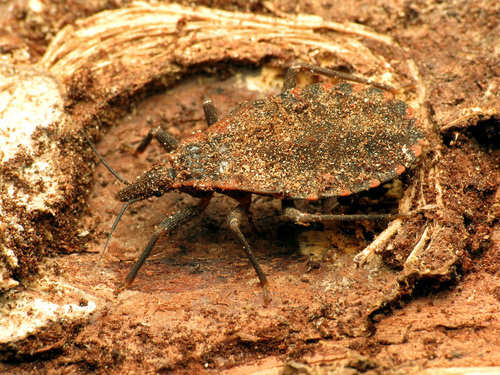
Potential disease vector
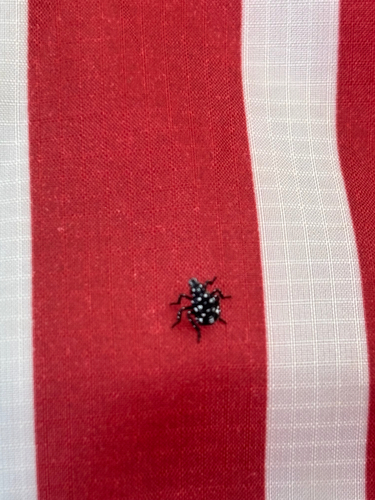
Non-toxic
This guide was written with AI assistance and fact-checked, last updated 2026-10-09. Identification from photos is never certain: don't handle insects you can't identify, and get medical advice for bites, stings or allergic reactions.