
Spotted lanternfly
Lycorma delicatula · Planthoppers
A large, colorful planthopper native to Asia that does not bite people but is an invasive plant pest that damages many trees and crops.
!Is the spotted lanternfly dangerous?
No. Spotted lanternflies do not bite or sting people and are not poisonous. Large numbers can produce sticky honeydew that soils surfaces and can cause respiratory or allergy irritation in very sensitive people due to mold growth; clean affected surfaces and wash skin if soiled. If you find them, do not move live insects or egg masses across quarantine boundaries—follow local reporting rules.
Pets
Not known to be toxic to pets. Pets may get sticky honeydew on fur; rinse with water if needed. Avoid deliberate feeding to animals.
📖Overview
Spotted lanternfly is a sap-feeding planthopper native to parts of China, Vietnam and India. Adults are showy with mottled forewings and bright red hindwings; they feed in groups on the sap of many woody and herbaceous plants, sometimes weakening and stressing hosts. Since the 2000s the species has become invasive in South Korea and Japan and, since 2014, in the eastern United States, where it is a regulated (quarantine) agricultural pest.
They do not bite or sting humans, but large infestations produce sticky honeydew that leads to sooty mold, attracts ants and reduces the aesthetic and economic value of fruit trees, grapevines, hardwoods and ornamentals. Management focuses on detection, reporting to local authorities, removal of preferred hosts, and targeted control where infestations threaten crops or native ecosystems.
🔍How to identify a spotted lanternfly
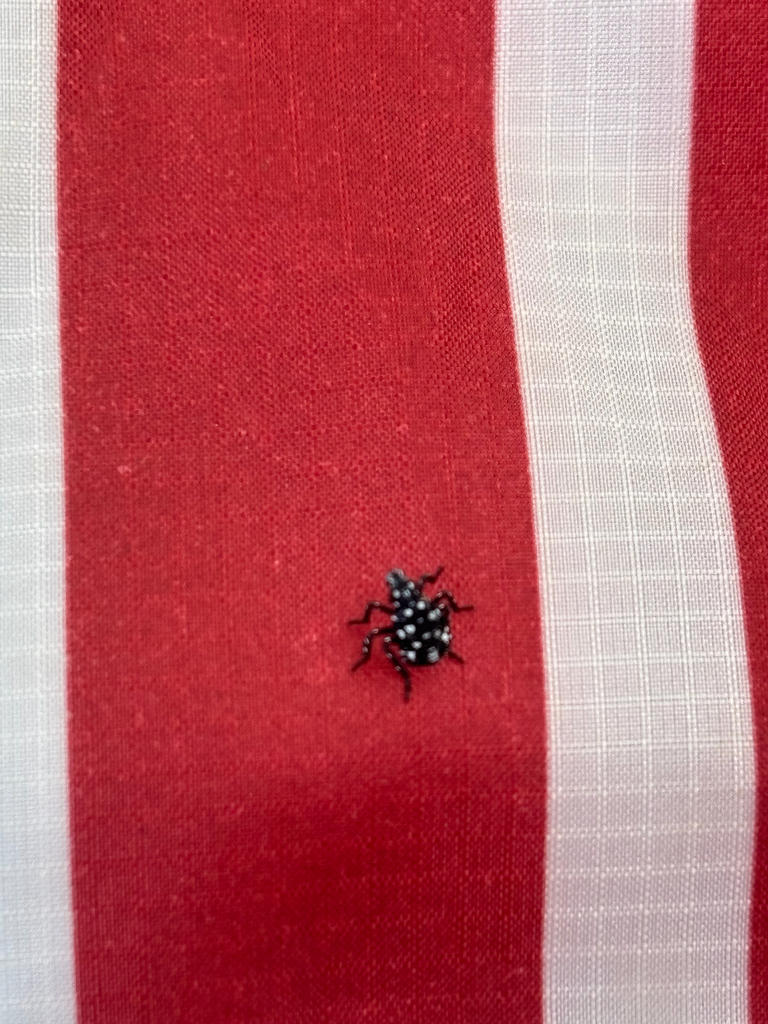
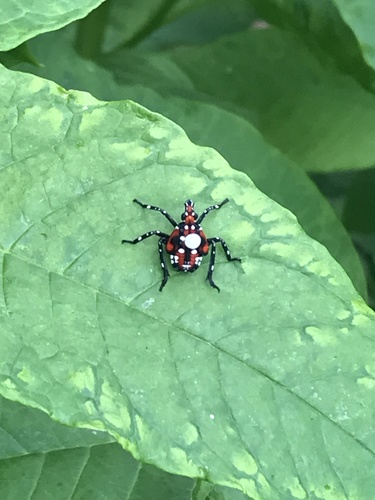
Adult spotted lanternflies are medium-large planthoppers with a flattened, wedge-shaped body. Forewings are light gray to tan with black spots and irregular black patches near the tips; when folded they give a mottled, camouflaged look. The hindwings (visible in flight or when wings are spread) are bright red with black spots and a white band, edged with black. The abdomen underside is yellow with black bands. Nymphs go through several stages: early nymphs are black with white spots, later instars develop red patches before becoming adults. Adults typically sit with wings tented over the body and are often found in groups on tree trunks and stems.
- Adult forewings pale gray with distinct round black spots and darker irregular patches near wing tips
- Bright red hindwings with black spots and white band visible when wings are open
- Nymphs: early instars black with white spots; later instars develop red patches before adulthood
- Egg masses are tan, putty-like coverings containing rows of eggs on bark, stones, vehicles or outdoor items
Lookalikes
Citrus flatid planthopper Metcalfa pruinosa
Smaller, uniformly gray-brown and lacks the bright red and spotted hindwings of spotted lanternfly; wing patterning is less distinct.
Other fulgorid planthoppers Various Fulgoridae
Other fulgorids may be similarly shaped but usually lack the spotted gray forewings and the vivid red hindwing pattern unique to adult spotted lanternfly.
↻Life cycle
Egg
Egg masses are laid on tree bark, stones, outdoor equipment and vehicles in late fall and overwinter. Each mass contains 30-60 eggs covered with a tan putty-like material; egg masses are often scraped off and destroyed.
Nymph
Nymphs hatch in spring. Early instars are black with white spots and are wingless; later instars develop red coloration and wing pads. Nymphs are highly mobile and feed in groups on many plants.
Adult
Adults appear in mid-summer, are winged and capable of hopping and short flights. They mate and females lay eggs in late summer to fall, producing one generation per year in temperate regions.
🍃Diet and predators
Young eat
Sap from leaves, stems and trunks of a wide range of woody and herbaceous plants
Adults eat
Plant sap from many tree and shrub species, including grapes, fruit trees, maples and tree of heaven
Predators of the young
Birds, spiders, predatory insects and parasitic wasps; in invaded ranges some native predators attack nymphs but control is limited
Predators of adults
Birds and larger predatory insects will prey on adults occasionally; research into biological control (parasitic wasps) is ongoing in invaded areas
🌱Effect on plants and gardens
Feeds on sap of many species but shows preference for tree of heaven, grapes, fruit trees, hardwoods and ornamentals. Heavy feeding stresses plants, reduces fruit yield and can lead to secondary infections.
How to get rid of spotted lanternflys
Report sightings to local agricultural or invasive species authorities first. Remove and destroy egg masses by scraping into a sealed bag or container and disposing according to local guidance. For trees, circle traps on trunks catch nymphs and adults; if you use sticky bands, cover them with a wildlife guard (such as wire mesh), since bare sticky bands often trap birds and other animals. Remove or treat tree of heaven where feasible to reduce breeding sites. In commercial settings, licensed insecticide treatments are used; follow local regulations and integrated pest management guidance. Manual removal (squashing, knocking into containers of soapy water) works for small infestations.
📍Where and when to find it
Look on tree trunks, vines and stems of preferred hosts such as tree of heaven, grapevines, fruit trees and maples. Check outdoor furniture, vehicles and stone surfaces for egg masses in fall and winter.
Best time
Late spring through fall for live nymphs and adults; late summer to fall for egg-laying and finding fresh egg masses. Daytime is best for observation.
Observation tips
Photograph adults with wings closed and open to capture forewing and hindwing patterns. Scrape suspected egg masses into a sealed container for confirmation and report to local invasive species authorities rather than transporting them.
✨Fun facts
- Spotted lanternfly is not a fly but a planthopper in the true bug order Hemiptera.
- The species got attention worldwide because egg masses are easily moved on vehicles and outdoor materials, which helped its spread.
- Infestations produce sticky honeydew that supports growth of sooty mold, which can blacken surfaces and harm plant photosynthesis.
?Frequently asked questions
Are spotted lanternflies dangerous to people?
No. They do not bite or sting and are not poisonous, but large numbers can be a nuisance and their honeydew can cause sooty mold.
Do spotted lanternflies bite or sting?
No. They feed by inserting mouthparts into plant tissue to drink sap; they do not bite or sting people.
Why is a spotted lanternfly on my house or car?
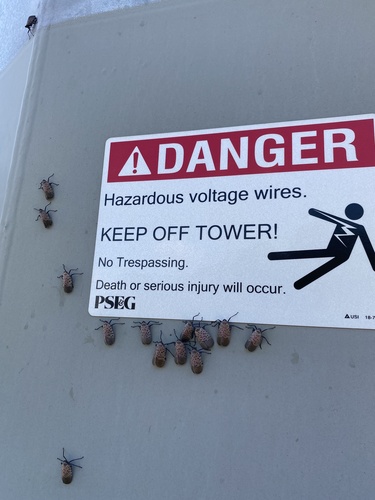
Adults often land on walls, cars and other surfaces as they move between host trees, especially in late summer and fall when they are numerous. Egg masses are often laid on vehicles and outdoor items, which also helps the species spread.
How do I get rid of spotted lanternflies?
Report sightings to local authorities. For small numbers, remove and destroy egg masses, squash adults or collect them in a container of soapy water, and use trunk bands for nymphs. For larger infestations, follow local integrated pest management guidance and licensed pesticide options.
Where do spotted lanternflies live?
Native to China; invasive populations are established in South Korea, Japan and the eastern United States. They live where host plants occur, including urban, agricultural and natural areas.
📷Photos of the spotted lanternfly

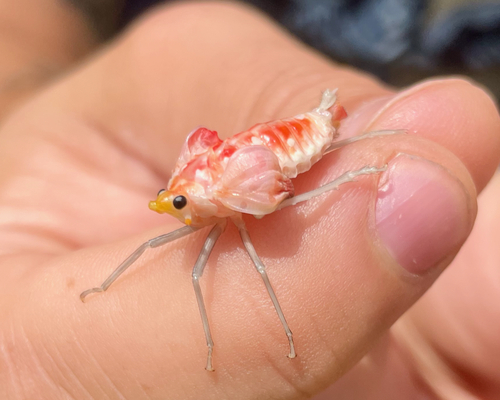
More true bugs
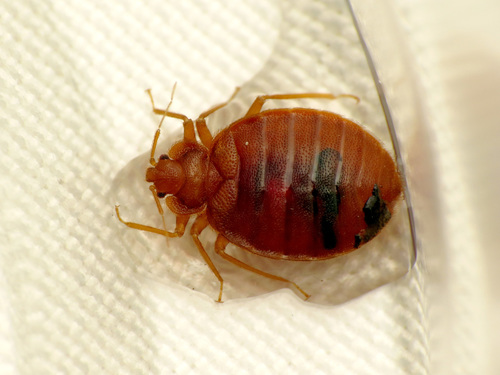
Bites cause itching
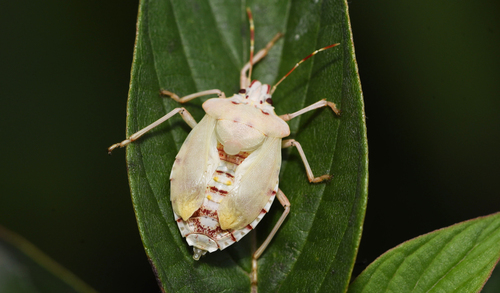
Non-venomous nuisance
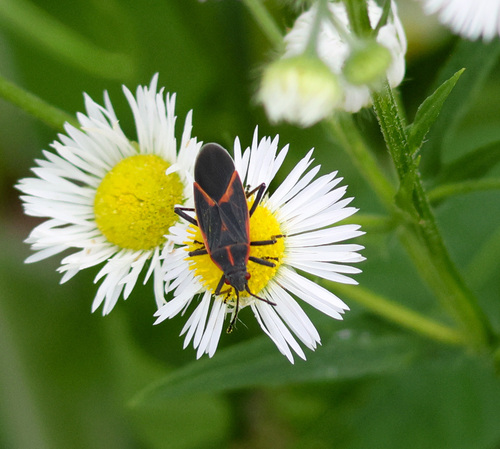
Non-toxic
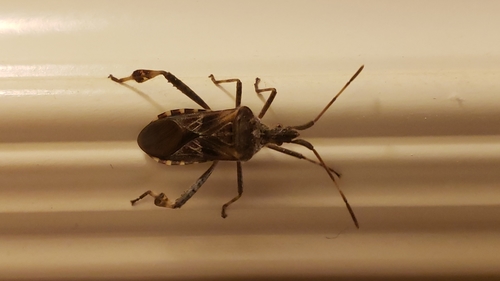
Smelly secretion
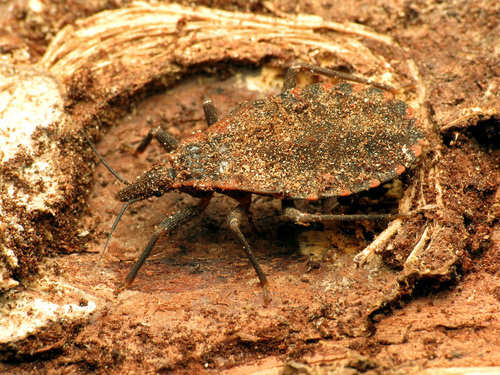
Potential disease vector
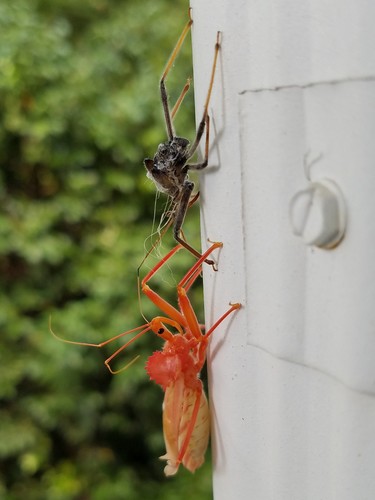
Painful bite
This guide was written with AI assistance and fact-checked, last updated 2026-10-09. Identification from photos is never certain: don't handle insects you can't identify, and get medical advice for bites, stings or allergic reactions.