
Citrus flatid planthopper
Metcalfa pruinosa · Flatid planthoppers
A small sap-feeding planthopper that produces sticky honeydew and can cause sooty mold on citrus and many ornamental plants.
!Is the citrus flatid planthopper dangerous?
No. Does not bite or sting and is not venomous. Occasional contact with honeydew or sooty mold can cause skin or surface stickiness but no toxic effects; wash affected skin with soap and water if needed.
Pets
Generally harmless to pets. Honeydew can make fur sticky; remove affected fur and wash if necessary. No known venom or toxin hazard.
📖Overview
Metcalfa pruinosa is a sap-sucking planthopper native to eastern North America that has been introduced to Europe, parts of Asia and elsewhere. Both nymphs and adults feed on plant sap from a wide range of woody and herbaceous hosts; heavy infestations produce copious honeydew, leading to sooty mold and reduced aesthetic or market value of fruit and ornamentals. It is not dangerous to people or pets, but can be an agricultural and garden nuisance when abundant. Adults are relatively slow-moving and often seen on stems, branches and leaves.
🔍How to identify a citrus flatid planthopper
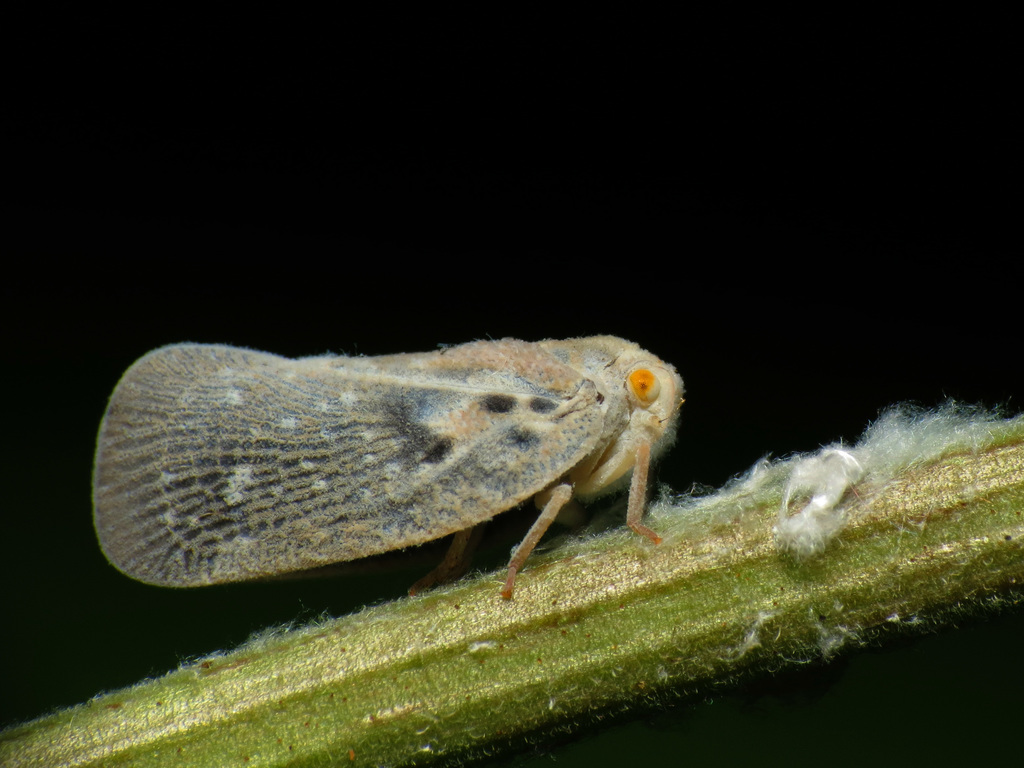
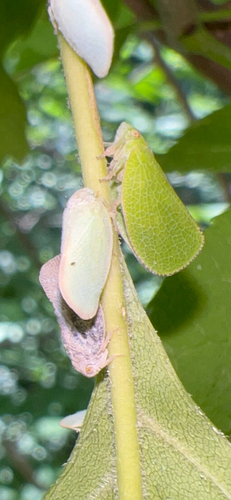
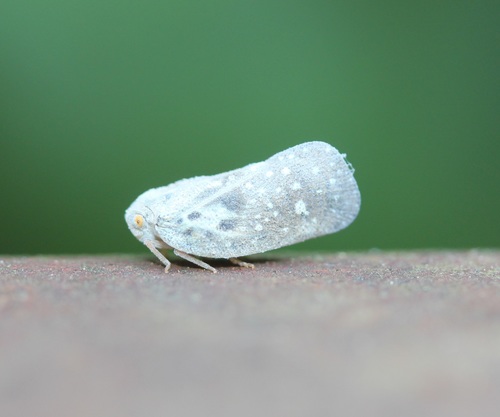
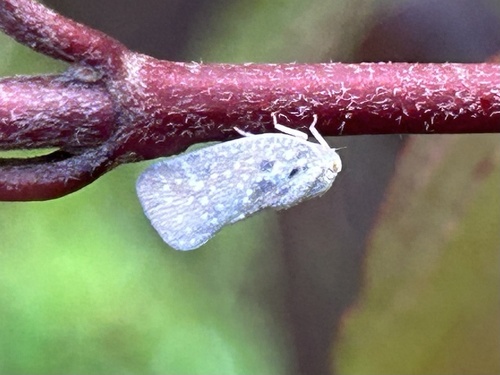
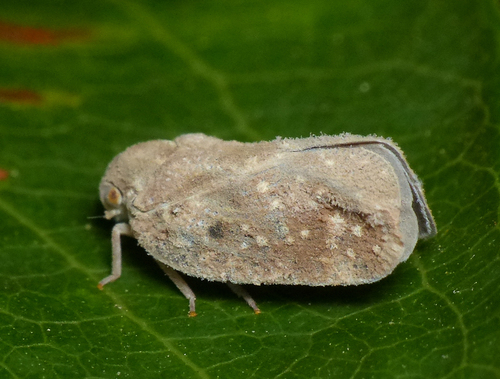
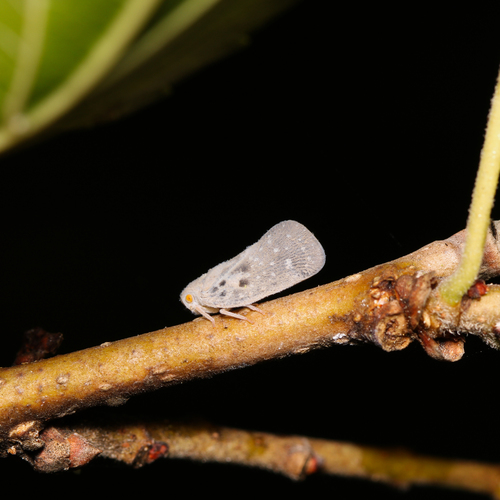
Adults are wedge-shaped, elongate-oval planthoppers about 6-9 mm long with broad, roof-like wings that overlap the body at rest. They are usually pale to medium brown beneath a whitish, powdery (pruinose) coating that gives them a frosted grey appearance. Nymphs are wingless, flattened, and often covered with white waxy filaments, especially the later instars.
- Wedge-shaped adult 6-9 mm long with overlapping roof-like wings and a frosted, powdery (pruinose) grey-white coating
- Nymphs wingless and often covered in conspicuous white, waxy filaments
- Feeds in groups on stems or beneath leaves and commonly leaves sticky honeydew and attendant ants
Lookalikes
Northern flatid planthopper Flatormenis proxima
Another flatid planthopper of similar shape, but usually pale green to bluish-green rather than frosted grey-brown; close inspection may be needed to confirm.
Tropical flatid planthoppers (various species) Various Flatidae species
Many flatid species are similar in shape but vary in colour, size and amount of waxy coating; nymphal wax filaments are useful to separate some species.
↻Life cycle
Egg
Overwintering eggs are laid in plant tissue in late summer or autumn and hatch the following spring.
Nymph (juvenile)
Wingless nymphs emerge from eggs and pass through several instars; they are often covered in white waxy filaments and produce honeydew while feeding.
Adult
Adults develop wings in the final molt, disperse short distances, and reproduce; one generation per year is common, though timing varies with climate.
🍃Diet and predators
Young eat
Plant phloem sap from stems and leaves
Adults eat
Plant phloem sap from a wide variety of woody and herbaceous hosts
Predators of the young
Predatory insects (ladybird beetles, lacewings), spiders and parasitoid wasps such as the dryinid Neodryinus typhlocybae
Predators of adults
Birds, predatory insects and spiders
🌱Effect on plants and gardens
Feeds on sap from many trees and shrubs, including citrus, ornamental trees, grapevine, maples and many weeds. Heavy infestations reduce plant vigor and produce honeydew that promotes sooty mold growth, which can reduce photosynthesis and marketability of fruit or foliage.
How to get rid of citrus flatid planthoppers
Monitor for nymphs and adults in growing season. Remove heavily infested plant parts if localized. Encourage natural enemies (predatory bugs, spiders, parasitic wasps) and avoid broad-spectrum insecticides that kill beneficials. For small infestations, wash insects off with a strong water spray or treat with insecticidal soap or horticultural oil targeting nymphs. Systemic insecticides or targeted contact insecticides may be used for severe, persistent infestations—follow label directions and consider integrated pest management.
📍Where and when to find it
Look on trunks, branches and underside of leaves of citrus, ornamentals, vines and many weeds; nymphs on stems with white waxy filaments, adults perched on leaves and twigs.
Best time
Late spring through autumn in temperate regions; daytime when they are active on host plants.
Observation tips
Photograph the top and underside of the insect, note any honeydew or sooty mold, and check for groups of nymphs with waxy filaments to confirm presence.
✨Fun facts
- The species name pruinosa refers to the powdery or frosted (pruinose) appearance of adults.
- Ants are often seen 'tending' these planthoppers to collect the sugary honeydew they excrete.
- Introduced populations have spread rapidly in some regions and become common on urban trees and ornamentals.
?Frequently asked questions
Do citrus flatid planthoppers bite or sting?
No. They are sap-feeders and do not bite or sting people or pets.
Why is there sticky stuff on my car or patio under a tree?
Sticky honeydew excreted by planthoppers, aphids and other sap-feeding insects falls onto surfaces and can become covered by sooty mold.
Are citrus flatid planthoppers harmful to fruit trees?
They can be a nuisance: heavy feeding weakens plants and honeydew promotes sooty mold that reduces fruit and foliage quality, though they rarely kill healthy mature trees.
How do I get rid of them on my plants?
Use a strong water spray to dislodge insects, encourage natural enemies, prune and remove heavily infested shoots, and consider insecticidal soap or horticultural oil for nymphs; use systemic or targeted insecticides only for severe infestations following label instructions.
Where did these planthoppers come from?
Metcalfa pruinosa is native to eastern North America but has been introduced to Europe, parts of Asia and other regions via plant trade and human activity.
📷Photos of the citrus flatid planthopper
More true bugs, cicadas & aphids
Bites cause itching
Non-venomous nuisance
Non-toxic
Smelly secretion
Potential disease vector
Painful bite
This guide was written with AI assistance and fact-checked, last updated 2026-10-10. Identification from photos is never certain: don't handle insects you can't identify, and get medical advice for bites, stings or allergic reactions. More about the citrus flatid planthopper: iNaturalist, Wikipedia.