
Tarnished plant bug
Lygus lineolaris · Plant bugs
A common North American plant-feeding true bug that damages many fruit, vegetable and ornamental crops by piercing-sucking plant tissues.
!Is the tarnished plant bug dangerous?
No. Tarnished plant bugs are not venomous and are not medically significant. They may occasionally probe or nibble if handled, producing a brief, minor, irritating bite, but they do not inject dangerous venom. Wash the area with soap and water if bitten; seek medical care only if there is an unusual allergic reaction.
Pets
Not toxic to pets. Large numbers feeding on plants may damage garden produce but pose no direct poisoning risk to cats or dogs.
📖Overview
Lygus lineolaris, the tarnished plant bug, is a widespread hemipteran pest in North America. Adults and nymphs feed by piercing plant tissues and sucking sap, causing deformities, stunted growth, necrotic spots and reduced yields on a very wide range of host plants. They are highly mobile, can move between wild hosts and crops, and often build up on weed hosts before moving into cultivated fields.
Tarnished plant bugs overwinter as adults in leaf litter and field margins. In spring they become active, lay eggs inserted into plant tissue, and produce several generations per year depending on climate. Control is typically integrated: sanitation and weed management reduce populations, and insecticide applications or biological controls are used when economic thresholds are exceeded.
🔍How to identify a tarnished plant bug
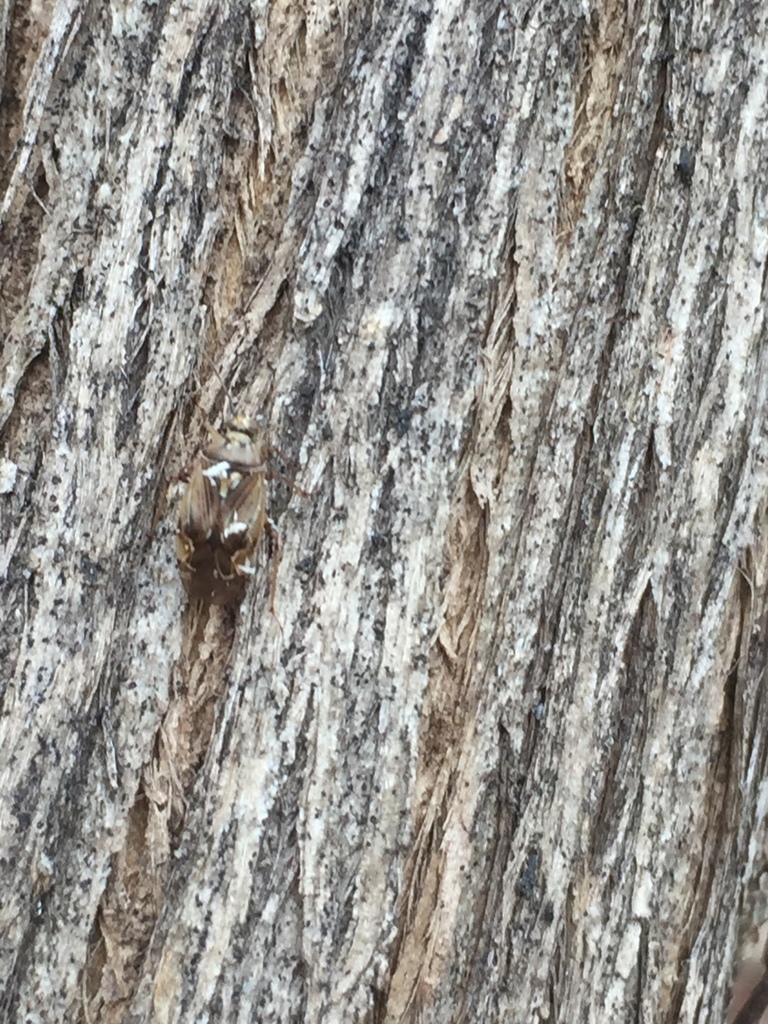
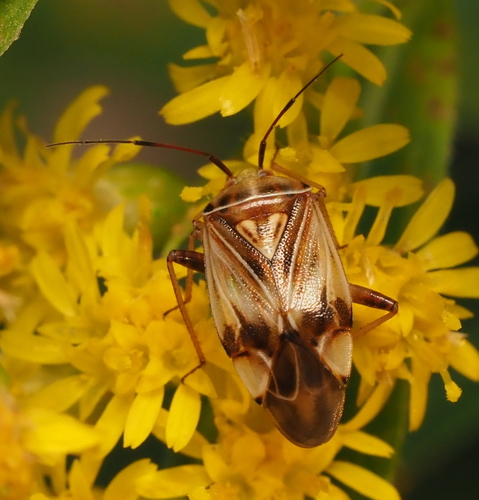
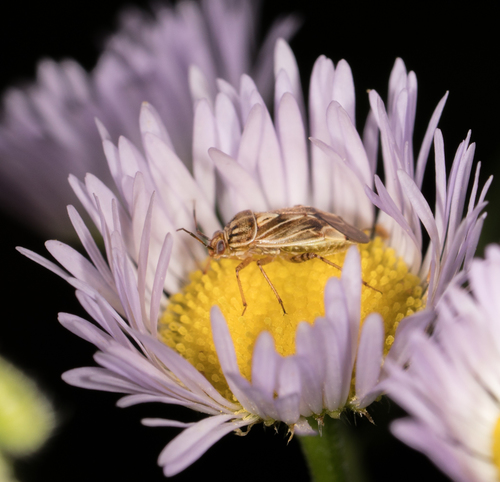
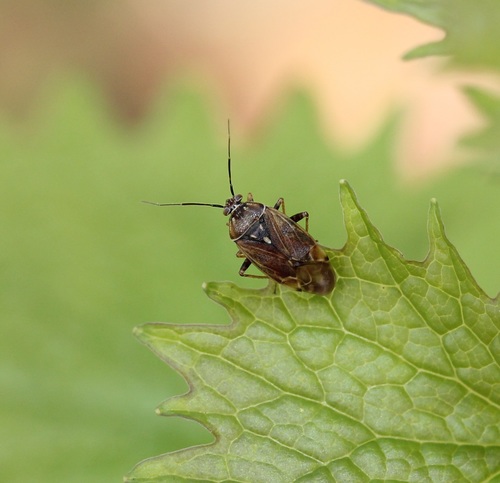
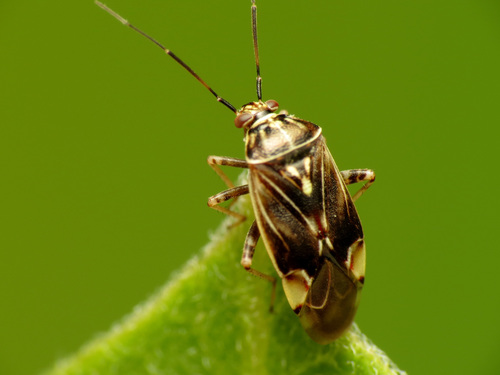
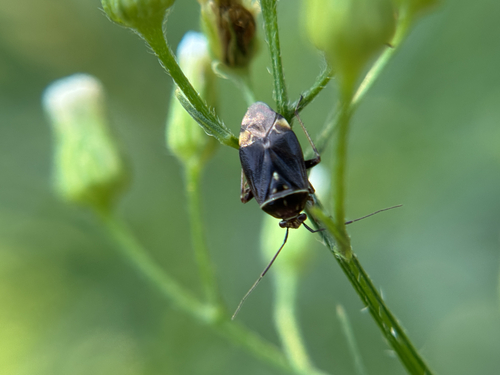
Adults are 4.5-6.5 mm long, elongate-oval true bugs with a somewhat flattened body. Colouration is variable — mottled brown, green and yellow with darker markings across the back. The wings lie flat over the body; between their bases sits a small triangular scutellum, often marked with a pale yellowish V or Y. Nymphs are wingless, similar in shape to adults but smaller and often greener; later nymph instars begin to show wing pads. Eggs are tiny, elongate and laid inserted into stems, buds or leaf tissue.
- Adults 4.5-6.5 mm long, elongate-oval, mottled brown-green with pale yellow patches
- Small triangular scutellum between the wing bases, often with a pale yellowish V or Y mark
- Nymphs are wingless, smaller, and often greener; later instars have visible wing pads
- Variable markings — identification to species may require examination of subtle markings or expert confirmation for some Lygus species
Lookalikes
Western tarnished plant bug Lygus hesperus
Very similar in appearance; range differs (L. hesperus is more common in western US). Detailed identification often requires examination by an expert or genitalia.
Mirid plant bugs (other Lygus spp.) Lygus spp.
Several Lygus species look alike; habitat and host plants overlap. Expert identification may need microscopic characters.
↻Life cycle
Egg
Small, elongate eggs laid into stems, buds or petioles. Eggs hatch in about 1-3 weeks depending on temperature.
Nymph
Several nymphal instars over 2-4 weeks; nymphs are wingless and feed like adults on plant juices. Multiple generations occur per year in warm areas.
Adult
Overwinters as an adult in leaf litter and field edges. Becomes active in spring, mates and females insert eggs into plant tissue.
🍃Diet and predators
Young eat
Piercing-sucking of plant sap from buds, developing fruit, flowers, stems and seed pods
Adults eat
Same as nymphs — sap from a wide range of host plants, feeding on reproductive plant parts that cause the most crop damage
Predators of the young
Generalist predators including assassin bugs, big-eyed bugs, damsel bugs, lacewings, spiders and predatory beetles; some parasitic wasps attack eggs
Predators of adults
Same generalist predators; birds and larger insects will also eat adults
🌱Effect on plants and gardens
Feeds on a very broad host range: fruit and vegetable crops (strawberry, apple, peach, cotton, alfalfa, beans, tomatoes), ornamentals and many weeds. Feeding causes bud and fruit deformities, necrotic spots, failure of fruit set and reduced quality.
How to get rid of tarnished plant bugs
Use integrated pest management: remove or mow weedy field margins and flowering weeds that host juveniles, use row covers for small plots or young plants, monitor with sweep nets or sticky traps and apply insecticides only when economic thresholds are met. Encourage natural enemies (predatory bugs, lacewings, spiders, parasitic wasps). In commercial crops consult local extension guidelines for appropriate insecticides and timing to target vulnerable nymph stages.
📍Where and when to find it
Sweep or beat flowering weeds, alfalfa, clover and crop canopies to find adults and nymphs. Overwintering adults hide in leaf litter and field margins.
Best time
Spring through early fall; daytime when temperatures are warm and plants are flowering.
Observation tips
Use a sweep net in weedy areas and crop borders to monitor numbers. Photograph dorsal view of adult for ID; for species-level confirmation, collect a specimen and consult an expert.
✨Fun facts
- Tarnished plant bugs feed on hundreds of plant species and are considered one of the most polyphagous agricultural pests in North America.
- They overwinter as adults and can rapidly recolonize crops in spring from nearby weedy habitats.
- Damage is often most evident as distorted fruit or aborted buds rather than visible feeding holes.
?Frequently asked questions
Do tarnished plant bugs bite people?
They can occasionally give a brief, minor bite if handled, but they are not aggressive toward people and bites are not dangerous.
Why do I have them in my garden?
They are attracted to flowering weeds and many crops. Weedy field margins, clover and volunteer plants often serve as reservoirs before they move into your garden.
How do I get rid of tarnished plant bugs?
Reduce nearby weeds and groundcover hosts, use row covers for small or high-value plants, monitor populations and apply targeted controls (biological or chemical) when thresholds are exceeded. Consult local extension for timing and product recommendations.
What damage do they cause to fruit and vegetables?
Piercing-sucking feeding causes distorted fruits, aborted buds, 'cat-facing' and internal necrosis, reducing marketability and yield.
Are natural predators effective?
Yes — generalist predators and some parasitic wasps can reduce populations, but predators alone often do not prevent outbreaks in large monocultures without additional management.
📷Photos of the tarnished plant bug
More true bugs, cicadas & aphids
Bites cause itching
Non-venomous nuisance
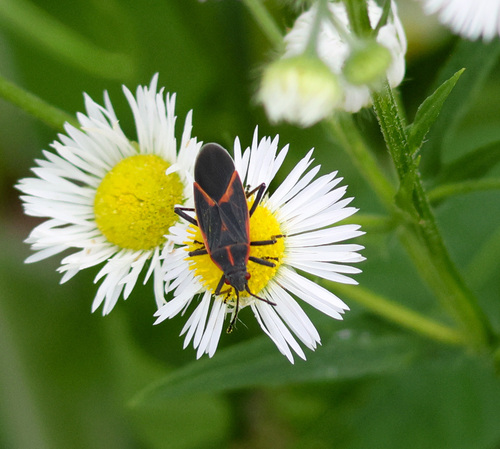
Non-toxic
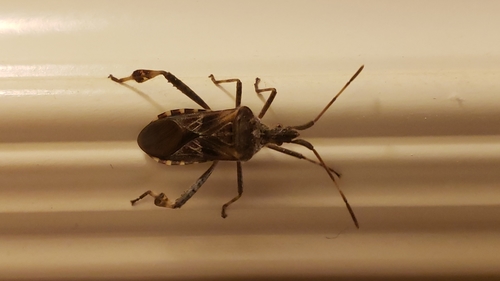
Smelly secretion
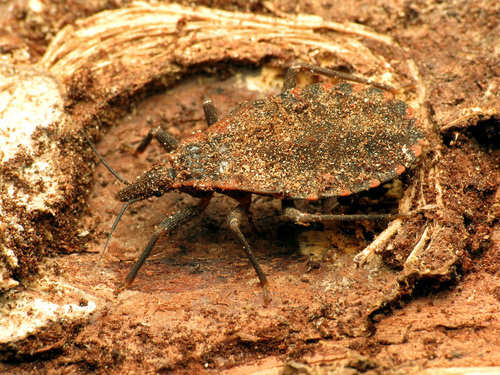
Potential disease vector
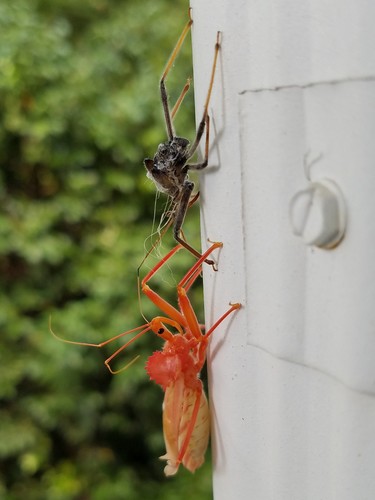
Painful bite
This guide was written with AI assistance and fact-checked, last updated 2026-10-10. Identification from photos is never certain: don't handle insects you can't identify, and get medical advice for bites, stings or allergic reactions. More about the tarnished plant bug: iNaturalist, Wikipedia.