
Common water strider
Aquarius remigis · Water striders
A widespread surface-walking true bug that skates on calm freshwater, hunting insects and other small prey on the water surface.
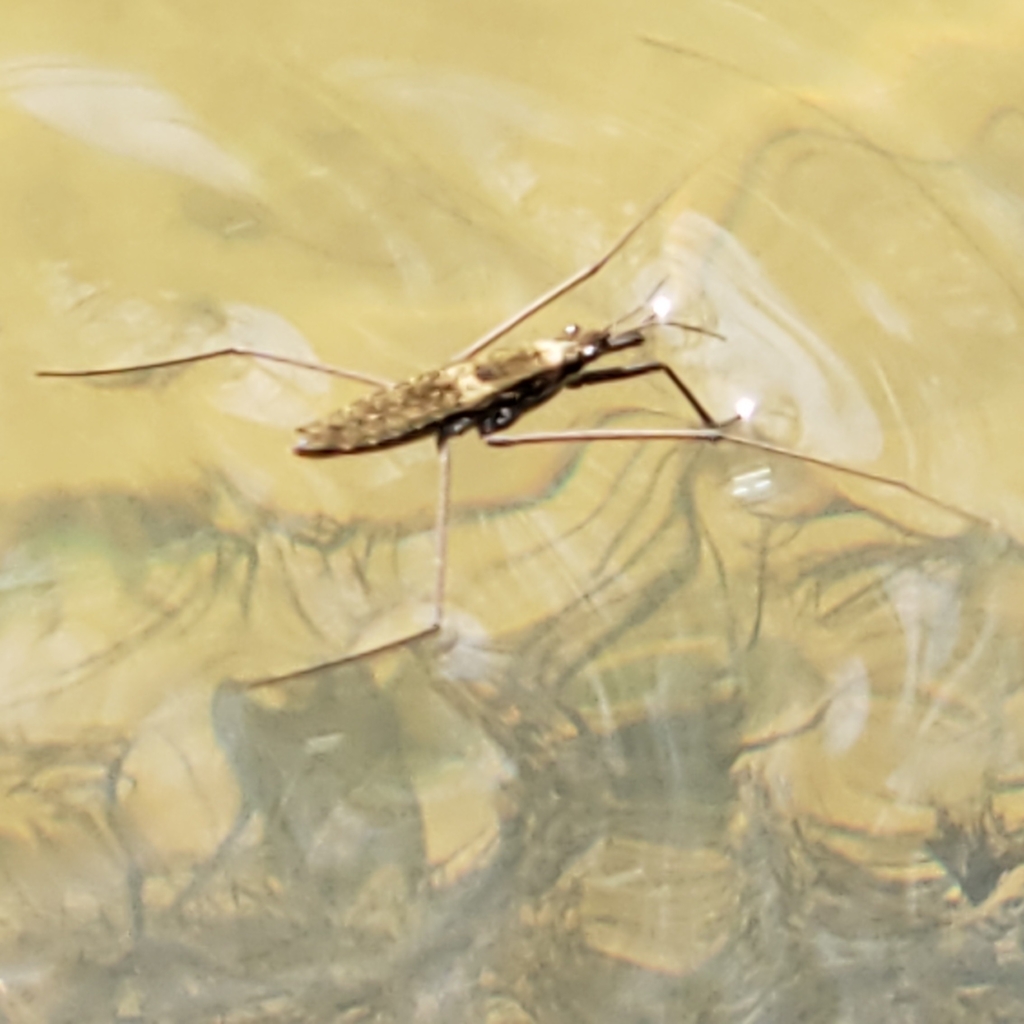
!Is the common water strider dangerous?
No. Not venomous. They do not seek out people but can deliver a mild bite with piercing-sucking mouthparts if handled or squeezed; bites are uncommon and usually produce only minor, brief irritation. Clean the area with soap and water if bitten and monitor for normal wound care.
Pets
Not toxic to pets. Bites to pets are very unlikely; if a pet snaps at one, the insect may be killed but will not cause poisoning.
📖Overview
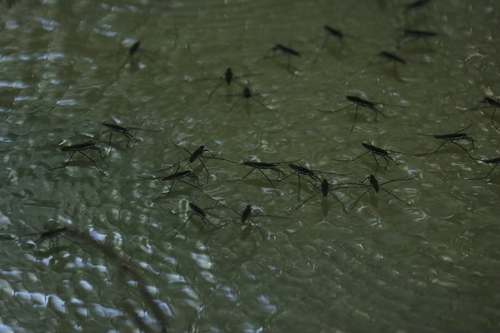
Aquarius remigis is a common pond and stream insect in North America known for its ability to run on the water surface using long, hydrophobic legs. It is an active predator of insects trapped on or emerging from the water. Adults are most conspicuous on streams and creeks, especially calm pools and sheltered margins, during warm months; they also occur on ponds. They are generally solitary or found in loose aggregations rather than forming dense swarms.
This species spends its entire life on or near the water surface. Eggs are laid on submerged or emergent vegetation or sometimes on man-made objects near the waterline. Nymphs resemble small wingless adults and go through several molts before reaching adulthood. Aquarius remigis was previously placed in the genus Gerris; the genus change reflects modern taxonomic revisions but common behaviour and ecology are unchanged.
🔍How to identify a common water strider
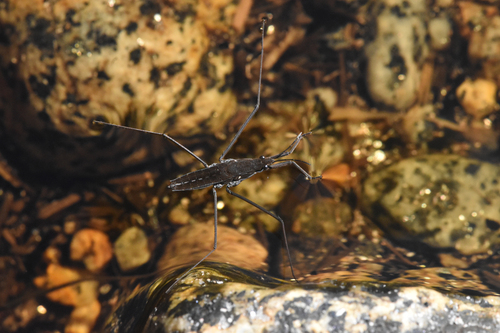
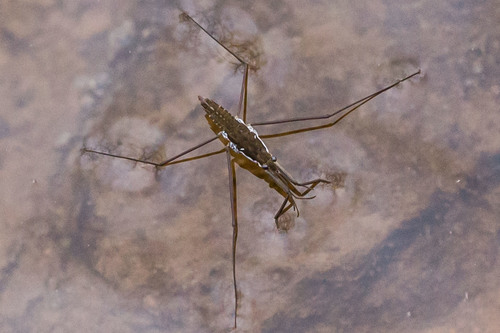
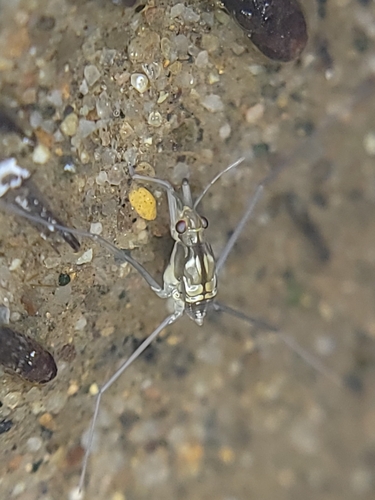
Adults are elongated, slender bugs with very long middle and hind legs adapted for distributing weight across the water surface. The body is elongated and somewhat flattened; most adults are wingless, although winged individuals occasionally occur. The head is small with piercing-sucking mouthparts used to feed on prey. Nymphs look like smaller wingless versions of adults.
Typical body length for adults is about 12-16 mm (not counting legs), while the legs, especially the middle and hind pairs, are several times the body length and give the insect a large footprint on the water surface.
- Very long, slender middle and hind legs that keep the insect afloat on the water surface
- Elongated, narrow dark body roughly 12-16 mm long (excluding legs)
- Typical skating behaviour: rapid surface movement, often in straight lines or short darts, and frequent pauses to feed
Lookalikes
Other water striders (Gerris and related genera) Gerris spp. and other Gerridae
Similar habits and general shape; Aquarius remigis tends to be one of the larger and more common North American species. Genitalic or detailed body measurements are needed for certain identification.
Broad-shouldered water striders Rhagovelia spp.
Much smaller (only a few millimetres) and stockier, often in groups in stream riffles; Aquarius remigis is far larger with very long legs.
↻Life cycle
Egg
Laid on submerged or emergent vegetation, stones or man-made items at the waterline; eggs hatch in days to weeks depending on temperature.
Nymph (immature)
Wingless, smaller versions of adults that go through multiple molts. Nymphs hunt similarly to adults on the water surface.
Adult
Usually wingless adults that reproduce and continue hunting on the water surface; adults disperse mainly along the water.
🍃Diet and predators
Young eat
Small aquatic and surface-dwelling invertebrates and trapped insects
Adults eat
Insects and other small arthropods that fall onto or emerge from the water surface; they use piercing mouthparts to suck bodily fluids from prey
Predators of the young
Fish, aquatic insects (predatory beetles, giant water bugs), amphibians and birds
Predators of adults
Fish (if they fall in), birds, larger aquatic insects and occasionally spiders or other predators at the water edge
🌱Effect on plants and gardens
Does not feed on plants; it is a predator of other small insects and invertebrates at the water surface and has little direct impact on aquatic vegetation
📍Where and when to find it
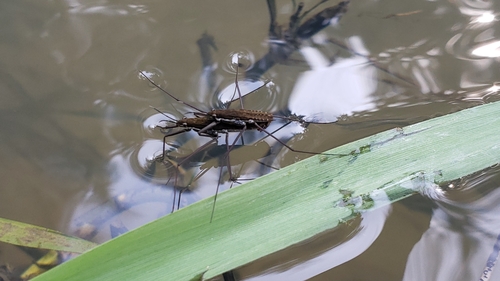
Look on the surface of calm ponds, slow-moving streams, sheltered bays, ditches and marsh edges. Adults and nymphs are visible on open water, often near vegetation or shorelines.
Best time
Late spring through early autumn during daylight, especially on warm, sunny days
Observation tips
Approach quietly to avoid creating surface ripples; use a telephoto or macro lens from the shore. Photograph from a low angle to capture the water-surface reflections and leg positioning.
✨Fun facts
- Aquarius remigis walks on water thanks to tiny hairs on its legs that repel water and trap air, increasing buoyancy.
- They are fast: water striders row with their long middle legs, steer with their hind legs and use their short front legs to grab prey.
- Some water striders can detect ripples and vibrations on the water surface to locate prey at surprising distances.
?Frequently asked questions
Are common water striders harmful to people?
No. They are not venomous and do not transmit disease. They rarely bite people; a bite can cause minor, brief irritation if the insect is handled.
Do water striders bite?
They can bite with their piercing mouthparts if grabbed or crushed, but bites are uncommon and usually not serious.
Why do I see them on my pond?
They hunt for insects and other small invertebrates on the water surface. Calm, sheltered water with nearby vegetation provides good habitat and food, so ponds and slow streams attract them.
How do I get rid of water striders?
They are harmless and beneficial predators of pest insects, so removal is usually unnecessary. If control is desired, reduce calm surface area and remove excess floating vegetation or debris; treating water is unnecessary and often harmful to other wildlife.
Where do they live in winter?
In temperate regions, adults may overwinter in sheltered edges, under debris, or in leaf litter near water; some populations recolonize ponds each spring from nearby refuges.
📷Photos of the common water strider
More true bugs, cicadas & aphids
Bites cause itching
Non-venomous nuisance
Non-toxic
Smelly secretion
Potential disease vector
Painful bite
This guide was written with AI assistance and fact-checked, last updated 2026-10-10. Identification from photos is never certain: don't handle insects you can't identify, and get medical advice for bites, stings or allergic reactions. More about the common water strider: iNaturalist, Wikipedia.