
Masked hunter
Reduvius personatus · Assassin bugs
A 17-22 mm predatory assassin bug whose camouflaged nymphs hide under dust and debris and which sometimes enters homes searching for insect prey.
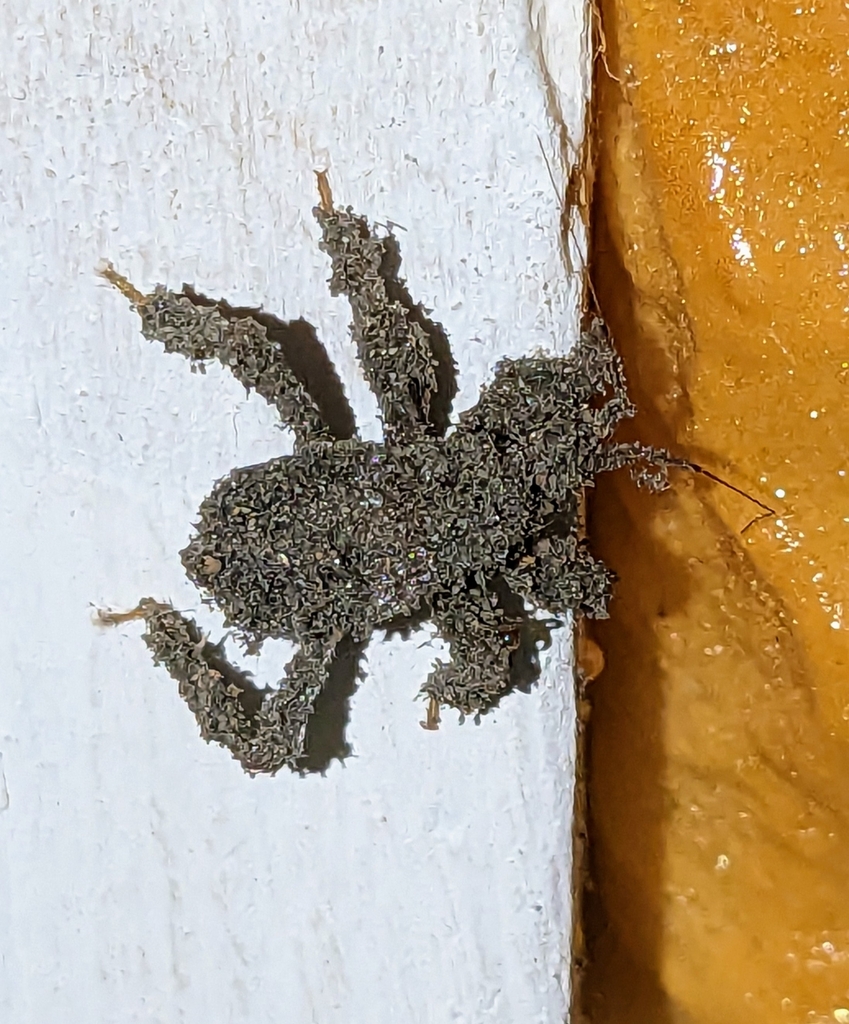
!Is the masked hunter dangerous?
Only mildly. Masked hunters are predators and do not seek out people, but they can deliver a painful stab-like bite if handled or trapped against skin. Bites may cause local pain, swelling and, rarely, an allergic reaction. They are not known to transmit human diseases. First aid: wash the wound with soap and water, apply a cold pack to reduce swelling, and seek medical care if symptoms worsen or signs of allergy or infection appear.
Pets
Unlikely to seriously harm pets. A bite can cause local pain or irritation if a small pet or curious animal is bitten on a sensitive area; monitor and seek veterinary care if there is swelling, persistent pain or unusual behavior.
📖Overview
Reduvius personatus is a predatory true bug in the assassin bug family. Adults hunt other insects by ambush or active pursuit; they use a sharp beak (rostrum) to inject digestive enzymes and suck out prey fluids. Nymphs are notable for covering themselves with dust, lint and debris, which helps them ambush prey and avoid predators. The species commonly occurs around human buildings, woodpiles and bird nests where insect prey is abundant.
🔍How to identify a masked hunter
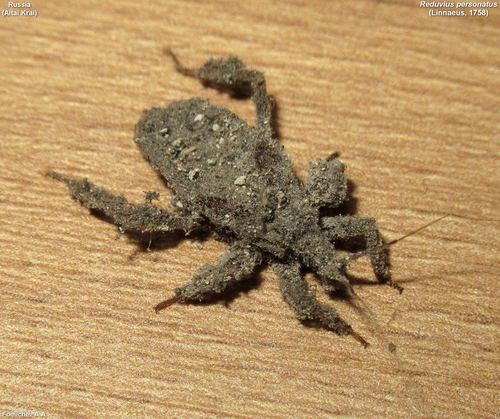
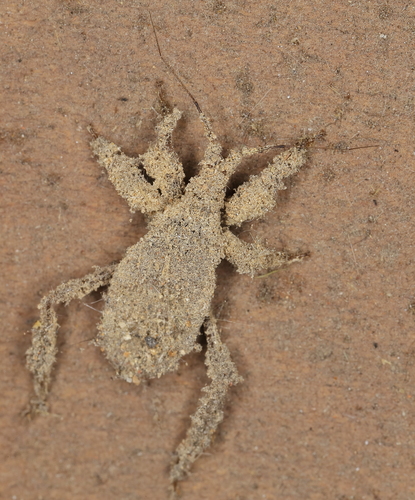
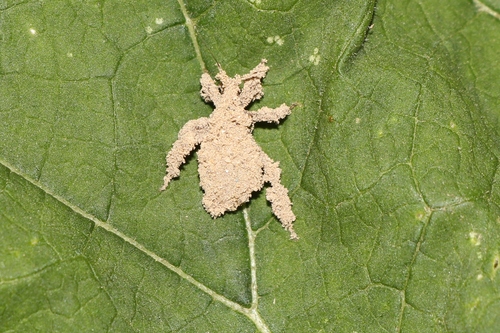
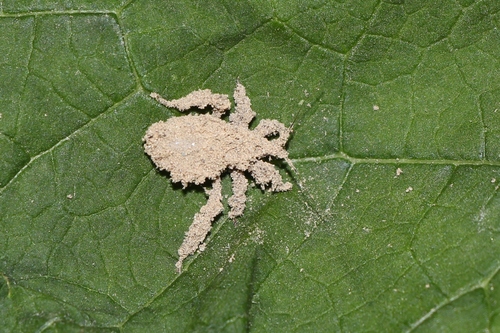
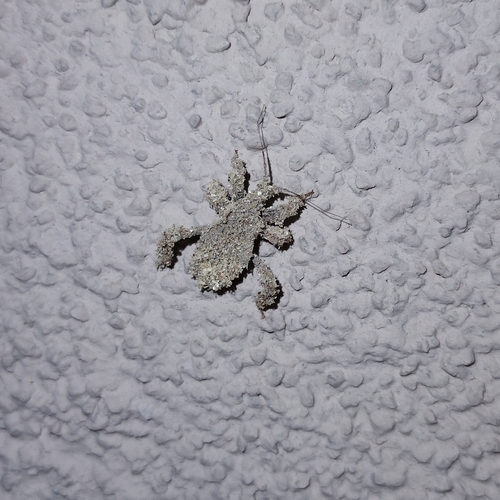
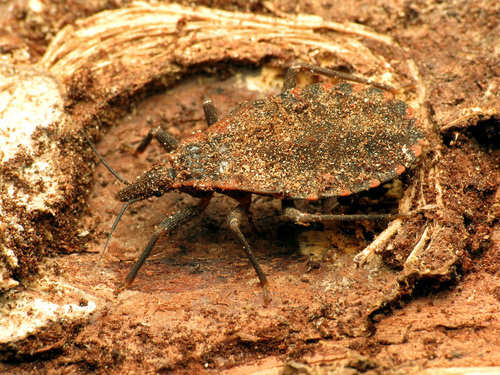
Adults are elongated, flattened bugs with a narrow 'neck' behind the head typical of assassin bugs. They are generally dark brown to black with a somewhat rough-textured exoskeleton. The head is elongated with a three-segmented beak tucked under. Legs are long and spindly. Nymphs are pale to brown but are usually obscured by a coat of dust and debris they carry on their backs, which gives them a fuzzy appearance.
- Adult body length about 17-22 mm with elongated, flattened profile and a narrow neck behind the head
- Long, three-segmented beak (rostrum) held under the head used for piercing prey
- Nymphs often dressed in a conspicuous coating of dust and lint they gather, making them look fuzzy or camouflaged
- Generally dark brown to black adults with long spindly legs; not brightly colored
Lookalikes
Wheel bug Arilus cristatus
Wheel bug is much larger (up to 35 mm or more) and has a distinctive toothed 'wheel' crest on the thorax; masked hunter is smaller and lacks the crest.
Kissing bugs (blood-feeding triatomines) Triatoma spp.
Triatomines often have a more pronounced head-to-body shape adapted for blood feeding, different wing venation and a different geographic and ecological context; kissing bugs are blood feeders and are associated with different medical risks (Chagas disease in the Americas) — masked hunter is an insect predator and not a blood feeder.
↻Life cycle
Egg
Laid in protected spots (crevices, under bark); eggs hatch after days to weeks depending on temperature.
Nymph
Multiple nymphal instars; nymphs usually overwinter. They are active predators and characteristically cover themselves with dust and debris for camouflage.
Adult
Winged, sexually mature stage, usually present in summer, that continues predatory behaviour; females lay eggs before dying.
🍃Diet and predators
Young eat
Small arthropods: insect larvae, larvae of beetles, woodlice and other small invertebrates
Adults eat
Larger insects such as beetles, cockroaches, occasionally bed bugs and other household pests; they use a piercing beak to inject enzymes and suck out fluids.
Predators of the young
Spiders, larger predatory insects, small vertebrates and parasitoids
Predators of adults
Birds, small mammals, larger predatory insects and spiders
🌱Effect on plants and gardens
Does not feed on plants; it helps reduce populations of other insects (may prey on pest species including woodlice, beetles and sometimes bed bugs).
📍Where and when to find it
Search in and around buildings (cracks, basements, attics), under bark, in woodpiles and bird nests. Look for camouflaged nymphs in dusty corners, floorboards or among lint.
Best time
Spring to autumn; most active at night and around dusk.
Observation tips
Use a flashlight at night to find active adults. For photographing nymphs, try a macro lens because their debris covering can obscure details; take care not to provoke them.
✨Fun facts
- Nymphs actively cover themselves with dust, lint and debris as camouflage — a behaviour unusual among insects.
- Masked hunters have been recorded preying on bed bugs, so they sometimes turn up in homes where bed bugs are present.
- Despite their ability to bite painfully, these bugs can be beneficial because they prey on other household pest insects.
?Frequently asked questions
Are masked hunters dangerous to humans?
Only mildly. They are not dangerously venomous but can give a very painful stab-like bite if handled or trapped; bites may swell and rarely trigger allergic reactions.
Do masked hunters bite people?
Yes, but only defensively when provoked or trapped against skin; they do not seek out humans as prey.
Why is a masked hunter in my house?
They enter buildings following insect prey, shelter (cracks, attics, basements) or nesting birds. Clutter, woodpiles and gaps around windows and doors increase chances of indoor sightings.
How do I get rid of masked hunters?
Capture and release outdoors using a jar and stiff paper or vacuum gently (empty outside). Reduce insect prey, seal entry points, remove clutter and inspect bird nests or woodpiles near buildings.
Can masked hunters transmit disease?
No evidence they transmit human diseases; their main risk is a painful bite and possible allergic reaction in sensitive individuals.
📷Photos of the masked hunter
More true bugs, cicadas & aphids
Bites cause itching
Non-venomous nuisance
Non-toxic
Smelly secretion
Potential disease vector
Painful bite
This guide was written with AI assistance and fact-checked, last updated 2026-10-10. Identification from photos is never certain: don't handle insects you can't identify, and get medical advice for bites, stings or allergic reactions. More about the masked hunter: iNaturalist, Wikipedia.