
Brown stink bug
Euschistus servus · Stink bugs
A common North American shield-shaped, plant-sucking bug that emits a strong odor when disturbed and is a frequent agricultural pest of fruits and field crops.
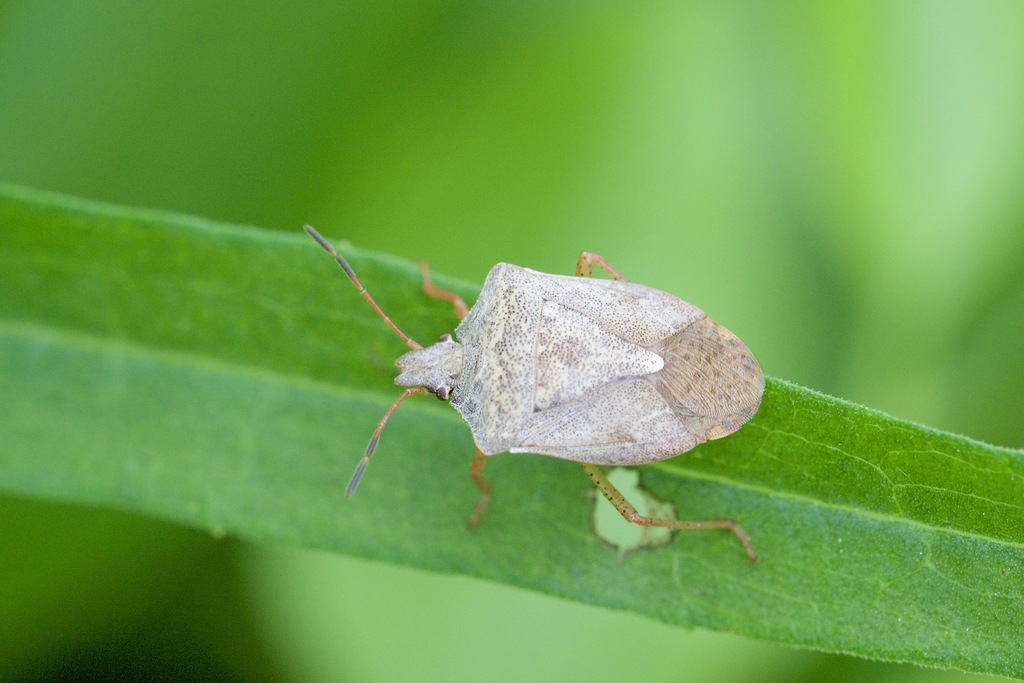
!Is the brown stink bug dangerous?
No. Brown stink bugs are not venomous and do not pose a medical threat. They do not seek to bite people, though an occasional defensive nip is possible and may be mildly irritating. The main nuisance is the strong, unpleasant odor produced when the insect is crushed or handled; the smell can stain fabrics.
Pets
Not poisonous to pets. Pets may be bothered by the smell or taste if they mouth or eat the bugs; this can cause temporary drooling or mild gastrointestinal upset but serious poisoning is unlikely.
📖Overview
Euschistus servus is a medium-sized stink bug native to North America. Adults are shield-shaped, brown and somewhat variable in colour, and both nymphs and adults feed by piercing plant tissue and sucking sap. They can cause damage to many crops including soybean, corn, cotton, peaches and various vegetables and fruits. When disturbed or crushed they release a characteristic pungent odor from glands on the abdomen. Adults overwinter in sheltered sites such as leaf litter, under bark, and occasionally inside buildings.
🔍How to identify a brown stink bug
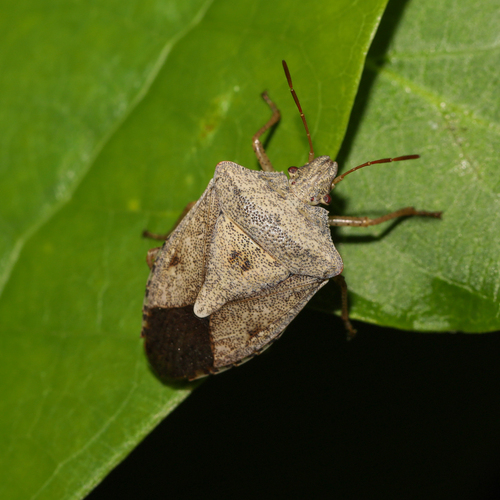
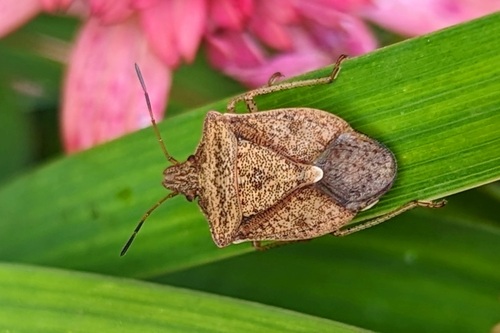
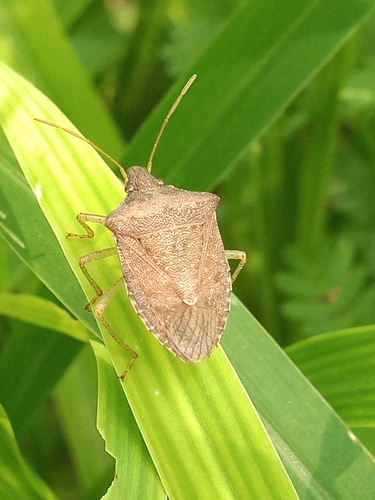
Adults are shield-shaped and stout with a broad, rounded abdomen and clear segmentation at the rear. Typical adult length is about 11-15 mm. The overall colour is medium to dark brown and may include reddish or yellowish tones; the underside is lighter. Antennae have distinct segments but lack the prominent white banding seen in some invasive species. The scutellum (triangular plate on the back) is large but does not cover the entire abdomen.
- Shield-shaped body typical of stink bugs, 11-15 mm long with a broad rounded abdomen.
- Uniform medium to dark brown overall colour without the distinct white antenna banding of brown marmorated stink bug.
- Large triangular scutellum on the back that does not cover the entire abdomen.
- When handled or crushed emits a strong, pungent odor.
Lookalikes
Brown marmorated stink bug Halyomorpha halys
H. halys typically has conspicuous light and dark banding on the antennae and alternating light-dark bands along the edge of the abdomen; Euschistus servus lacks these clear antenna bands and is generally more uniformly brown.
Southern green stink bug Nezara viridula
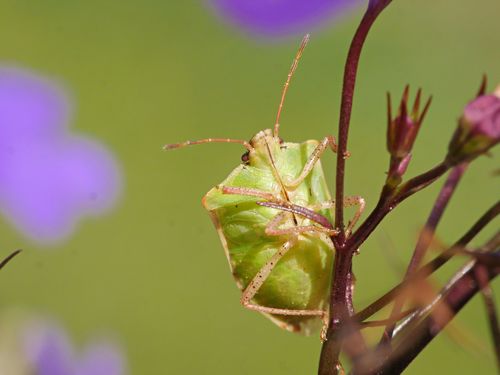
Nezara viridula is usually green (sometimes turning brownish with age) and has a different overall hue and shoulder markings; E. servus is typically brown from adulthood onward.
↻Life cycle
Egg
Females lay clusters of barrel-shaped eggs on the underside of leaves; eggs hatch in about 4-7 days depending on temperature.
Nymph (immature)
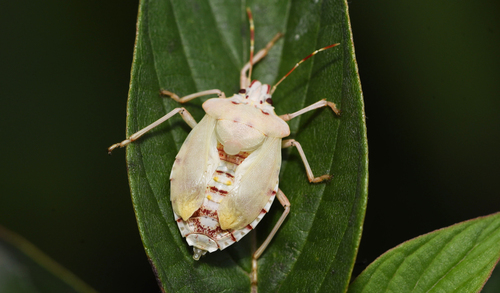
Several nymphal instars follow; early instars are small and more brightly coloured, later instars resemble adults but lack fully developed wings. Nymphs feed on the same host plants as adults.
Adult
Winged adults are reproductive and will overwinter in sheltered sites; they emerge in spring to resume feeding and reproduction.
🍃Diet and predators
Young eat
Plant sap from fruits, seeds, stems and leaves of many host plants (beans, corn, fruit trees, vegetables and wild hosts).
Adults eat
Same as juveniles: plant sap from a wide range of cultivated and wild plants; considered polyphagous.
Predators of the young
Birds, predatory insects (assassin bugs, predatory stink bugs, beetles), spiders, and parasitic wasps that attack eggs and nymphs.
Predators of adults
Birds, larger predatory insects and some mammals; parasitoid wasps attack eggs in some regions.
🌱Effect on plants and gardens
Feeds on many crops and wild plants by piercing fruit, seeds or stems and sucking sap; causes fruit deformation, dimpling, discoloration, aborted or shriveled seeds, and reduced marketability of fruit and vegetables.
How to get rid of brown stink bugs
For homes: exclude them by sealing gaps around windows, doors, siding and utility openings; remove by vacuuming (empty bag outdoors) or sweeping — avoid crushing to prevent odor. For gardens: hand-pick or knock into a container of soapy water. For farms: monitoring with sweep nets, trap crops and targeted insecticide applications when populations exceed economic thresholds; biological control includes encouraging natural enemies (parasitoid wasps, predatory insects). Always follow label directions for any pesticide and consider integrated pest management.
📍Where and when to find it
On host plants (soybeans, corn, fruit trees, vegetables) feeding on fruit and seed structures; adults on building walls and window sills in autumn when seeking overwintering sites.
Best time
Summer through early autumn for active feeding; autumn for house invasions. Daytime and warm evenings are good for observation.
Observation tips
Look on the undersides of leaves and on fruit where feeding damage appears. Photograph the dorsal side to show shape and antennae for identification. Avoid handling to prevent odor.
✨Fun facts
- Stink bugs get their name from glands on the abdomen that release a defensive, pungent odor when the insect is disturbed.
- Although considered pests in agriculture, stink bugs are part of a complex food web and support many predators and parasitoids.
- Adults overwinter in sheltered spots such as leaf litter and under bark, and occasionally move into houses and barns in autumn.
?Frequently asked questions
Are brown stink bugs dangerous to humans?
No — they are not venomous and do not spread disease. The main problem is their unpleasant odor if crushed or handled.
Do brown stink bugs bite?
They do not bite people as a normal behavior. A defensive nip is possible but uncommon and not medically significant.
Why are stink bugs in my house?
Adults seek warm, sheltered places to overwinter in autumn and may enter houses through gaps around windows, doors, vents and siding.
How do I get rid of stink bugs indoors?
Seal entry points, use a hand vacuum to remove them (avoid crushing), or gently trap and release outdoors. Chemical sprays indoors are not recommended for routine removal.
How do farmers control brown stink bugs?
Growers use monitoring (sweep nets, traps), economic thresholds to time treatments, insecticides when necessary, trap cropping, and encourage natural enemies. Specific tactics depend on crop and region.
📷Photos of the brown stink bug
More true bugs, cicadas & aphids
Bites cause itching
Non-venomous nuisance
Non-toxic
Smelly secretion
Potential disease vector
Painful bite
This guide was written with AI assistance and fact-checked, last updated 2026-10-10. Identification from photos is never certain: don't handle insects you can't identify, and get medical advice for bites, stings or allergic reactions. More about the brown stink bug: iNaturalist, Wikipedia.