
Cottony cushion scale
Icerya purchasi · Scale insects
A sap-sucking scale insect that produces a conspicuous white cottony egg sac and is a serious pest of citrus and many ornamentals.
!Is the cottony cushion scale dangerous?
No. Not dangerous or venomous. They do not bite or sting people. Handling heavy infestations may be messy because of sticky honeydew.
Pets
Not toxic to pets. Honeydew and sooty mold can make plants sticky and less attractive to pets, but the insect itself poses no direct health risk.
📖Overview
Icerya purchasi is a large scale insect in the family Monophlebidae. Females are slow-moving and usually found attached to plant stems, leaves or fruit where they feed on phloem sap. Females produce a distinctive cottony ovisac that can be 5-20 mm long and easily noticed. The species is a major pest in orchards and gardens because heavy infestations weaken plants, reduce fruit yield and produce honeydew that leads to sooty mold. Effective biological control by the vedalia beetle (Rodolia cardinalis) has historically reduced its impact in many regions.
🔍How to identify a cottony cushion scale
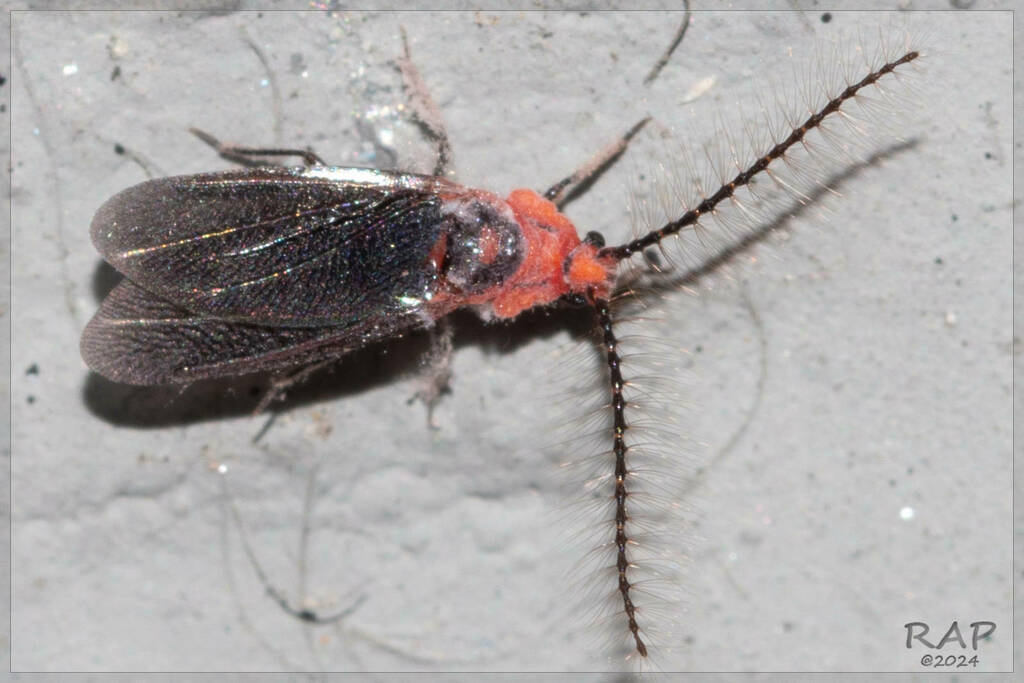
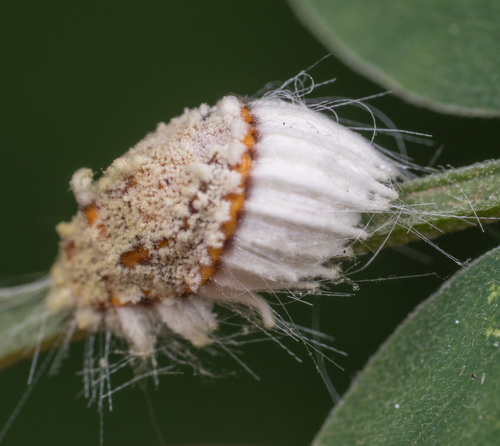
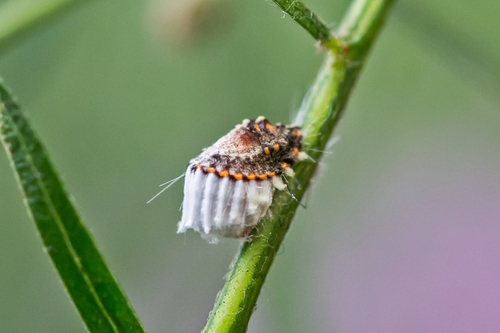
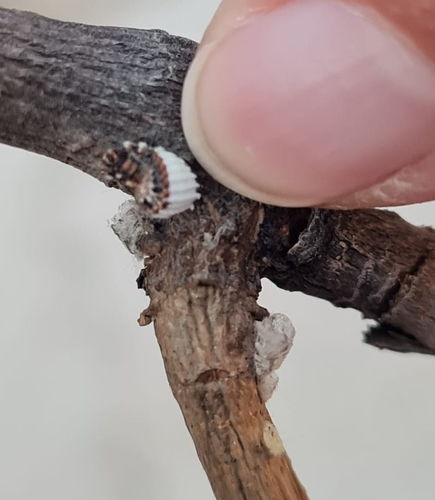
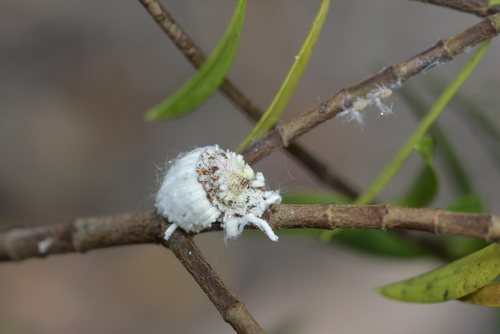
Adult females are roughly 4-6 mm long (body only), broadly oval and yellowish to reddish-brown beneath a dense white, cottony wax covering. The most obvious feature is the white, oval to elongate cottony ovisac or 'cushion' attached to the posterior; the ovisac may extend well beyond the body and reach 5-20 mm. Nymphs (crawlers) are tiny, mobile and pale before developing waxy filaments. Most individuals are self-fertilising hermaphrodites; males are rare, small, winged and short-lived.
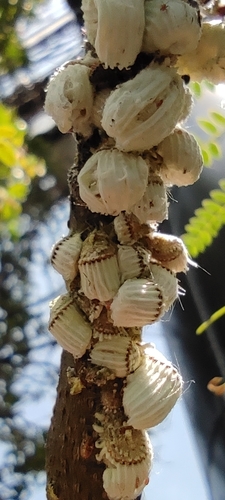
- Look for a conspicuous white, fluted cottony egg sac (ovisac) on stems, leaf axils or fruit.
- Adults are roughly 4-6 mm long beneath the cottony covering; the body is yellowish-brown to reddish-brown.
- Sticky honeydew and black sooty mold on leaves and fruit commonly indicate an infestation.
- Inspect close to branch unions and leaf axils where ovisacs are often tucked in.
Lookalikes
Mealybugs Various species (family Pseudococcidae)
Mealybugs are often smaller, more uniformly covered with powdery wax and lack the large posterior cottony ovisac typical of cottony cushion scale.
Other cottony scale insects Eriococcus spp. and others
Some other scale insects produce cottony wax but differ in body shape, host range and arrangement of wax filaments; identification often requires microscopic examination or host association.
↻Life cycle
Egg
Females deposit eggs inside the cottony ovisac; eggs hatch after days to weeks depending on temperature.
Nymph (crawler)
First-instar 'crawlers' are the main dispersal stage, spreading to new feeding sites on leaves and twigs where they insert their mouthparts.
Later nymphal instars
Later nymphal instars feed mainly along leaf veins and twigs, develop a waxy covering and can still move short distances, typically migrating to larger branches as they mature.
Adult
Adults are wingless, slow-moving and largely stationary once they begin producing the cottony ovisac. Most are self-fertilising hermaphrodites; males are rare.
🍃Diet and predators
Young eat
Sap from plant phloem (same host plants as adults)
Adults eat
Phloem sap of woody host plants
Predators of the young
Predatory lady beetles (especially Rodolia cardinalis), lacewings, some parasitic wasps and generalist predators
Predators of adults
Predatory beetles (vedalia and other Coccinellidae), parasitoids and some birds; ants often tend them for honeydew and protect them from predators.
🌱Effect on plants and gardens
Feeds on the phloem of many woody plants, especially citrus, oleander, bougainvillea, pittosporum and other ornamentals. Heavy infestations cause yellowing, leaf drop, reduced vigor and fruit damage; honeydew encourages sooty mold which reduces photosynthesis and marketability of fruit.
How to get rid of cottony cushion scales
For small infestations: physically remove ovisacs and egg masses with a brush or cloth, prune heavily infested branches and wash plants with a strong jet of water. Horticultural oils or insecticidal soaps applied thoroughly to cover the insects and ovisacs can be effective (follow label rates). For larger infestations or orchards: biological control using predatory lady beetles such as Rodolia cardinalis (vedalia) and parasitoid wasps has a proven record of long-term control. Systemic insecticides (e.g. some neonicotinoids) or targeted contact insecticides can be used where necessary, but consider nonchemical options first and follow local regulations and integrated pest management practices.
📍Where and when to find it
Check branch unions, leaf axils, undersides of leaves and fruit on citrus and many ornamentals. Look for white ovisacs, sticky honeydew and sooty mold. Crawlers may be found moving on leaves during warm weather.
Best time
Best observed in spring and summer when crawlers are active and populations build; in mild climates they can be found year-round. Daytime inspections are usually effective.
Observation tips
Use a magnifying lens to see tiny crawlers. Shake a branch over white paper to detect moving crawlers or honeydew droplets. When photographing, include the cottony ovisac for clear identification.
✨Fun facts
- The cottony cushion scale was famously controlled in California citrus by introducing the vedalia beetle in the late 1800s, one of the earliest and most successful examples of classical biological control.
- Their conspicuous cottony ovisac is a protective structure for eggs and newly hatched crawlers.
- Ants often 'farm' these scales for honeydew and will aggressively defend them from predators.
?Frequently asked questions
Is cottony cushion scale dangerous to people?
No. They do not bite or sting and are not poisonous, but heavy infestations harm plants and produce sticky honeydew.
Do cottony cushion scale insects spread quickly?
The mobile crawler stage can disperse locally and be moved further by wind, animals, clothing, nursery stock and infested plant material; spread can be rapid without control.
How do I get rid of cottony cushion scale in my garden?
Remove and crush ovisacs by hand if few; hose plants, prune heavily infested branches, apply horticultural oil or insecticidal soap ensuring thorough coverage, and consider releasing or encouraging natural predators like vedalia beetles for longer-term control.
Will pesticides kill them?
Yes, contact insecticides, oils and some systemic products can reduce populations, but thorough coverage is needed to reach insects under waxy coverings; integrating biological control reduces reliance on chemicals.
Why is there so much white fluff on my citrus?
The white fluff is the cottony ovisac produced by female Icerya purchasi to protect eggs and young crawlers; it is the species' most visible symptom.
📷Photos of the cottony cushion scale
More true bugs, cicadas & aphids
Bites cause itching
Non-venomous nuisance
Non-toxic
Smelly secretion
Potential disease vector
Painful bite
This guide was written with AI assistance and fact-checked, last updated 2026-10-10. Identification from photos is never certain: don't handle insects you can't identify, and get medical advice for bites, stings or allergic reactions. More about the cottony cushion scale: iNaturalist, Wikipedia.