
Water scorpion
Nepa cinerea · Water scorpions and water stick insects
A slow-moving aquatic true bug with raptorial forelegs and a breathing siphon; a predator of aquatic invertebrates that can deliver a painful but non-venomous bite.
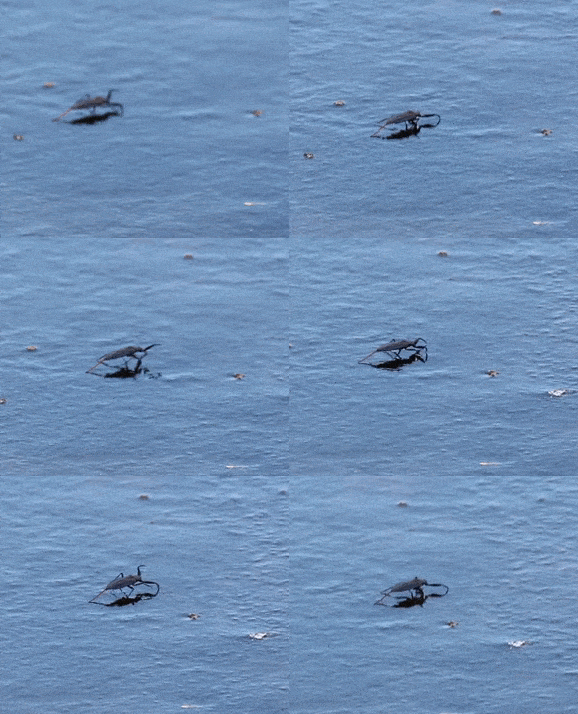
!Is the water scorpion dangerous?
Only mildly. Nepa cinerea is not venomous and does not transmit disease, but it can deliver a painful bite with its piercing mouthparts if handled or provoked. Bites usually cause local pain, brief swelling and possible redness. Wash the area with soap and water and apply a cold compress for pain. Seek medical advice if there is severe pain, increasing swelling, signs of infection, or an allergic reaction.
Pets
Unlikely to be dangerous to pets; a bite could cause local pain if a small pet handled or chewed one. In practice they are not considered a veterinary hazard.
📖Overview
Nepa cinerea is an aquatic hemipteran (true bug) found in still or slow freshwater across much of Europe and parts of temperate Asia. It is a sit-and-wait predator that uses grasping front legs to capture prey and a tubular breathing siphon at the rear to draw air from the surface while submerged. Adults and nymphs live among pond vegetation, debris and the margins of pools and slow streams. They are relatively sluggish and often active at night or in low light.
They feed on aquatic invertebrates and small vertebrates (for example tadpoles or small fish fry) using their piercing-sucking mouthparts. Females lay eggs in plant stems or other submerged substrates; development is hemimetabolous (egg, nymph, adult). While they look intimidating, Nepa cinerea is not venomous; however, it can bite humans if handled and the bite is reported to be painful.
🔍How to identify a water scorpion
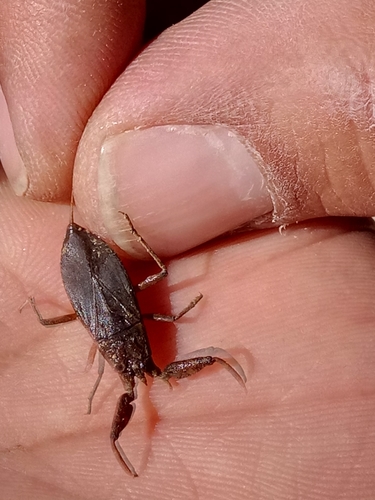
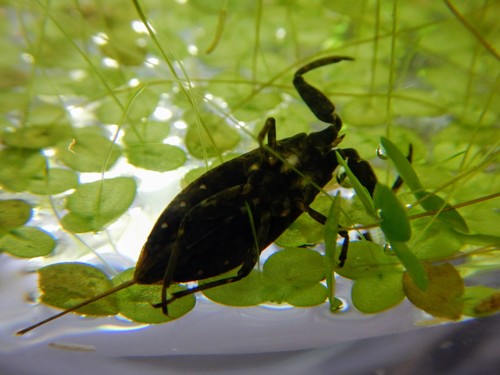
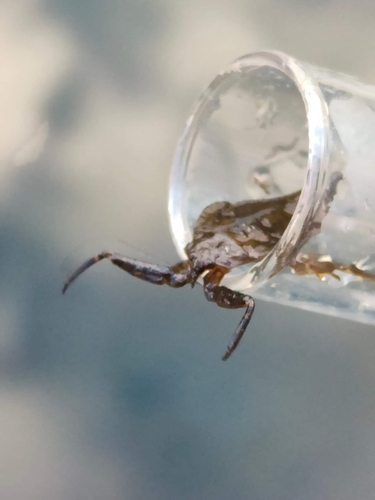
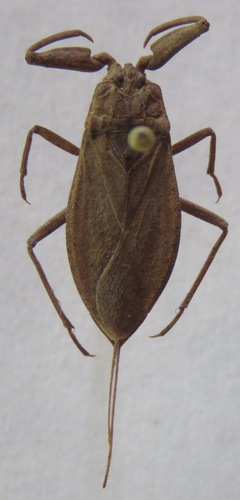
Adults are broad, flattened and somewhat leaf-shaped, giving a flattened, scorpion-like silhouette (hence the common name). The body is robust compared with the long stick-like Ranatra species. The head is small with a short rostrum; the forelegs are raptorial (adapted for grasping). At the rear is a short tubular breathing siphon formed from the last abdominal segments. Adults have fully developed wings but rarely fly, as their flight muscles are often poorly developed.
- Broad, flattened, leaf-like body about 18-23 mm long (excluding the siphon) with stout build (not long and stick-like)
- Raptorial (grasping) front legs held folded forward for catching prey
- Short rear breathing siphon visible as a tube at the end of the abdomen
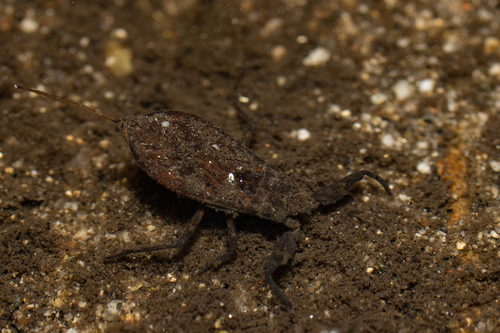
- Brown, mottled coloration blending with pond vegetation and debris
Lookalikes
Water stick insect Ranatra spp.
Ranatra are much slimmer and longer (stick-like) with longer breathing siphons; Nepa is broader and more flattened.
Backswimmer Notonecta spp.
Notonecta are smaller, more streamlined and swim on their backs; they lack the broad, leaf-like body and raptorial forelegs of Nepa.
↻Life cycle
Egg
Eggs are laid individually in plant stems, hollow vegetation or other submerged substrates; they hatch into nymphs after a period of development.
Nymph
Nymphs resemble small wingless adults and undergo several molts while hunting in the water; they have the same predatory habits and breathing siphon.
Adult
Adults have fully developed wings but rarely fly; they continue predatory behaviour and can reproduce to complete the cycle.
🍃Diet and predators
Young eat
Small aquatic invertebrates and tiny vertebrate prey (aquatic insect larvae, small crustaceans, tiny tadpoles or fish fry)
Adults eat
Larger aquatic invertebrates, insect larvae, and occasionally small fish or tadpoles; captured with raptorial forelegs and sucked out with the rostrum
Predators of the young
Fish, larger aquatic insects, amphibians and birds
Predators of adults
Fish, water birds and larger aquatic predators; they rely on camouflage and stillness for protection
🌱Effect on plants and gardens
Does not damage aquatic plants significantly; found among submerged and emergent vegetation where it hunts.
📍Where and when to find it
Look among submerged and emergent vegetation, under floating debris and at pond margins; nymphs and adults occupy the same microhabitats.
Best time
Spring to autumn, especially at night, dusk and dawn when they are most active.
Observation tips
Search slowly and quietly near the vegetation edge; use a net to sample gently and photograph from above or at water level. Wear gloves if you need to handle one to avoid a bite.
✨Fun facts
- The 'scorpion' name comes from its superficial resemblance to a scorpion due to the tail-like breathing tube and predatory posture, but it is not related to scorpions.
- It breathes by extending a short tube to the water surface, letting it act like a snorkel while the rest of the body remains submerged.
- Nepa cinerea can remain motionless for long periods, waiting to ambush prey.
?Frequently asked questions
Do water scorpions bite people?
Yes, Nepa cinerea can bite if handled or provoked. The bite is not venomous but can be painful.
Are water scorpions dangerous?
Only mildly. They are not dangerous and have no venom of medical significance, but they can give a painful bite with a minor local reaction if handled.
Why is a water scorpion in my pond?
They hunt in ponds and slow water with vegetation. If your pond has aquatic plants and invertebrates, it provides good hunting habitat.
How do I get rid of water scorpions?
Remove excess vegetation and debris, net or scoop out individuals if necessary. They are harmless and control is usually unnecessary; avoid handling them directly.
Where does Nepa cinerea live?
In still or slow freshwater bodies—ponds, ditches, marsh edges and slow streams across Europe and temperate Asia, typically among submerged vegetation.
📷Photos of the water scorpion
More true bugs, cicadas & aphids
Bites cause itching
Non-venomous nuisance
Non-toxic
Smelly secretion
Potential disease vector
Painful bite
This guide was written with AI assistance and fact-checked, last updated 2026-10-10. Identification from photos is never certain: don't handle insects you can't identify, and get medical advice for bites, stings or allergic reactions. More about the water scorpion: iNaturalist, Wikipedia.