
Bordered plant bug
Largus succinctus · Bordered plant bugs
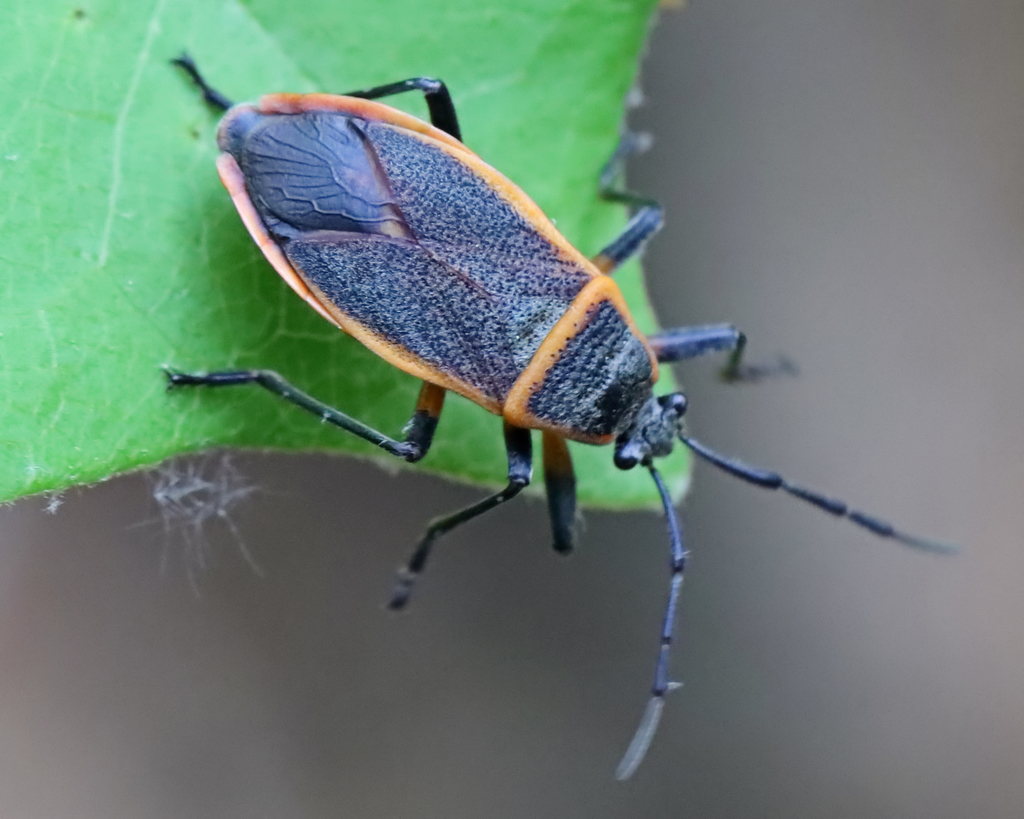
A medium-sized, dark brown to black plant-sucking bug with a narrow orange or red edge on the body margins, commonly found on shrubs, garden plants and weedy vegetation.
!Is the bordered plant bug dangerous?
Only mildly. Not venomous. If handled roughly, adults can deliver a brief, mildly painful bite; bites are uncommon and usually cause only minor local irritation. Standard first aid: wash area with soap and water and apply a cold pack or topical antiseptic if needed.
Pets
Not known to be dangerous to pets. Large numbers feeding on fruit or ornamental plants can cause plant damage but they do not pose a systemic toxin risk to cats or dogs.
📖Overview
Largus succinctus is a true bug in the family Largidae. Adults and nymphs feed by piercing plant tissues and sucking sap from flowers, seeds and fruits. They are often seen on a variety of ornamental and wild plants where they may congregate in small groups. They are active in warm months and are most noticeable because of their contrasting body margin colour.
🔍How to identify a bordered plant bug
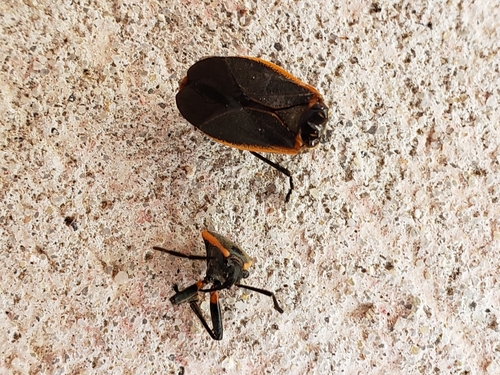
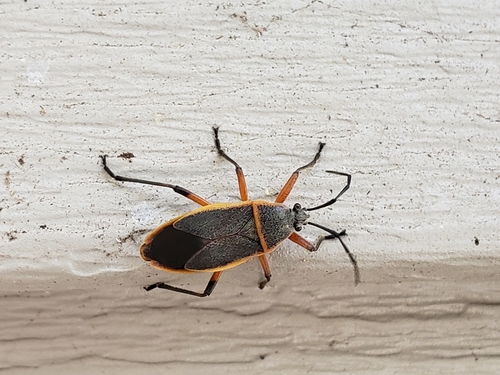
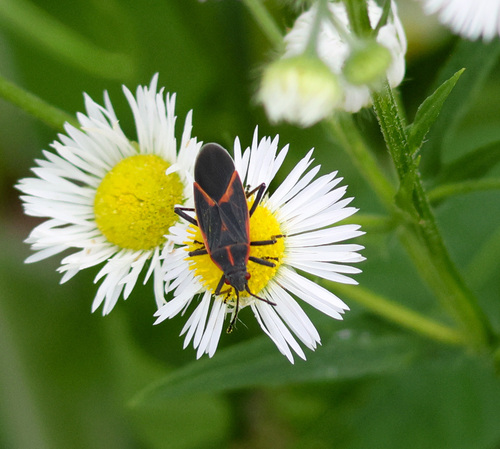
Adults are broadly oval, somewhat flattened bugs with a pronounced head and wide pronotum. The body ground colour is dark brown to black while the outer margins of the pronotum and hemelytra often show a narrow orange to red border. Legs and antennae are darker; nymphs are similar in shape but smaller, and are shiny steel-blue with a red or orange spot near the base of the abdomen. Size is moderate for a hemipteran.
- Dark, broad-bodied bug 12-18 mm long with a contrasting narrow orange or red border along the pronotum and wing margins
- Flattened, oval shape with a wide pronotum and visible wing pads or fully developed hemelytra in adults
- Diurnal and often found on flowers, seed pods or fruit where they feed in small groups
Lookalikes
Largus rufipennis Largus rufipennis
Has more extensive red or rufous coloring on the wings and pronotum compared with the usually narrower marginal border of Largus succinctus
Various Lygaeidae seed bugs Family Lygaeidae (various)
Seed bugs tend to have different body proportions and lack the distinct marginal bordering typical of Largus succinctus
↻Life cycle
Egg
Laid in clusters on stems or in crevices of host plants; eggs hatch in days to weeks depending on temperature.
Nymph
Several instars; nymphs resemble adults but are smaller and lack fully developed wings. They feed on the same plant tissues as adults.
Adult
Winged, reproductively mature stage that disperses to new plants and lays eggs. Adults persist through the warm season.
🍃Diet and predators
Young eat
Plant sap from flowers, seed pods, stems and young fruit
Adults eat
Plant sap from flowers, seeds and fruits; occasionally feed on a variety of ornamental and wild plants
Predators of the young
Predatory insects (assassin bugs, spiders), parasitoid wasps and birds
Predators of adults
Birds, predatory insects and spiders
🌱Effect on plants and gardens
Feeds on sap from flowers, seed pods, fruits and tender stems. In heavy numbers they can cause blemishes on fruit, wilting of flower parts and reduced seed quality. Usually not a major agricultural threat but can be a nuisance or cosmetic pest on ornamentals and small fruit.
How to get rid of bordered plant bugs
Hand-pick adults and nymphs from plants and drop into soapy water for small outbreaks. Reduce weedy hosts and overgrown vegetation near gardens to lower local populations. For larger infestations, insecticidal soaps or pyrethroid-based sprays labeled for garden use can reduce numbers; follow label instructions. Encourage natural enemies such as predatory insects and birds.
📍Where and when to find it
Look on flowers, seed pods, fruit and the foliage of shrubs and weeds. Nymphs are often on the same plants as adults.
Best time
Spring through early fall during daylight hours when temperatures are warm.
Observation tips
Approach slowly and photograph from above to capture the bordered margins; use a macro lens or phone close-up. Check flowers and seed heads where they commonly feed.
✨Fun facts
- Bordered plant bugs are named for the distinct colored border along their body margin.
- They feed in groups at feeding sites, which can make damage to flowers or fruit more noticeable.
- Although they pierce plant tissue, they do not inject venom and are not dangerous to humans.
?Frequently asked questions
Do bordered plant bugs bite?
They can deliver a brief, mildly painful bite if handled, but bites are uncommon and not medically significant.
Are bordered plant bugs harmful to my garden?
In small numbers they cause little harm, but large numbers feeding on flowers, fruit or seed pods can cause cosmetic damage and reduced seed quality.
Why are they on my houseplants?
They are attracted to flowers, fruits and seed-producing plants. Houseplants with blooms or fruit may be used as food sources, especially if other outdoor hosts are scarce.
How do I get rid of them?
For small infestations hand-pick and drop into soapy water. Remove nearby weeds and overgrown vegetation. Use insecticidal soap or a labeled insecticide for larger outbreaks, following label directions.
Where do bordered plant bugs live?
They live on a wide range of plants in weedy areas, gardens, hedgerows and shrub borders across parts of the Americas, especially in warmer regions.
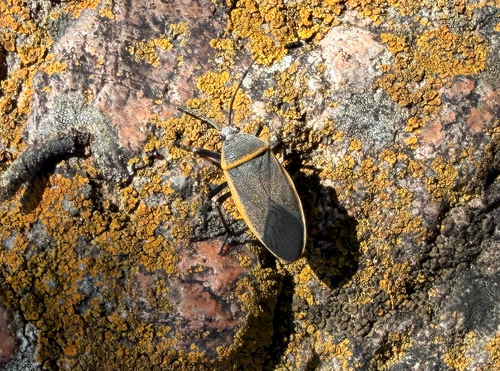
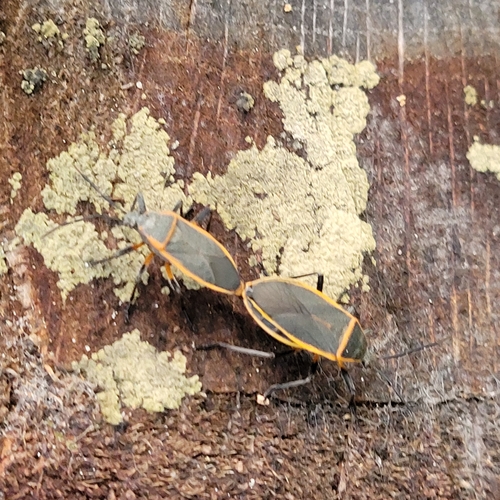
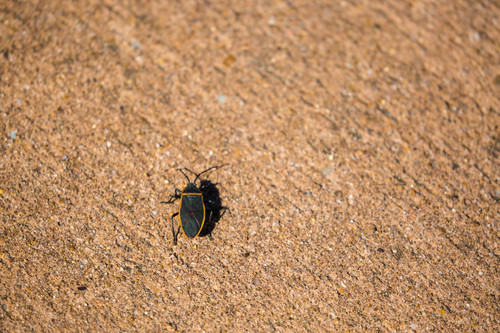
📷Photos of the bordered plant bug
More true bugs, cicadas & aphids
Bites cause itching
Non-venomous nuisance
Non-toxic
Smelly secretion
Potential disease vector
Painful bite
This guide was written with AI assistance and fact-checked, last updated 2026-10-10. Identification from photos is never certain: don't handle insects you can't identify, and get medical advice for bites, stings or allergic reactions. More about the bordered plant bug: iNaturalist, Wikipedia.