
Tropical bed bug
Cimex hemipterus · Bed bugs
A blood-feeding, nocturnal tropical bed bug that feeds on humans and other warm-blooded hosts and is an important household pest in warm regions.
!Is the tropical bed bug dangerous?
Only mildly. Tropical bed bugs bite at night and inject saliva that can cause itchy, red welts and sometimes allergic reactions. Bites are usually a nuisance rather than a medical emergency. Rarely, excessive scratching can cause secondary skin infection. There is no strong evidence that Cimex hemipterus transmits human diseases in normal household settings. First aid: clean bites with soap and water, apply cold compresses for itching, and use topical anti-itch creams or oral antihistamines if needed. Seek medical care for severe allergic reactions or infected bite sites.
Pets
Pets (cats, dogs) can be bitten and irritated by bed bugs, but pets are not common long-term hosts; bites on pets are less frequently reported. Treating the environment is key to protecting pets. Veterinary care is rarely required unless secondary infection or severe irritation occurs.
📖Overview
Cimex hemipterus is a small, wingless, blood-feeding true bug adapted to living in close association with people and their dwellings in tropical and subtropical regions. Adults hide in cracks and seams of beds, furniture and nearby crevices by day and emerge at night to feed on sleeping hosts. Infestations can cause itchy bites, sleep disturbance and allergic skin reactions; the species is not known to be an efficient pathogen vector.
This species often occurs where housing is crowded, where luggage moves between infested sites, or in places with limited pest control. It is closely related to the common bed bug (Cimex lectularius) but prefers warmer climates and can be the dominant species in tropical areas. Control requires thorough inspection, cleaning, and often professional insecticide or heat treatments because eggs and hidden nymphs are hard to eliminate with casual measures.
🔍How to identify a tropical bed bug
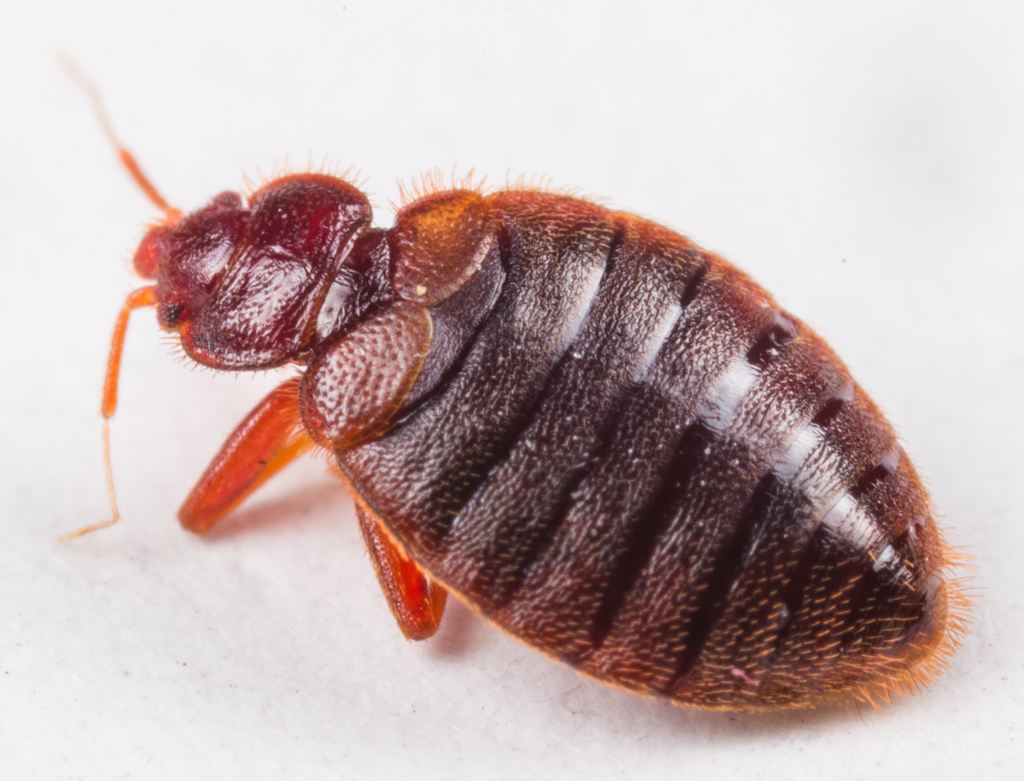
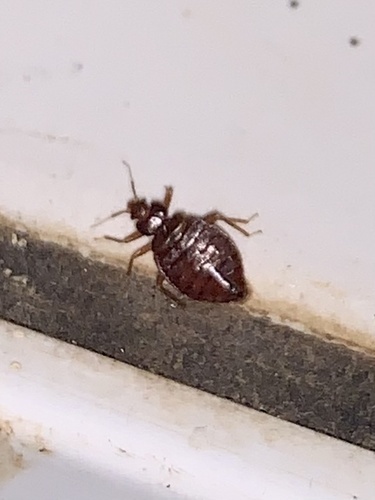
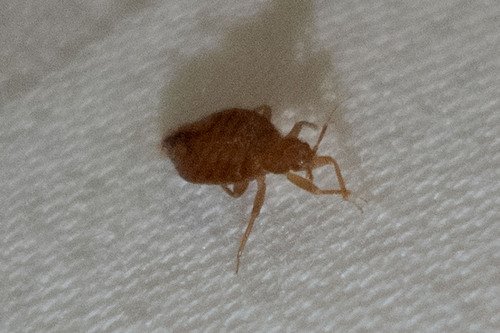
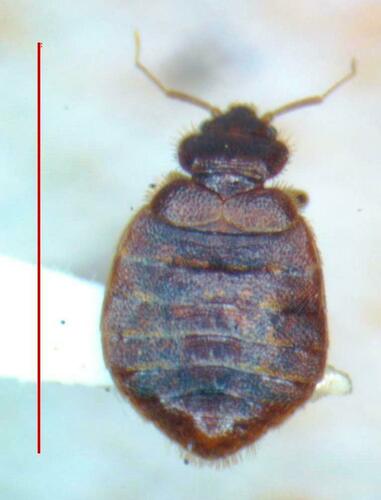
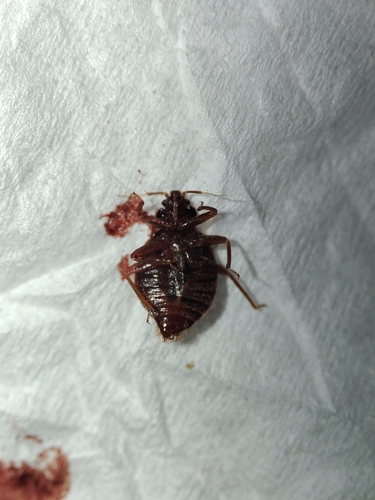
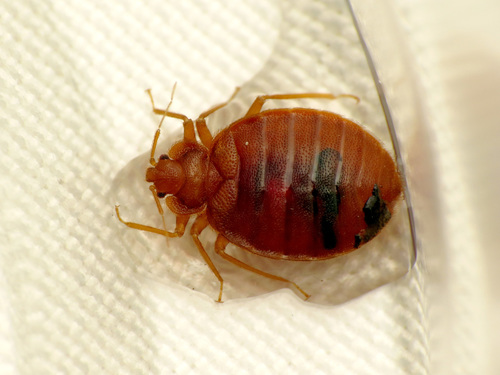
Adults are flattened, oval, wingless insects about the size of an apple seed. Before feeding they are broad and flattened; after feeding they become elongated and swollen with blood. Color ranges from brown to reddish-brown; freshly fed individuals are darker and redder due to blood in the gut. Nymphs look like smaller, translucent to pale yellow versions of adults until they molt and darken. Eggs are tiny (about 1 mm), pearly white and glued to rough surfaces in clusters.
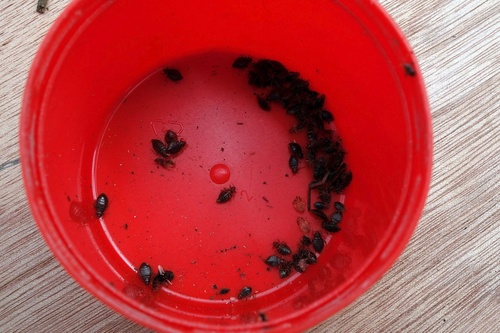
- Adults 4-6 mm long, wingless, flattened, oval, brown to reddish-brown; resembles an apple seed
- Look for small dark fecal spots, shed skins (exuviae) and tiny white eggs in mattress seams, bed frames and furniture joints
- Bite patterns: clusters or linear bites on exposed skin after sleep — though bites alone do not confirm bed bugs
- Use a flashlight and magnifier to inspect seams, tufts, electrical outlet covers and behind headboards
Lookalikes
Common bed bug Cimex lectularius
Cimex lectularius is more common in temperate regions and has subtle morphological differences (shape of pronotum and certain genital features) visible to specialists; in the field, distribution and climate (temperate vs tropical) and genetic testing help distinguish them.
Bat bug Cimex pipistrelli
Bat bugs look almost identical but live in bat roosts and only bite people when bats leave or are excluded; experts separate them by the longer hairs on the pronotum.
↻Life cycle
Egg
Small pearly white eggs about 1 mm long, glued singly or in clusters to rough surfaces in hidden crevices; hatch in about 6-17 days depending on temperature.
Nymph (juvenile)
Five nymphal instars; each stage requires a blood meal to molt. Newly hatched nymphs are pale and small and darken after feeding.
Adult
Wingless, flattened adult that feeds at night. Adults mate and females lay multiple eggs over weeks to months under suitable conditions.
🍃Diet and predators
Young eat
Blood meals from humans or other warm-blooded hosts; each molt requires a blood meal
Adults eat
Blood meals from humans and other warm-blooded animals, typically feeding at night
Predators of the young
Spiders, ants, some species of predatory beetles and parasitoid wasps in natural or stored environments
Predators of adults
Spiders, ants, predatory mites and some beetles; in human dwellings these predators rarely control infestations
🌱Effect on plants and gardens
Does not feed on plants; no direct impact on gardens or crops.
How to get rid of tropical bed bugs
Integrated approach: inspect and isolate infested items, wash and dry bedding and clothing at high temperatures (60 degrees C or higher for at least 30 minutes recommended), vacuum mattresses and crevices, and use mattress encasements. Non-chemical options include professional whole-room heat treatment and steam cleaning of seams and crevices. Insecticide treatments (pyrethroids, neonicotinoids, desiccants) are often used by professionals but resistance is common. For serious or widespread infestations consult a licensed pest control operator. Avoid DIY pesticide misuse; fumigation and unlabelled product use can be dangerous.
📍Where and when to find it
Check mattress seams, box springs, bed frames, headboards, bedside furniture, behind baseboards, electrical outlet surrounds, and luggage. Look for live bugs, shed skins, eggs and blood or fecal spotting.
Best time
Any month in heated indoor locations; inspect at night with a flashlight to catch active feeders, but daytime inspections are effective because bugs rest in predictable hiding spots.
Observation tips
Use a bright flashlight and a magnifier; remove pillowcases and inspect seams and tufts; vacuum crevices and immediately discard or seal vacuum bag contents; mark and isolate suspected infested items until treated.
✨Fun facts
- Bed bugs locate hosts mainly by sensing body heat and carbon dioxide.
- Despite their flat shape, bed bugs cannot fly; they move by crawling and are spread largely by human movement of infested goods.
- Females lay dozens to hundreds of eggs over their life; eggs and hidden nymphs make infestations hard to eliminate.
?Frequently asked questions
Do tropical bed bugs bite?
Yes. Cimex hemipterus feeds on blood and bites sleeping humans and other warm-blooded animals, typically at night.
Are tropical bed bug bites dangerous?
Bites usually cause itchy welts and sometimes allergic reactions. They are a nuisance and can affect sleep and mental health; they are not known to routinely transmit disease.
How do I know if I have tropical bed bugs or common bed bugs?
From appearance in the home it's hard to tell them apart. Geographic location (tropical/subtropical) and, if needed, expert identification or genetic testing can distinguish species.
Why are bed bugs in my house?
They are usually introduced by luggage, used furniture, clothing or movement of infested items from other infested sites. Crowded housing and frequent travel increase risk.
How can I get rid of them?
Inspect and isolate infested items, wash and dry textiles at high temperatures, vacuum and steam-clean mattresses and furniture, use mattress encasements, and consider professional heat treatment or pest control. Because resistance to insecticides is common, large infestations usually need professional treatment.
Can I use household pesticides to treat an infestation?
Many household products are ineffective or unsafe when used incorrectly. For safety and best results consult a licensed pest control professional who can use approved methods and follow resistance-management practices.
📷Photos of the tropical bed bug
More true bugs, cicadas & aphids
Bites cause itching
Non-venomous nuisance
Non-toxic
Smelly secretion
Potential disease vector
Painful bite
This guide was written with AI assistance and fact-checked, last updated 2026-10-10. Identification from photos is never certain: don't handle insects you can't identify, and get medical advice for bites, stings or allergic reactions. More about the tropical bed bug: iNaturalist, Wikipedia.